
As children and teenagers, we all have heroes, or at least, people we look up to and respect. Often, they are parents, or older siblings or aunts and uncles. Sometimes, they are celebrities, athletes or simply people who give of themselves to others or to society in general.
Sometimes, these admired individuals remain constant in our minds throughout life. Sometimes, we outgrow them as adults (I can name a few political figures) and their lustrous star fails to shine so brightly when we gain experience, wisdom and greater knowledge of life.
As a teenager, I had a few sports heroes, for I followed certain sports closely – hockey (Stan Mikita of the Chicago Blackhawks),
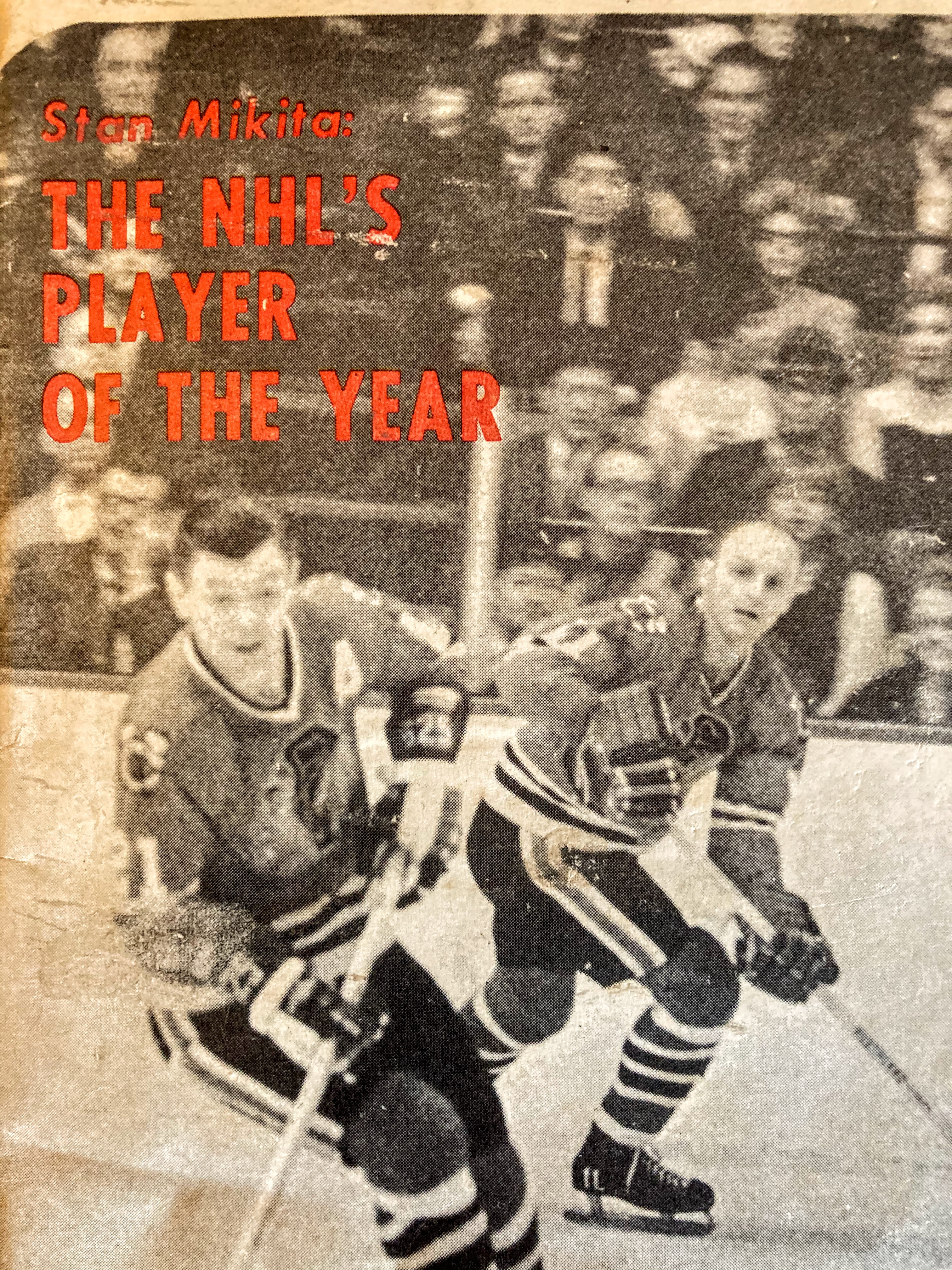
Cover of the 1968 NHL Hockey Annual (Montreal, Ken-Will Publishing)
Formula 1 racing (Stirling Moss and John Surtees) and Canadian football (Russ Jackson of the Ottawa Roughriders).
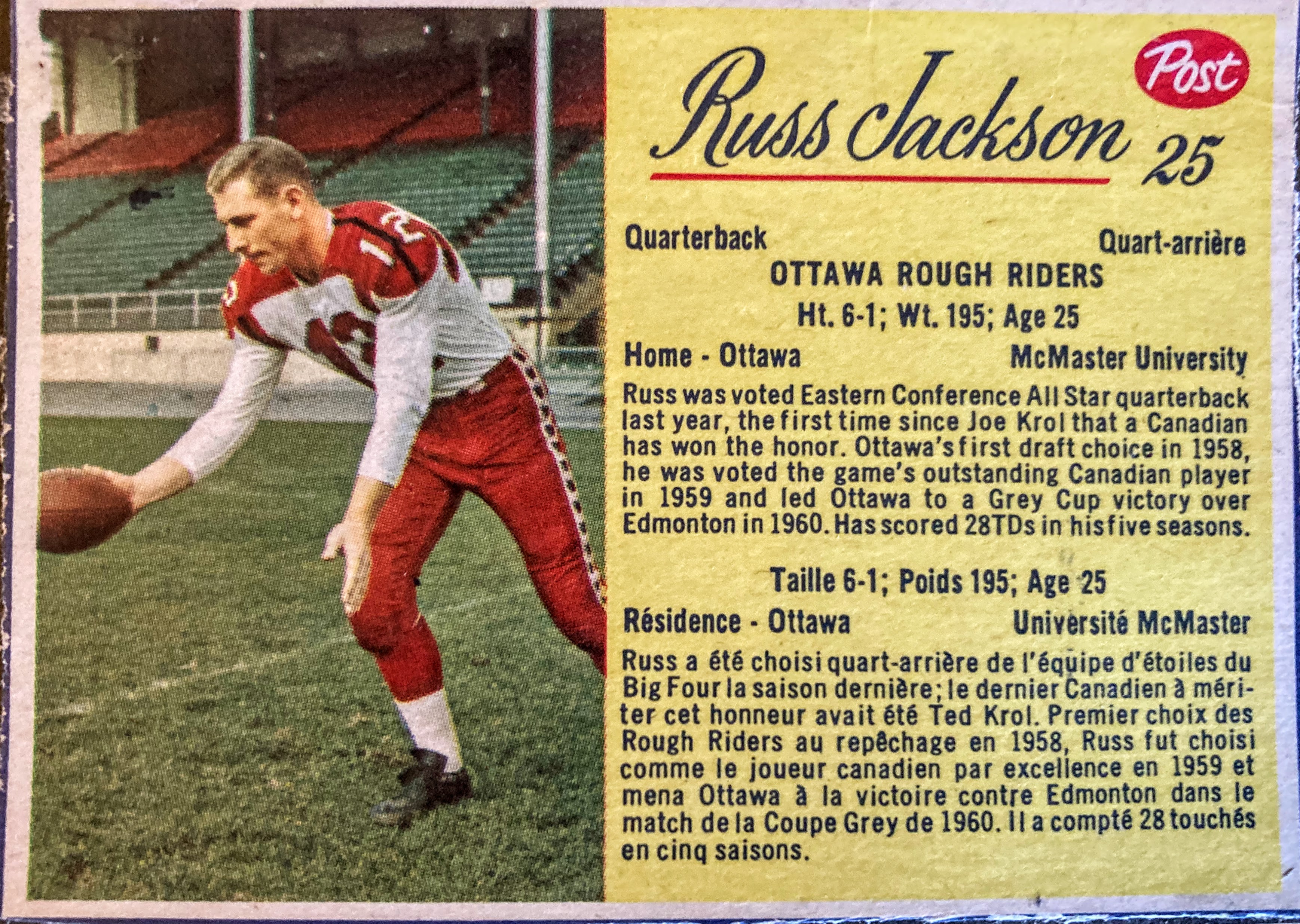
One of a complete set of Post Cereals CFL Football Album, 1963 cards (I ate a lot of Post cereal that year!)
Later on, as a university student and with a great interest in Canadian politics, I came to admire certain Members of Parliament. Eric Kierans (not just a politician but also an economist!) and Walter Gordon (for his role in promoting Canadian economic nationalism) were two that stood out for me.
Over the years, my interests broadened to include statesmen the world over. By the time I’d first heard of Nelson Mandela, I was too old for hero-worship, but, in my opinion, he should be everyone’s hero.
I’ve always loved literature (I am a writer, after all) and admired poets in particular. In my view, poetry represents the very pinnacle of literary forms. (It’s a shame the financial rewards for poetry are so small.) I’ve tried my hand at writing poems. In fact, I confess to have written many, the vast majority for my wife, usually for Valentine’s Day, Mother’s Day, her birthday, etc. (you get the idea – an audience of one person). I vow none will ever be published, for while some might be clever enough, I don’t consider them sufficiently sophisticated and certainly not worthy of wider distribution.
During my time at the University of Manitoba, I studied Political Science, in particular international relations, voting behaviour and the constitution (division of powers). My interest in these subjects has never waned, which is fortunate as they provided the intellectual basis for much of what I did during my career with the Government of Canada.
As a young person my politics were rather left wing, veering towards support of the NDP (weren’t most of us back then?). Thus, when I discovered a scholar of constitutional law who was also a celebrated poet and thinker, contributor to the celebrated Canadian Forum magazine, as well as a founder of the CCF/NDP, how could this gentleman not become a hero?
F.R. Scott was not only all these things, but also a Rhodes Scholar, Guggenheim Fellow, Dean of McGill’s Faculty of Law, winner of too many literary prizes (for both non-fiction and poetry) to list here, a translator of French-Canadian poems into English and – perhaps most important of all – a defender of civil liberties. He was, in sum, a true Renaissance man.
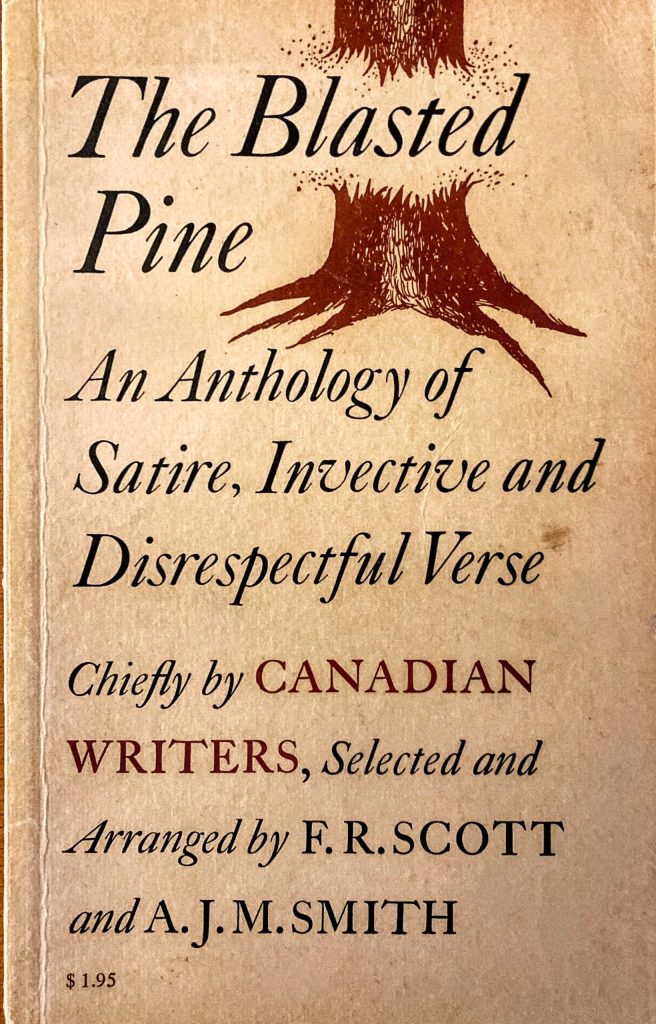
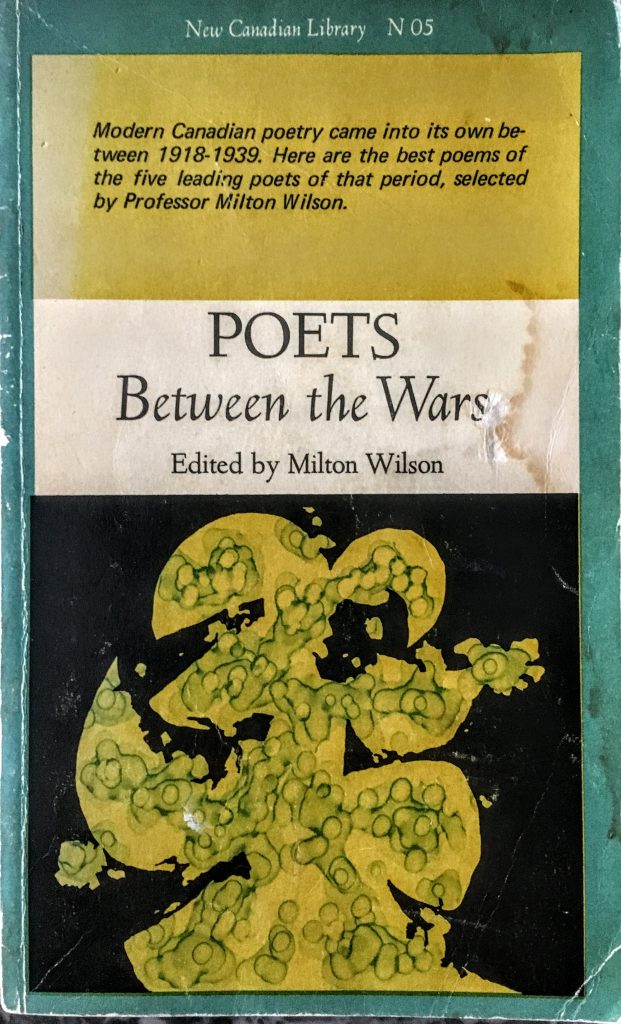
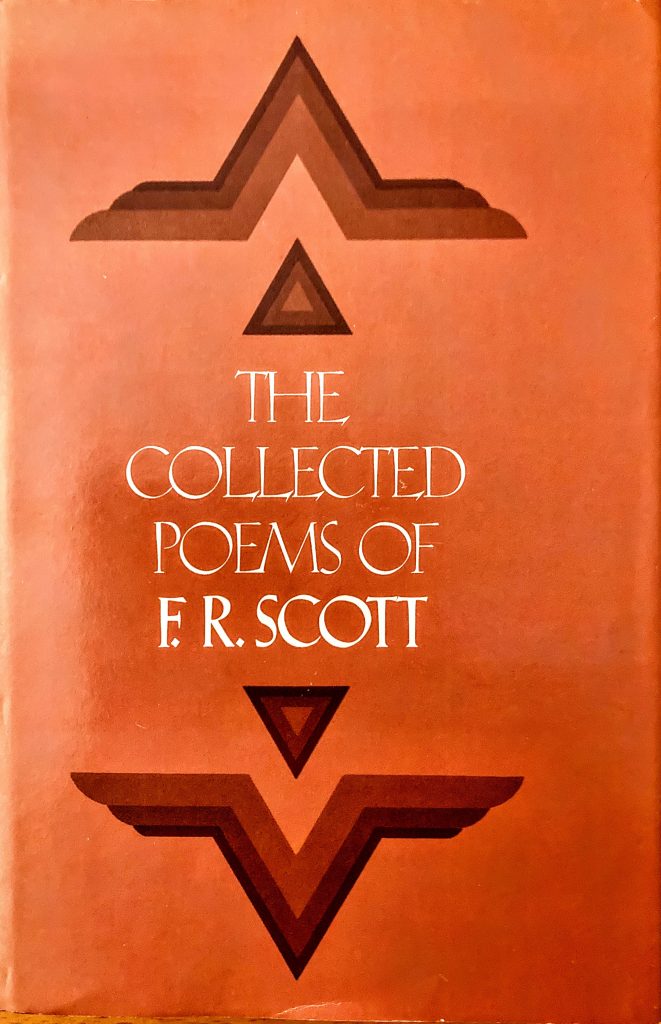
I’ve long owned and enjoyed these three books – The Collected Poems of F.R. Scott, (Toronto, McClelland and Stewart, 1981), the rather bedraggled Poets Between the Wars, edited by Milton Wilson, (Toronto, McClelland and Stewart, 1967, 1969) and The Blasted Pine, selected by F.R. Scott and A.J.M. Smith, (Toronto, Macmillan, 3rd printing, 1962).
Scott’s poetry ranged from social and political satire (those were the ones I liked best) to evocative visual pictures of Canada’s geography. W.L.M.K. (about Canada’s long-serving Prime Minister Mackenzie King) and The Canadian Social Register are possibly his two most famous poems.
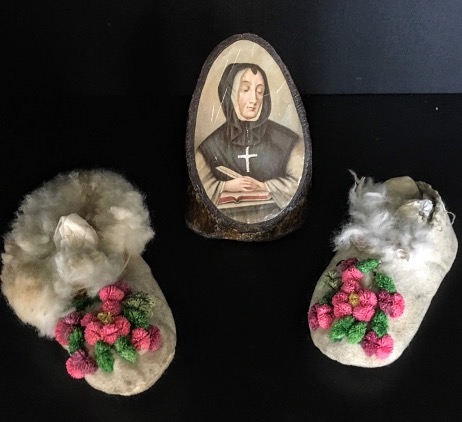
They also provided a personal connection. I have an older sister who was born in Ottawa, Ontario, a younger brother born in Aklavik, N.W.T., and while I was born in Yellowknife, N.W.T., I was quickly transported home by float plane (with my mother of course) to Fort Providence where I spent the first part of my life.
My only remaining souvenirs of my time in Fort Providence:
The point is F.R. Scott wrote poems about all three places (a fact I discovered later in life): i) Fort Providence, ii) Norman Wells to Aklavik (both in Letters From the Mackenzie River), and iii) Ottawa Becomes Civilized (in Trouvailles: Poems From Prose). I doubt there are many people who can claim to have a favoured poet who’s written about such unusual geographic locales, especially ones that were so germane to their life.
In his honor, I’d like to quote from only one, entitled Mackenzie River:
This river belongs
wholly to itself
obeying its own laws
Its wide brown eye
softens where it reflects
from sky and shore
The top water calm
moves purposely
to a cold sea
Underneath its stone bed
shows sunken rock
in swirl and surface wave
Suspended
in its liquid force
is the soil of deltas
The servient valleys
reach up to lake and spring
the clefts of far hills
And shed
arteries of streams
that stain the central flood
In spring thaw and spate
its wide levels
rise slowly fall
Like tides
that start upstream
and die at sea
A river so Canadian
it turns its back
on America
The Arctic shore
receives the vast flow
a maze of ponds and dikes
In land so bleak and bare
a single plume of smoke
is a scroll of history.

One response to “Heroes”
[…] Heroes […]
LikeLike