Some years back, as I was in the middle of writing The Ravenstones series, I discovered the Canadian Wildlife Federation and their monthly journal, Canadian Wildlife.
One particular issue I recall provided a great deal of information on the wolverine, detail that had been challenging to obtain elsewhere.
Realizing the value in ensuring accurate information on my characters’ behavior in the wild, it wasn’t long before I began to contribute to the Federation and subscribe to the magazine.
These periodicals became an invaluable source of detail on many of the North American animals that make up this story.
At one point, I considered contributing a percentage of the profits from the series to the CWF (and its American sister entity), but then it occured to me that I had taken such an artistic license to the characters’ traits, the organization or its members might be offended by the very suggestion.
After all, The Ravenstones series is a work of fiction based on anthropomorphic animals. It’s neither a scientific tome nor dedicated to the CWY priorities: celebrating nature, habitat conservation or species preservation. Ultimately, deciding it would not be appropriate, I chose not to contact the organization or make a public statement to that effect.
That being said, as the protection of both animals and natural habitat is a matter I do care about, not only will I continue to support the organization I would also encourage every reader to do the same.
If (fantasy) readers care equally about these issues, I would encourage them to contribute to this organization or any like-minded entity, international, national or local. There are many worthy and deserving not-for-profits out there.
Having made this entreaty, and in hopes of making this post as entertaining and educational as possible, here are seven things I’ve learned from Canadian Wildlife over the past years:
- The hippocampus (the part of the brain responsible for memory and learning) of the black-capped chickadee expands by over 30%, so the bird can better find food, hide it and retrieve it. (Jan/Feb 2021)
- The Arctic Woolly Bear moth spends 14 years as a caterpillar, emerging for just one month each summer to eat before returning to dormancy, freezing solid during the coldest part of the year. (Jul/Aug 2020)
- A nest of long-tailed jaegers was discovered on Ward Hunt Island (just north of Ellesmere Island) at 83 degrees 05’35.1″. It is the most northerly birds’ nest ever recorded. (Nov/Dec 2017)
- Twenty subspecies of Canada’s national animal, the beaver, used to exist across North America. Hunted to extinction, now, only Castor canadensis canadensis remains. “There are no American beavers…only Canadian beavers living in the United States.” (Jul/Aug 2017)
- Another species of beaver does exist in North America, the mountain beaver. It doesn’t chew down trees, build dams, slap its tail or live in a well-crafted lodge of sticks. But the poor fellow is home to the world’s largest flea, roughly the size of a watermelon seed. (Jan/Feb 2021)
- Bluebirds are not really blue. The blue color is created by the way light waves interact with tiny pockets of air and protein molecules in the bird’s feathers. In other words, the color is structural, not caused by pigmentation. The actual feather is brown. (Sept/Oct 2019)
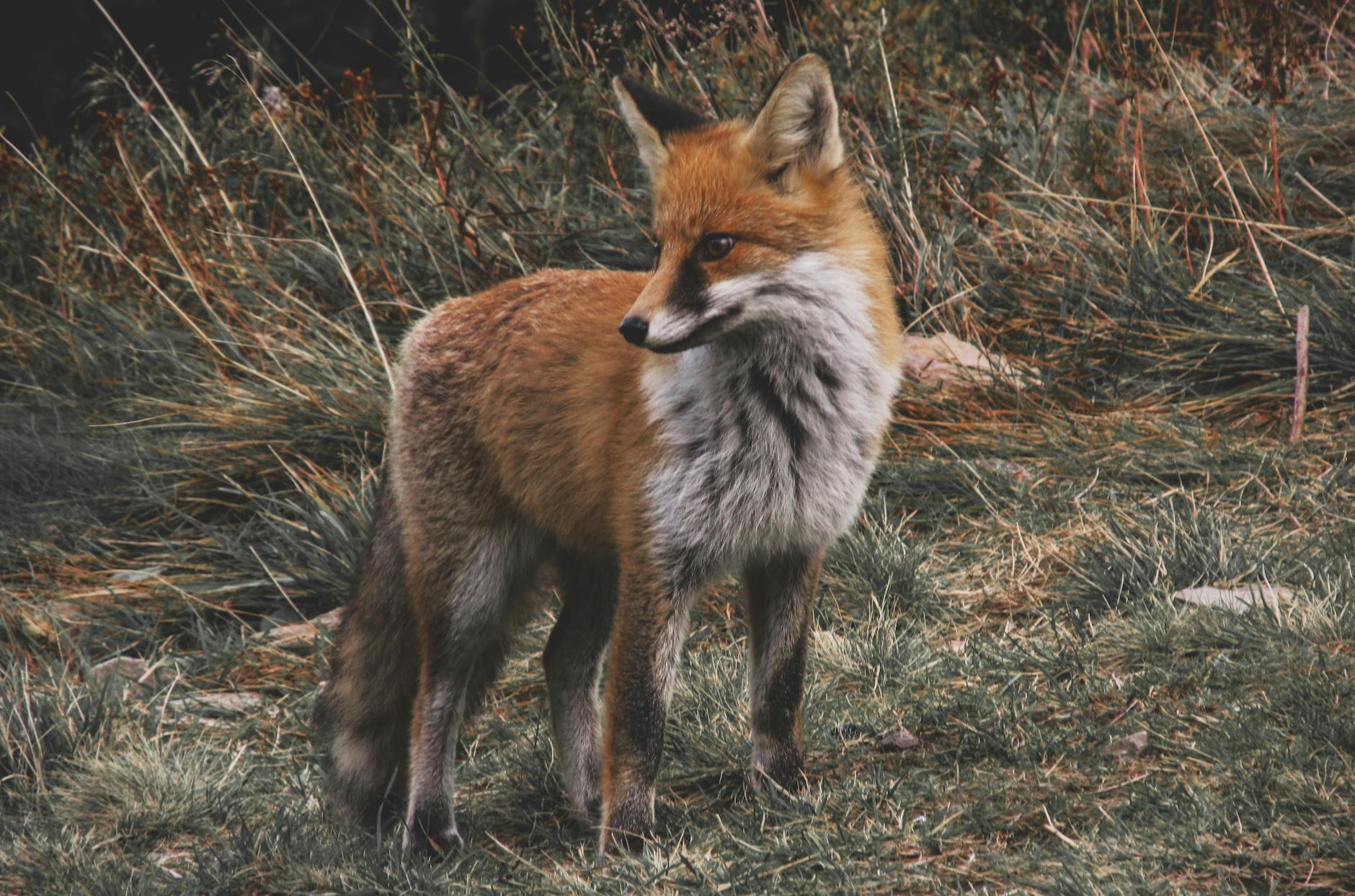
- Having subscribed to Canadian Wildlife for several years now, I have conducted my own survey of cover choices. I conclude that the fox wins hands down as the most popular choice, followed by the bear and whale. All other choices (moose, wolverine, wolf, beaver, loon, bat, etc.) were one-offs.
And now that I’m writing the prequel to The Ravenstones, I invite readers/subscribers to propose any animals they’d like to see included in that book. It’s your chance to promote your favorite feathered or furry creature, one who can be immortalized for evermore in literature! Just reply to this post.


Leave a comment