
I never did find out what happened to the Soviet Embassy’s Science Counsellor. Of course, my new security contacts were hardly likely to share that news with me. Most likely, our spy beavered away, trying to make and develop his various contacts under close CSIS observation until transferred to some other location.
Flash forward three years to 1981. I’m now working for Alberta’s Office of Federal & Intergovernmental Affairs (FIGA). Herein lies the province’s own mini-foreign service, and I am responsible for political relations with all of Europe. It’s the height of the oil boom and OPEC. Alberta’s wealth, its huge resource base, especially its oil sands, makes the province of great interest to the outside world. Everyone wants to either get a piece of the action, benefit from its riches or, at very least, establish closer relations.
Reagan has been elected President; Brezhnev is hanging on as General Secretary but his health is deteriorating. The Soviet leader had been a heavy smoker until the 1970s, addicted to sleeping pills and tranquilizers and begun drinking to excess.
The Soviet-Afghan war (1979-89) is dragging on; Brezhnev announces that the Soviet Union had the right to interfere in the internal affairs of its satellites to “safeguard socialism”. This claim became known as the Brezhnev Doctrine. In protest of the invasion, the USA leads a boycott of the 1980 Summer Olympics. 65 countries sign on, including Canada.*
Within Canada, it’s a time of feuding between federal and provincial governments, over a myriad of issues. Political conflict is a regular occurance, especially over the constitution and federal/provincial sharing of resource revenues. It’s the era of Pierre Trudeau and Peter Lougheed, two impressive, determined and skilled politicians.
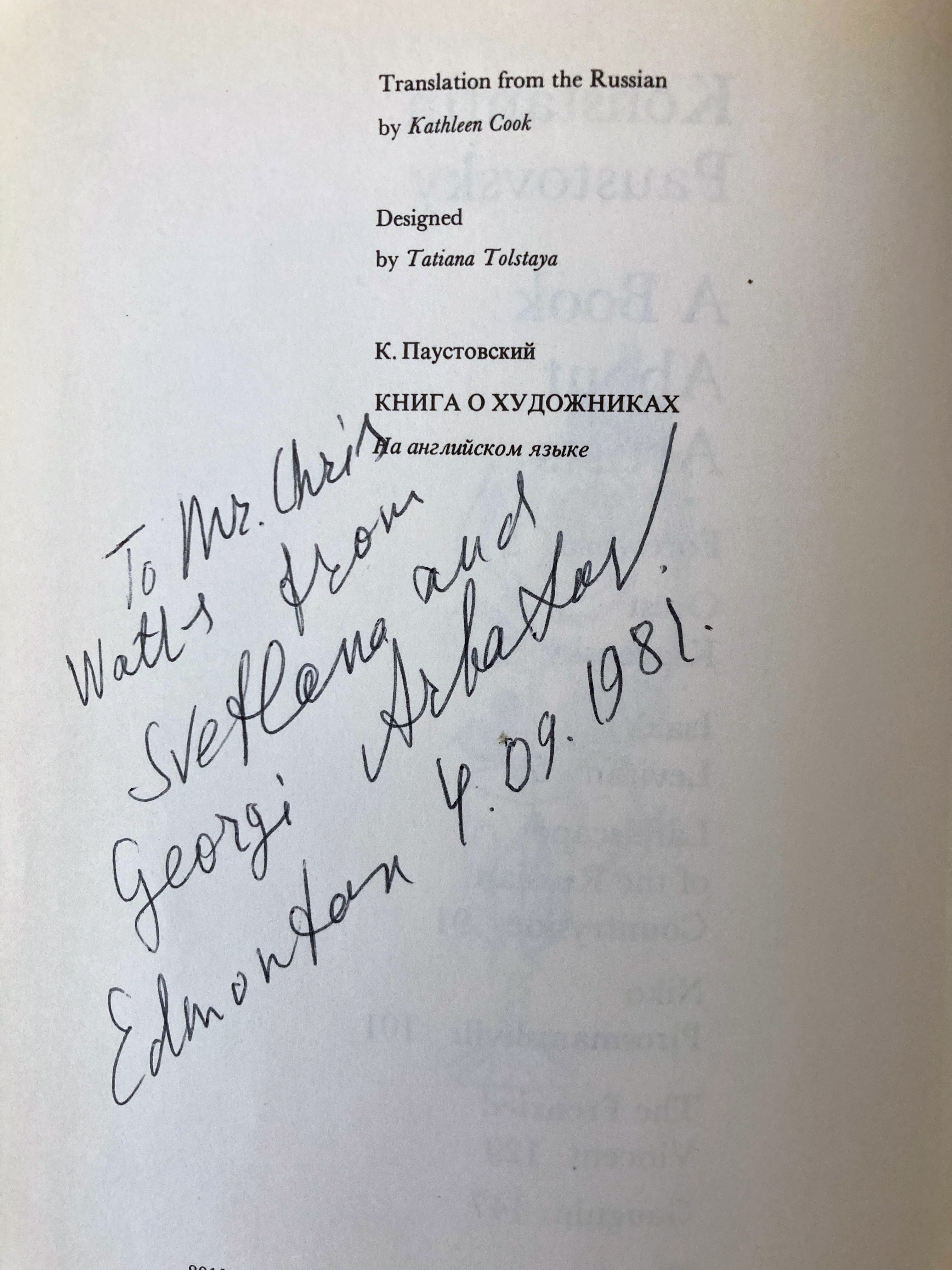
In September, 1981, Georgy Arbatov comes to visit Alberta and I am responsible for organizing his schedule. Arbatov was a major player in Soviet politics and international relations, the founder and director of the Russian Academy of Sciences’ Institute for US and Canada Studies, the USSR’s key policy institute advising on the west.
Let me assure readers that Mr. Arbatov (1923-2010) was no spy. In fact, he was one of those few Soviet era officials who understood North America and tried to enhance relations rather than sow dissension. He made significant contributions to US/Soviet relations during the Cold War and continued to play a role in the post-Cold War era.
Through his position, political instincts and views, Arbatov managed to thread the needle of engaging with the West while not straying too far from the official Soviet party line. Believing in the importance of maintaining open channels of communication between the two sides, he advocated for peaceful existence and played a crucial role in fostering dialogue, both as an advisor to Soviet leaders and through his interactions with western policymakers and academics. [The Carnegie Institute for International Peace has a first rate tribute to Arbatov on its website.]
According to Wikipedia, “Arbatov became the face of the Soviet Union in the West, where he used his strong, though heavily accented, command of the English language to help foster ties with American officials and to present Soviet views to the American public.”
But that didn’t mean Arbatov wasn’t of interest to the RCMP Security Service (replaced by CSIS in 1984). They maintained close contact with me as I made arrangements for his various meetings, and while in Edmonton Arbatov was followed everywhere he went. Among the people he wanted to spend time with was Edmonton publisher and federal political candidate Mel Hurtig. Mr. Hurtig, a left-wing social activist, economic nationalist, founding member of the Committee for an Independent Canada and critic of foreign ownership, was an obvious choice for a Soviet official to meet.
Mr. Arbatov and I visited Mr. Hurtig’s office. Later that day, they dined together at one of Edmonton’s swankier restaurants. Because I had to attend to Mr. Arbatov, I sat at another table, within eyesight but not earshot, at his service if needed and waiting to escort him back to his hotel afterwards. Alongside me, enjoying our complimentary dinner, were two security officers who’d been following Mr. Arbatov over the course of his entire two-day itinerary in Alberta.
We get to talking about my earlier experience with the Soviet Science Counsellor. I was told that foreign agents are always on the lookout for converts and contacts, especially the troubled, the unhappy, the bypassed, those laden with debt or holding aberrant political views (not me I hasten to say). Those individuals are prime targets, but sometimes it’s also the naive, more trusting types who can be wooed (also not me).
After making contact, the usual first recruiting step of any foreign agent was to ask for a simple, completely legal, even possibly innocuous favor. Once accepted and completed, they’d work up from there. The ‘asks’ get more sensitive and demanding until the request is obviously beyond the pale.
Should the victim balk at this point, evidence of the past ‘favors’ is thrown in the recruit’s face, with the clear message being made: one is already compromised and one’s career or marriage now at risk. The target must either continue – and be suitably rewarded – or lose everything. Like a prized fish, the new recruit is slowly reeled in.
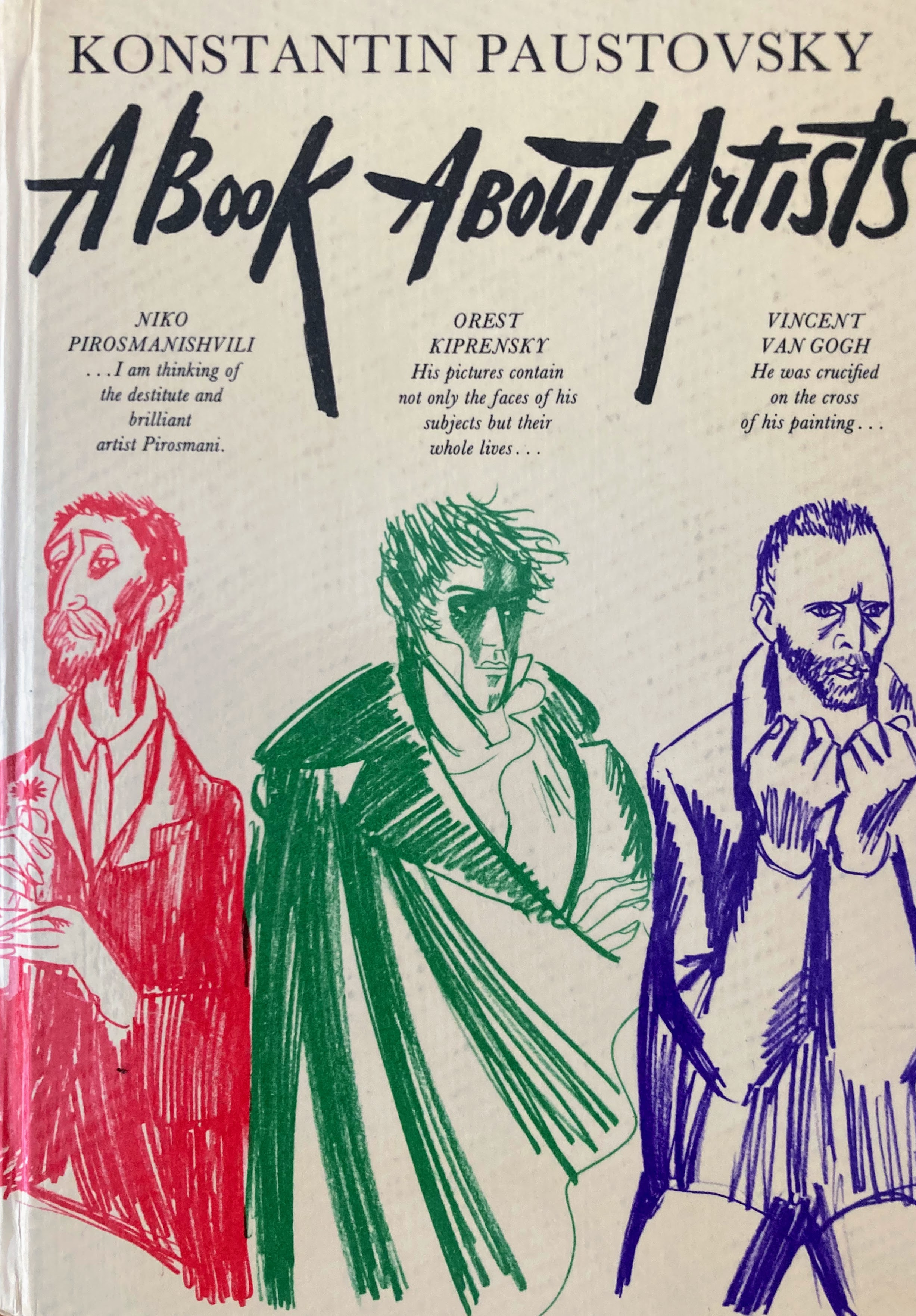
Upon leaving Alberta, Mr. Arbatov presents me with a gift, for organizing his visit and escorting him everywhere. It’s a book about art:
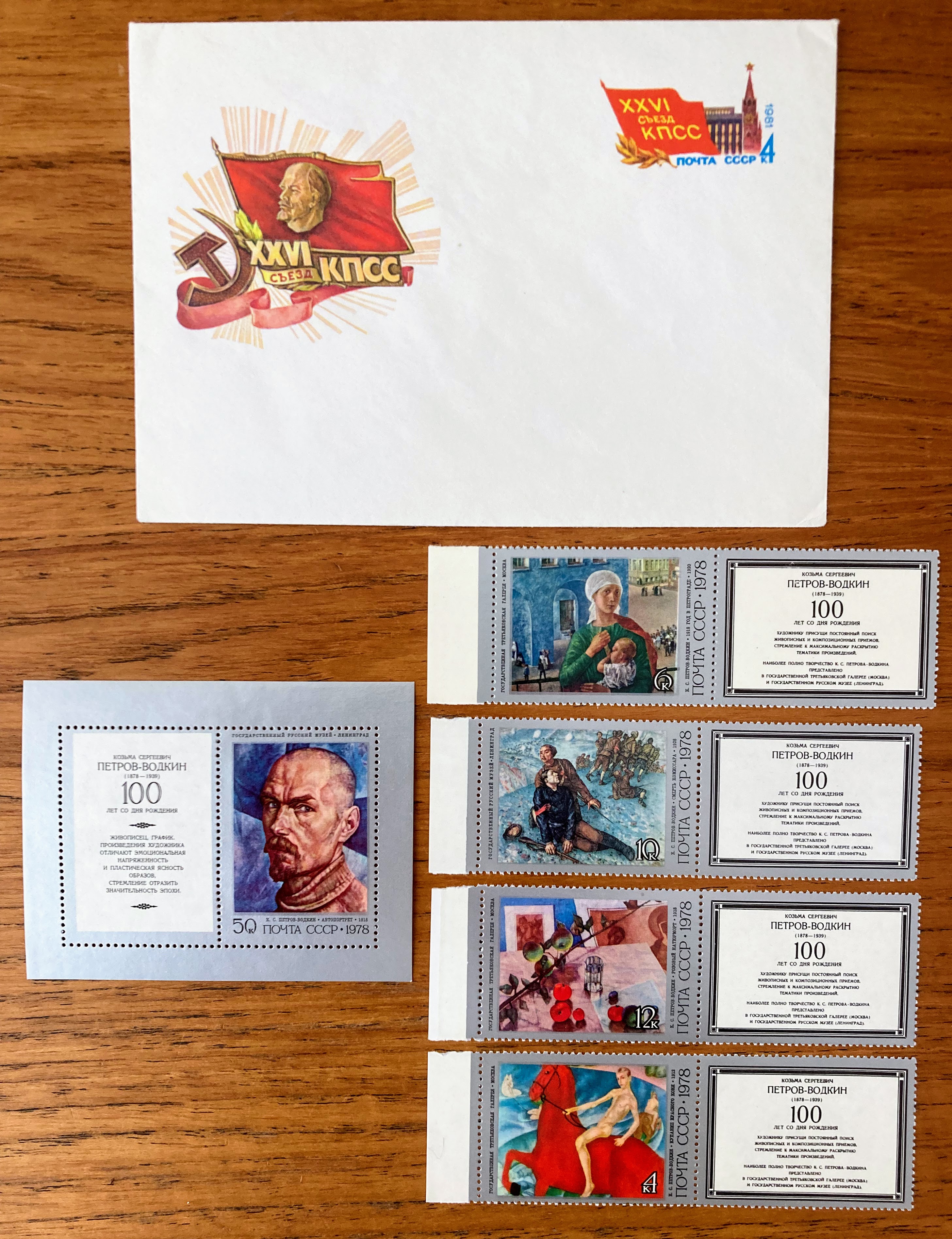
along with some Russian stamps (the envelope was to protect the stamps), which I kept as a souvenir:
I did not know of Konstantin Paustovsky, but in 1965 he was nominated for a Nobel Prize for literature. (The prize was awarded instead to Mikhail Sholokhov).
Did Mr. Arbatov know that I collected stamps and that I had an avid interest in art. Was that in my file back in Moscow? Or was it purely a coincidence? It’s anyone’s guess.
Many Years Later (It’s A Small World After All):
* In response to the subsequent 1984 Soviet retaliation (a boycott of the next Olympic Games in Los Angeles), American entrepreneur, Ted Turner, attempted to create a duplicate event, called the Goodwill Games.
Although successful in attracting participants from both sides of the East-West divide in this difficult Cold War era and finding five cities to host these games over the 1986-2001 period, the games were a money-losing proposition for Turner. In late July, 1990, then serving as an international advisor to the BC Government, and participating in cooperative efforts with our neighboring American states, I was able to attend the second set of games, held in Seattle.
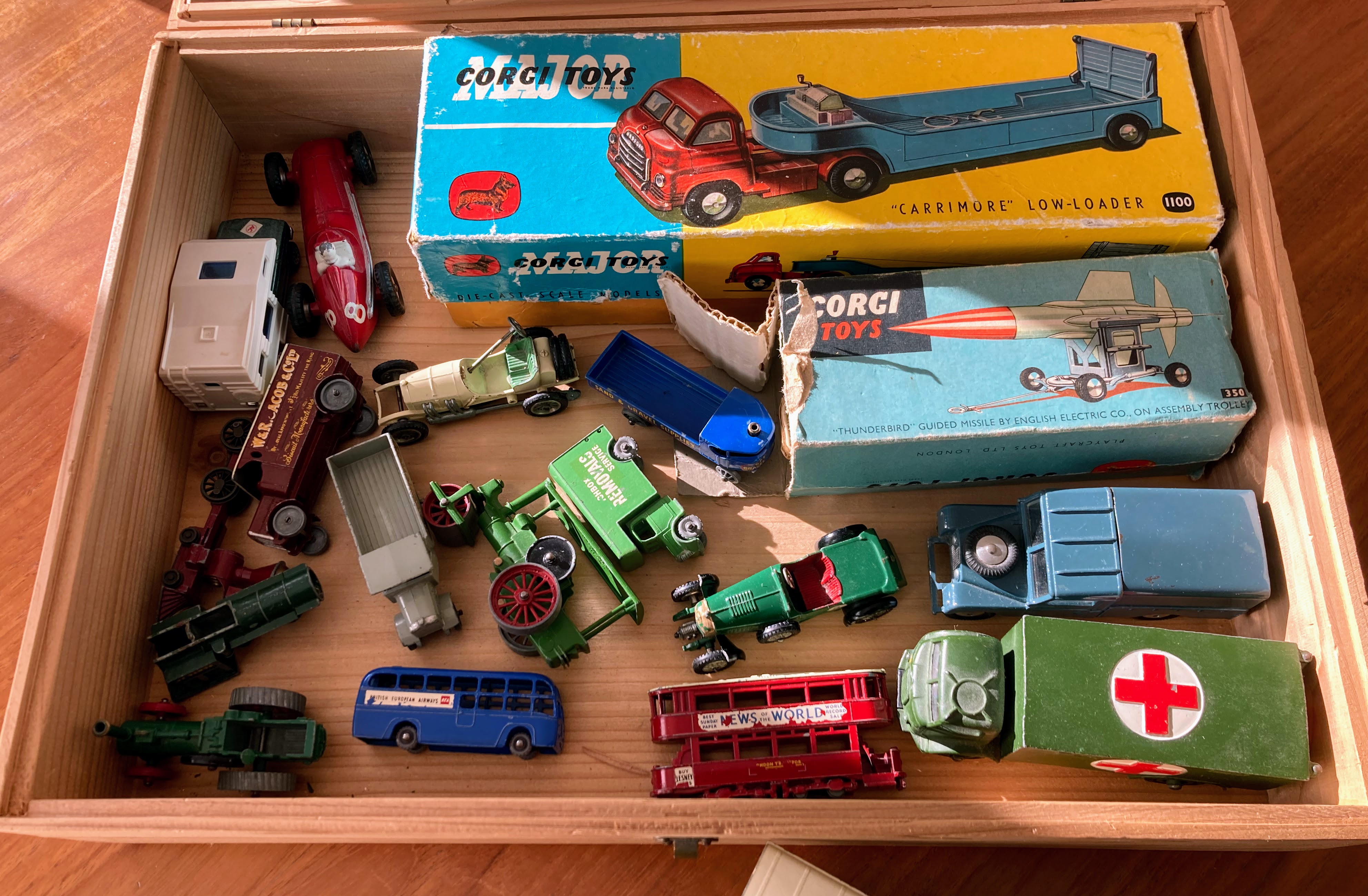
Through efforts to engage with and support the newly freed Russian people, I was able to connect with many of the Russian athletes and coaches who, after many years of economic deprivation, were more than thrilled to take advantage of the shopping opportunities in downtown Seattle (Nordstrom Rack!). At least I came away with one souvenir of this event, a wooden box, that now holds a small part of my (well-worn) collection of old Corgi and Dinky toys.
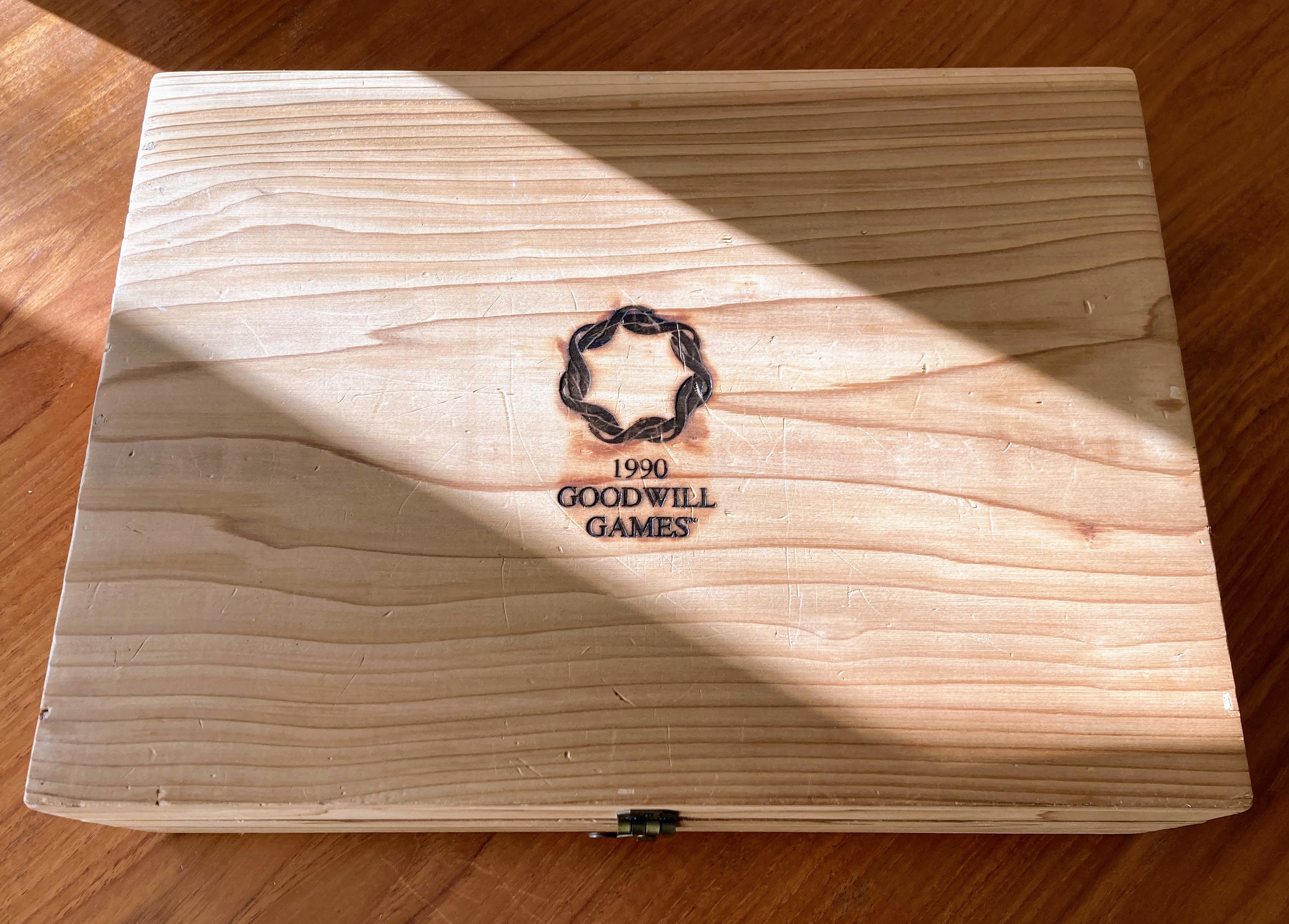
Everything’s put to use.

You must be logged in to post a comment.