
When I began writing these posts in July 2020, I set out the topics I planned to cover. These were largely focused on my writing and reading journey, much of it nostalgic or inwardly based.
Later, as world events intruded into our lives, I made two exceptions: one dealing with the former President of the United States and the other with Russia’s invasion of Ukraine (still including a literary angle, of course). I trust you’ll bear with me as I tread this path once more.
We’ve reached another anniversary of Russia’s invasion of Ukraine, as we begin the third year of the struggle. I marked this tragic event last year and I do so again today because it is worthy – more than worthy – of recognition.
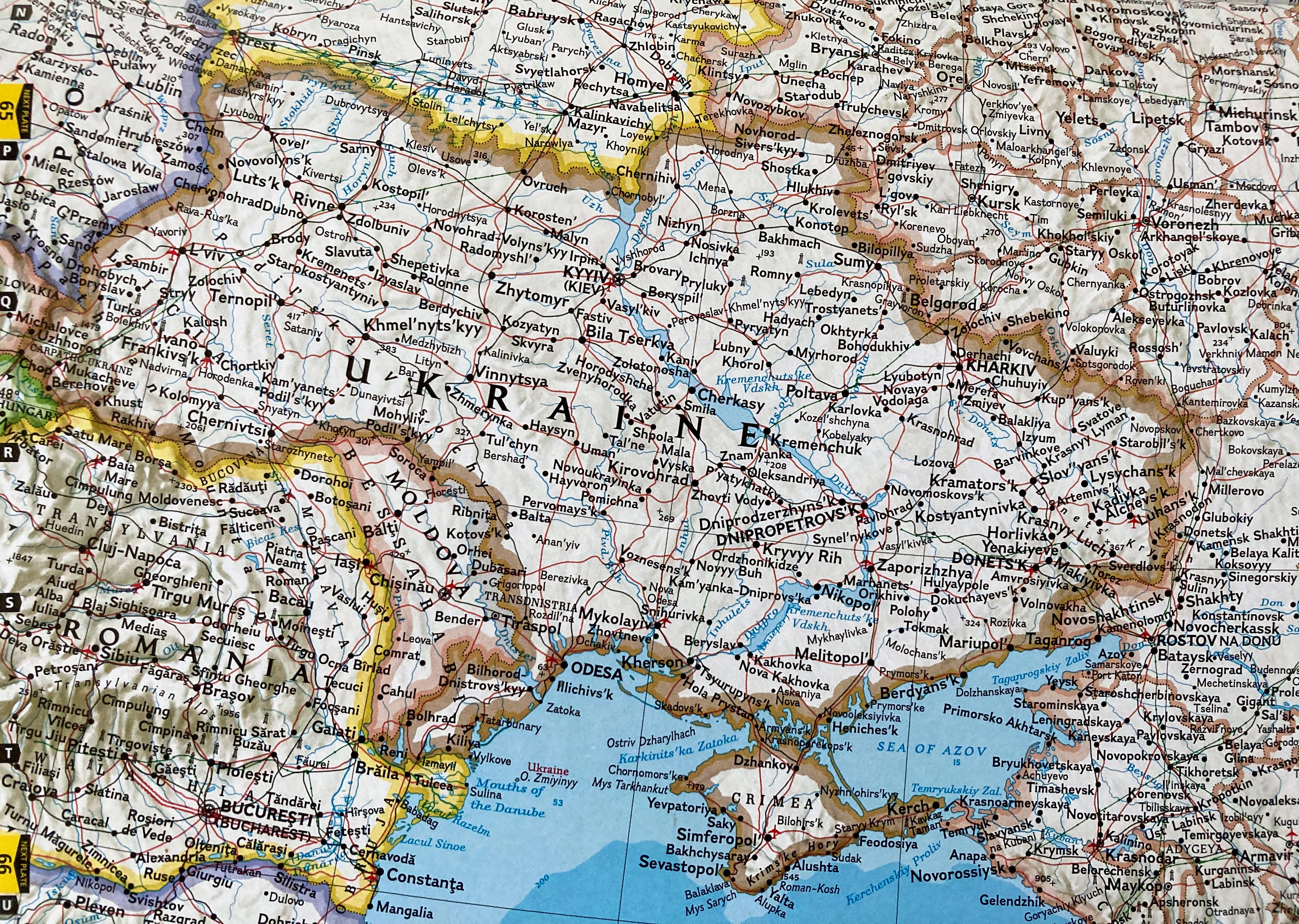
National Geographic Atlas of the World, 8th Edition, 2005, NG Books, Washington, D.C., p.68
War fatigue has set in, on the part of many western observers and actors. The conflict drags on, entering a new phase, a stalemate, even with some small recent Russian advances. Both militaries are depleted, with funds, troops and supplies running low.
Without the capacity to make sizeable territorial gains, Putin resorts to the bombing of infrastructure, through drones and missiles, hoping to wear down resolve by attacking the civilian population. It’s a tactic similar to the massive aerial bombing of cities during World War 2 (it failed back then too). In turn, Ukraine retaliates with its own missile and drone attacks, as well as resorting to guerilla warfare.
Both sides have experienced setbacks.
Russia failed to take Kyiv and topple Ukraine’s government in the early days of the war, and since then has been unable to measurably expand its territory. Ukraine’s disappointments, meanwhile, have come more recently. During a much anticipated counteroffensive that began last summer, it failed to break through Russian lines in the east and southeast. Leaders on both sides have come to recognize that dislodging a dug-in enemy is no easy feat.
On Jan. 21, Fareed Zakaria, on his weekly CNN television show, GPS, interviewed the Ukraine Foreign Minister on what the country needs and two soldiers on why they fight. The answers were as eloquent as any I’ve heard yet.
After providing significant financial and political support, some in the west have proven faint-hearted. The former US president, with many axes to grind when it comes to Ukraine, wants to pull away; many of his supporters in Congress parrot his lines, holding new funding hostage. Although NATO and the EC is standing firm, American funding is seen as crucial to Ukraine’s resistance.
Putin, it is reported, is open to a ceasefire. Not surprising since his forces have made little progress in meeting their original war aims. It seems he’ll have to widen the draft to keep the war effort going. Some in the west see a truce as an easy way out of their current obligations.
So, think back to World War 2.
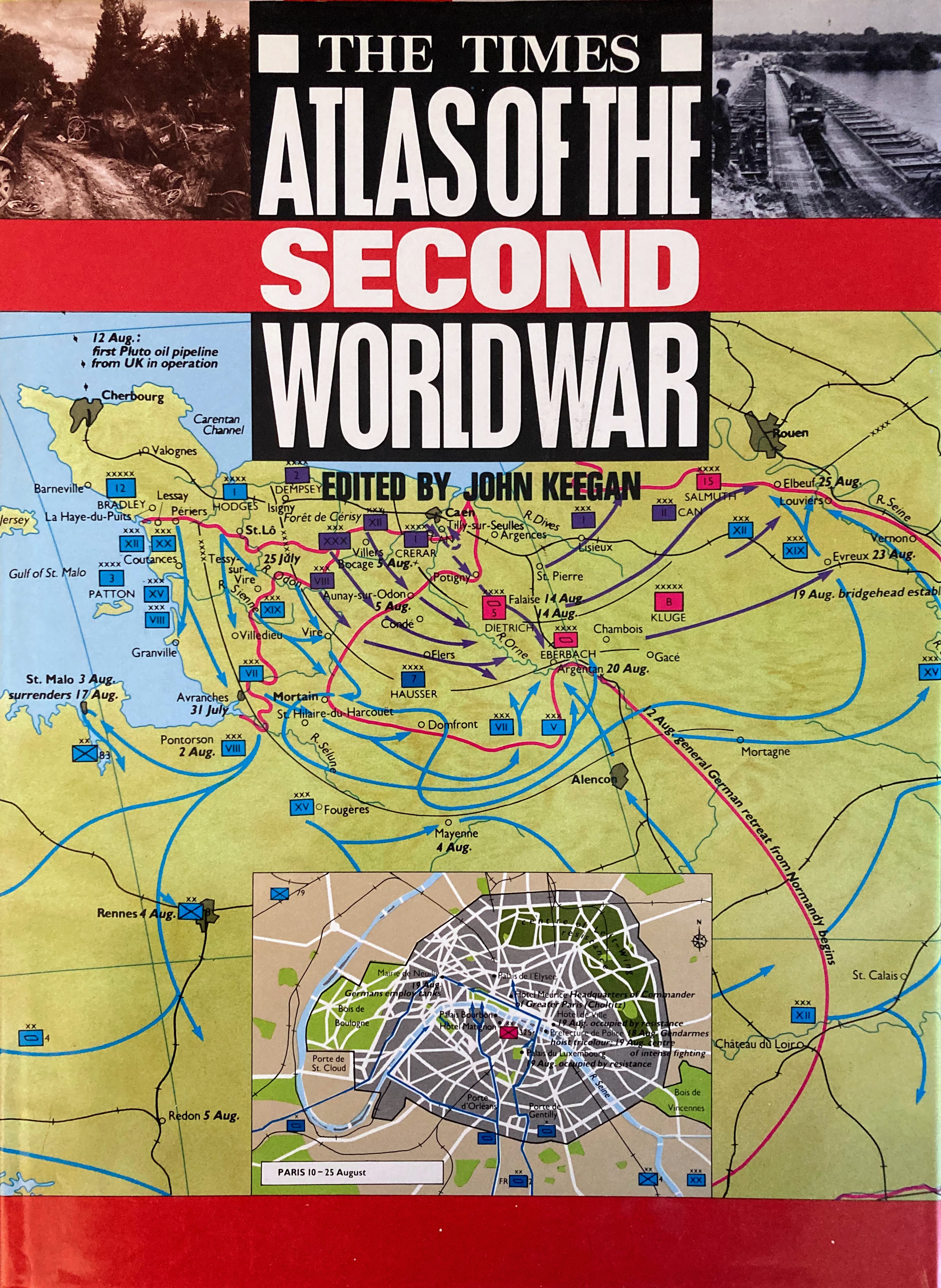
Times Books, London, 1989
Two years in from the start of that terrible conflict (begun with the invasion, and then the dismemberment of Poland in September, 1939) takes us to the summer of 1941. Nazi Germany and Imperial Japan were nearing their height of power; it would take another full year before the tide started to turn, and then it would take three more years of bitter slogging to defeat the two aggressors.
In his terrific account of that disastrous year, military historian Richard Collier called this period of the war “Armageddon”, hearkening back to that last battle between good and evil before the Day of Judgment.
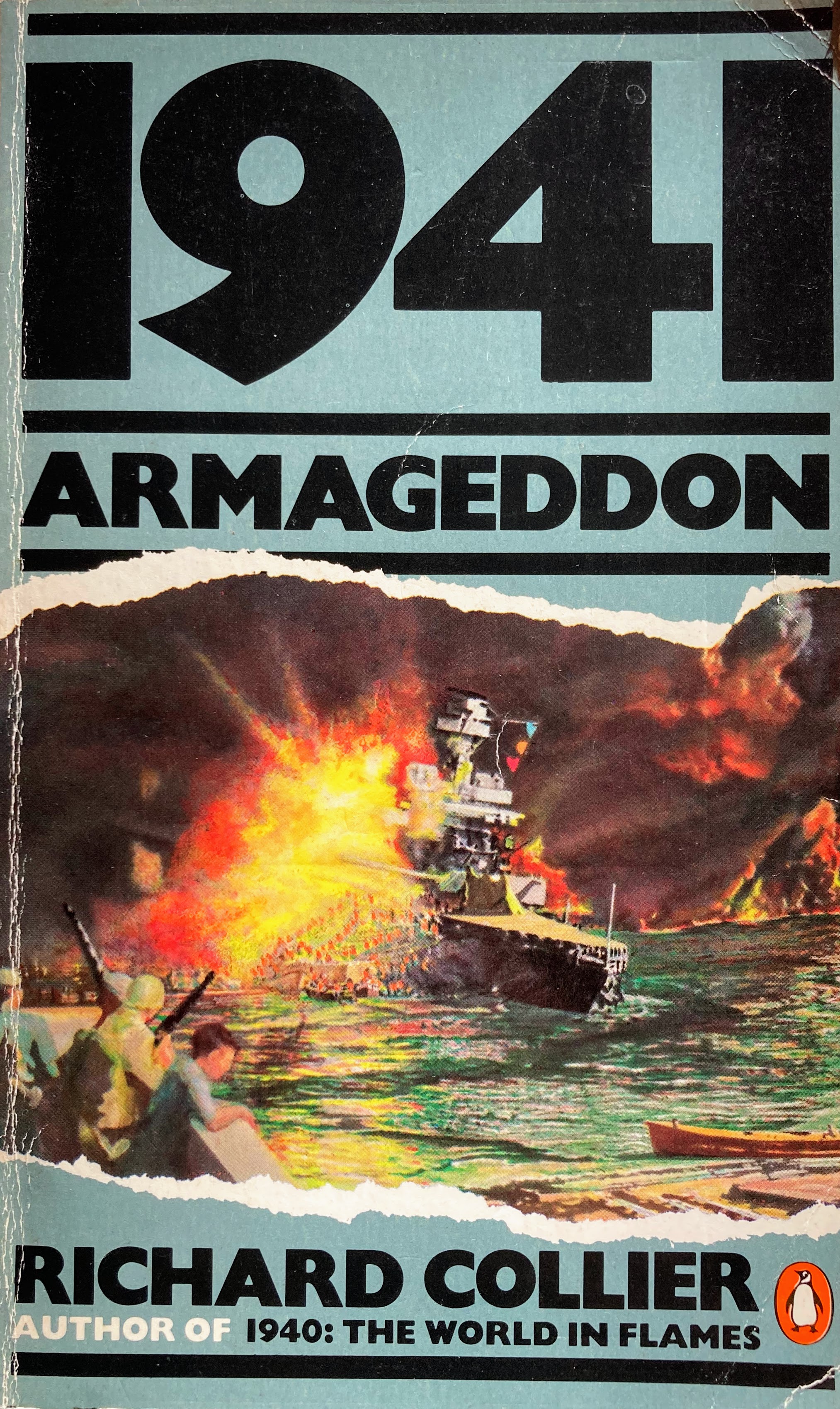
Penguin Books, 1982
It is an apt metaphor, given what was occurring. One forgets now how alone Great Britain was in that year standing up to the forces of Fascism.
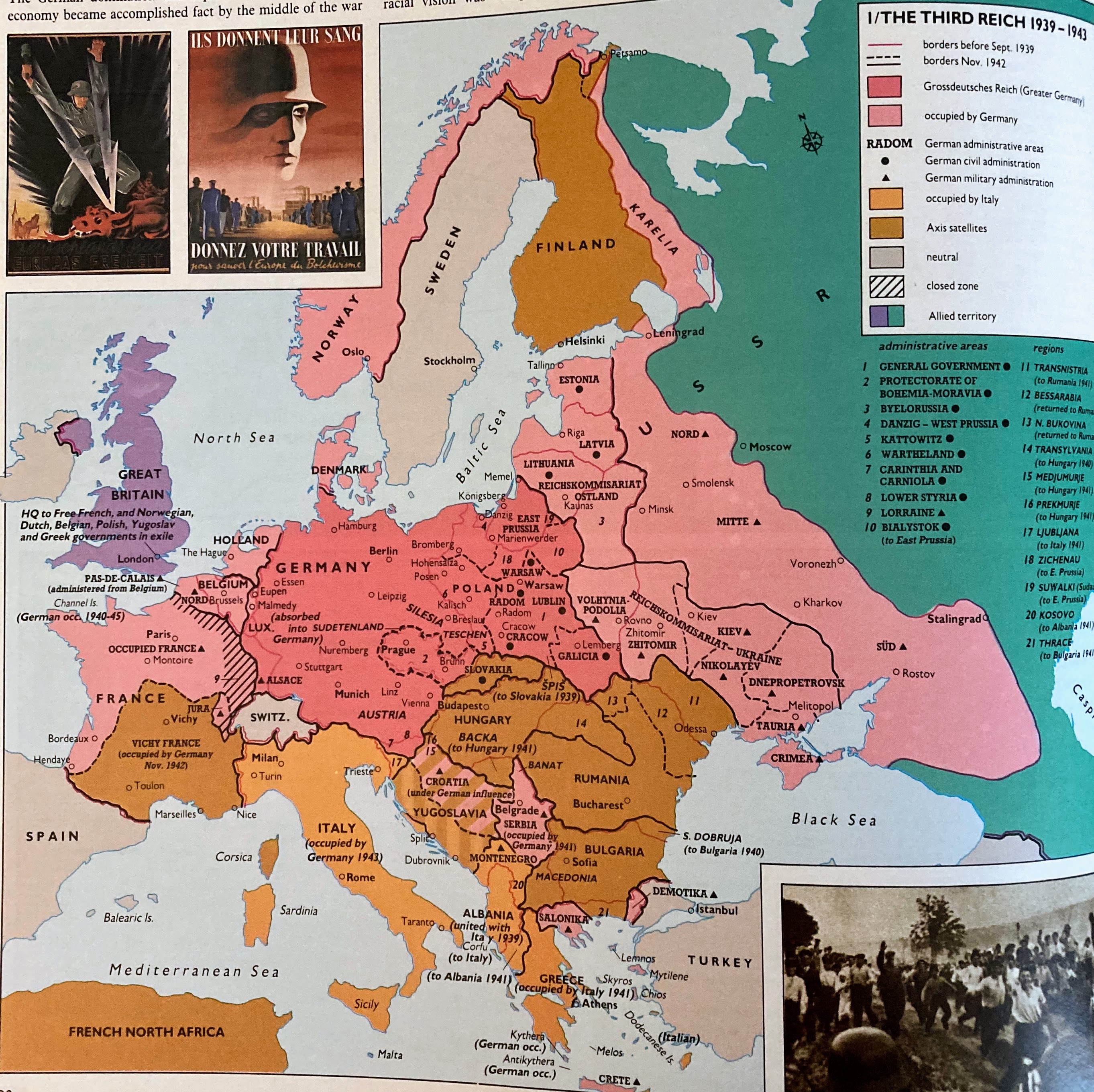
Nazi Germany at its peak; Britain stands alone, save for its Commonwealth allies, until the USA, having been attacked at Pearl Harbor, joins in.
My point is that Ukraine’s battle for independence and democracy has barely begun and the western powers must stay the course. Let me quote from the opening page of Collier’s book:
“In Glasgow, Scotland, a bitter wind was driving across the river Clyde. By 9 PM on Friday, 17 January, snow was drifting from the mountains by Ben Lomond, a white noiseless cloud blanketing tenements and shipyards, but it brought no added warmth. At nightfall thermometer had showed 24 degrees Fahrenheit and still falling…
In Room 21 on the first floor of the four-star North British Hotel, a select private dinner party was drawing to close. It was now that the host, the Secretary of State designate for Scotland, Tom Johnston, turned to his guest of honour, Prime Minister Winston Churchill. Would President Franklin Roosevelt’s emissary, who had just returned with the Premier from inspecting the Home Fleet at Scapa Flow, care to address the company? All eyes now focussed on Harry Hopkins, Roosevelt’s lanky unkempt personal advisor, as he rose to his feet.
It was an historic moment. His voice barely pitched above a whisper, Hopkins seemed to direct his words to Churchill alone. ‘I suppose you want to know,’ he began, ‘what I am going to say to President Roosevelt on my return. Well, I’m going to quote you one verse from that Book of Books in the truth of which Mr. Johnson’s mother and my own Scottish mother was brought up. ‘Whither thou goest, I will go; and where thou lodgest, I will lodge; thy people shall be my people, and thy God my God.’ Then, his voice cracking, Hopkins added three words that formed no part of the Book of Ruth: ‘Even to the end’.”
“Even to the end.” President Roosevelt heeded that message in 1941. These words should be the West’s message to Ukraine now.

Leave a comment