
I grew up with books and plenty of trips to the local library. Inevitably, the games that would attract me as a child usually had to do with words. And the el supremo word game had to be Scrabble. Especially in summertime.
On those long, tranquil summer evenings at the cottage on Lake Winnipeg, our hosts, Mr. and Mrs. T, my parents and I would often play the game. For me, it became a nightly obsession, one not shared by my brother and sister or, for that matter, any of the T’s six kids.
It was the mid-sixties, well before computers and cell phones became the go-to source of amusement. And, back then, deep in cottage country, no television either.
On those rare inclement days, when we were shut indoors, books, brought from home or thanks to the small local library, always provided a refuge. And well-used board games of course, Monopoly, Clue and Life being the most popular.
But, for me, Scrabble was king. A time when I developed not only a love for the game but also a fascination with the English language and the meanings, origins, evolution and usage of words.
It was not just the play, the luck of the draw (blanks!), the tactics, the odd two-letter combination (Mrs. T’s speciality), the thrill of a seven-letter word or even victory (a teenager taking on the more adept adults) but also the search for the perfect word in the collection of dictionaries we used back then. And since no two games could ever be the same, the variety was endless.
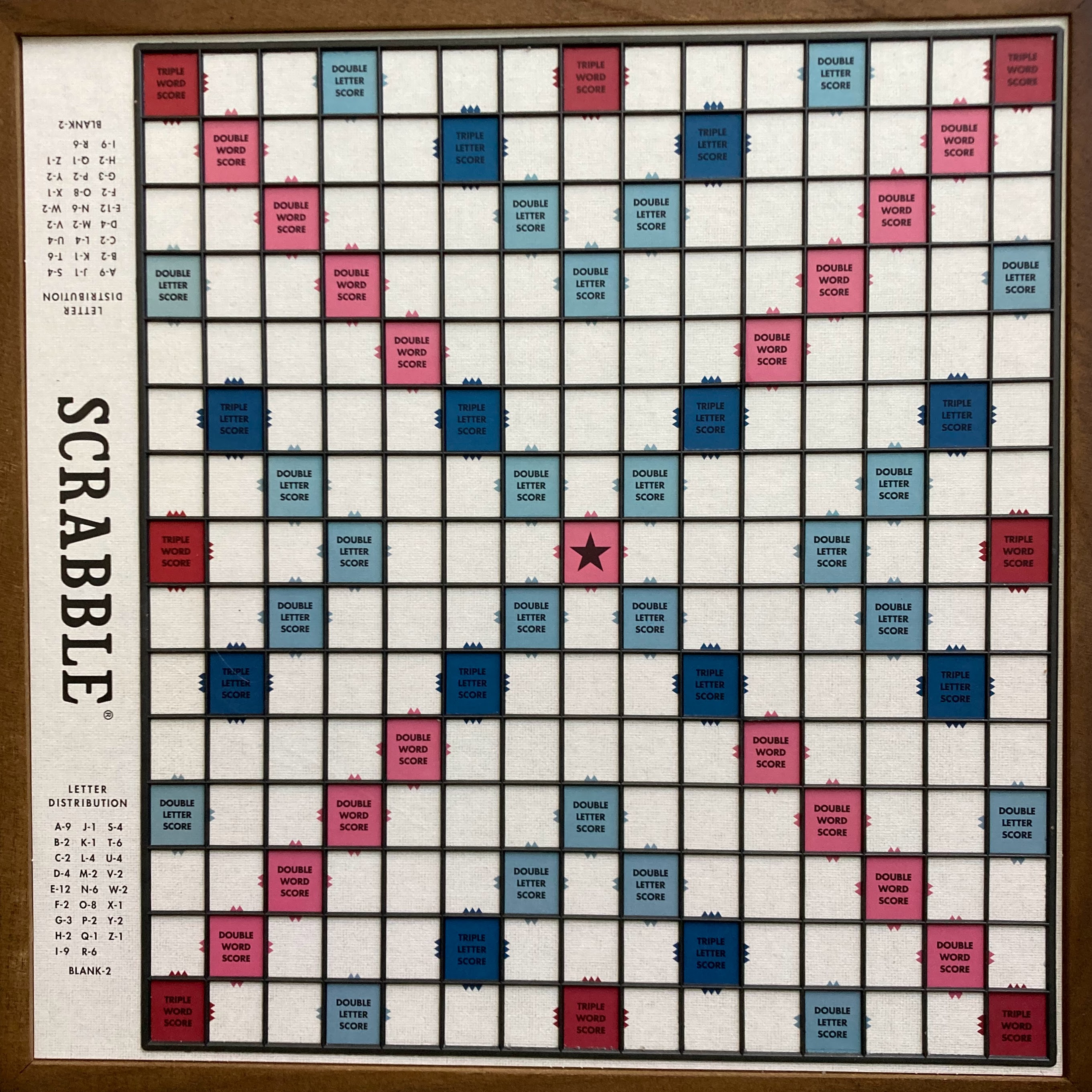
My current “deluxe vintage” edition of Scrabble; the one at the cottage was much more basic.
Looking back on it now, I’m struck by the adults’ collective forbearance. They had no reluctance to include a young teenager who shared their passion for the game.
It was vacation time: school was out, no work demands; nothing to do but laze around and adjust to the day.
Mornings meant sleeping in, everyone to their own schedule, eating Frosted Flakes or Raisin Bran, in those little boxes one was never allowed to consume during the school year.
Later, when everyone was up and about, if the weather was fine, a quick walk down the road took us to the beach. At day’s end, dinner meant toasting burgers or hot dogs (followed by marshmallows) around the front lawn fire pit. If overcast or rainy, we read or worked on jigsaw puzzles, played games or went off exploring.
Back then, Matlock was little more than a modest haven. Its few streets were gravel, oiled down to reduce the summertime dust and lined by sturdy boardwalks and ditches full of frogs (probably mosquito larvae as well).
Beach access, open to the locals, lay at one end of our road. The shoreline was rocky and the water was cold but we cared less. In the other direction, also within walking distance, was the proverbial corner store, source of all the basics for easy summertime life.
For us kids, that meant comic books (10 cents in those days), gumballs, popsicles and fudgesicles. By the way, for those interested, I couldn’t help looking up the origins of the popsicle, which was invented all the way back in 1905.
Back then, no shopping mall existed nearby; serious places of commerce required a good half-hour drive.
As Mr and Mrs. T were both high-school teachers, they were able to enjoy the long two-month break from work. While our family only went up for a couple of weeks or so, they stayed the entire summer, with Mr. T often commuting back and forth to Winnipeg.
With four adults and nine kids in all, the place was jam-packed. Doubling-up in bedrooms was essential. Fortunately, the cottage was enormous (at least so it seemed), having evolved in a hodge-podge fashion from its original much smaller footprint, and full of pleasing sitting arrangements.
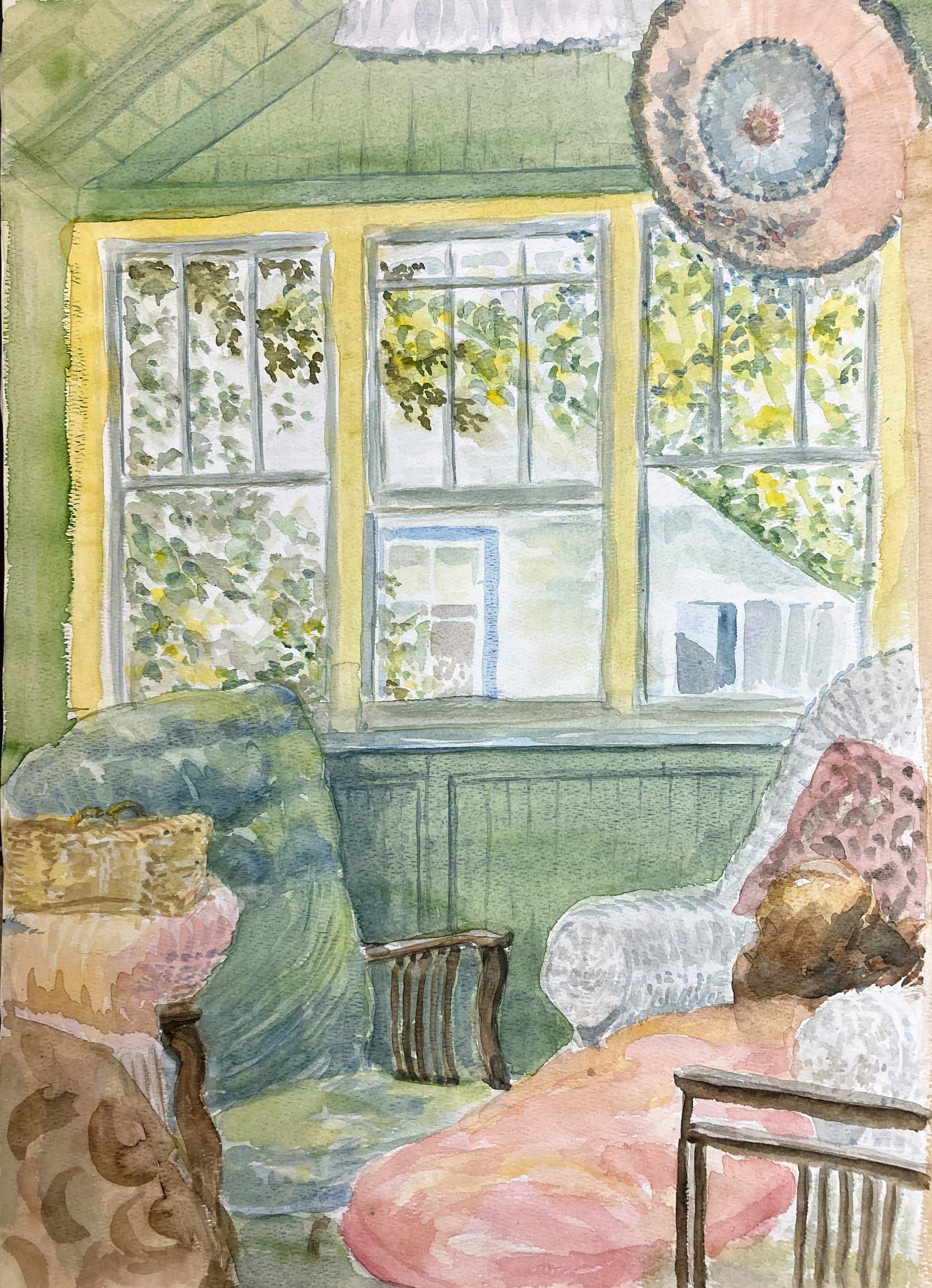
Cottage porch
My mother, an accomplished amateur artist, painted several water colors around the cottage: the picture was one of the porches subsumed into the house’s footprint. My mother also decorated the large dining-room table, illustrating it with pictures of every family member.
Mr. T owned a Jaguar S-Type, if memory serves me well. We kids – especially ones into British Formula One racing cars – were dutifully impressed. He was also a school principal who was happy to take us for a quick spin up the highway to Winnipeg Beach, with its amusement park and wooden roller coaster (back then one of the largest in the country) offering a tremendous lure for us kids.
On his return from his trips into Winnipeg, Mr. T would invariably greet me with “well, Chris, what do have to say for yourself?” Even though I always knew the question was coming, I rarely had a quick retort and quickly retreated back into whatever I was doing (usually reading).
However, although I might not have been skilled at repartee, I held my own at Scrabble. Sometimes it was just a matter of lucking into the right combination of letters at the right time, but it was also a result of figuring out how to play the game, determination and skill at finding words that provided the most points. I didn’t win often, but I did win a few times.
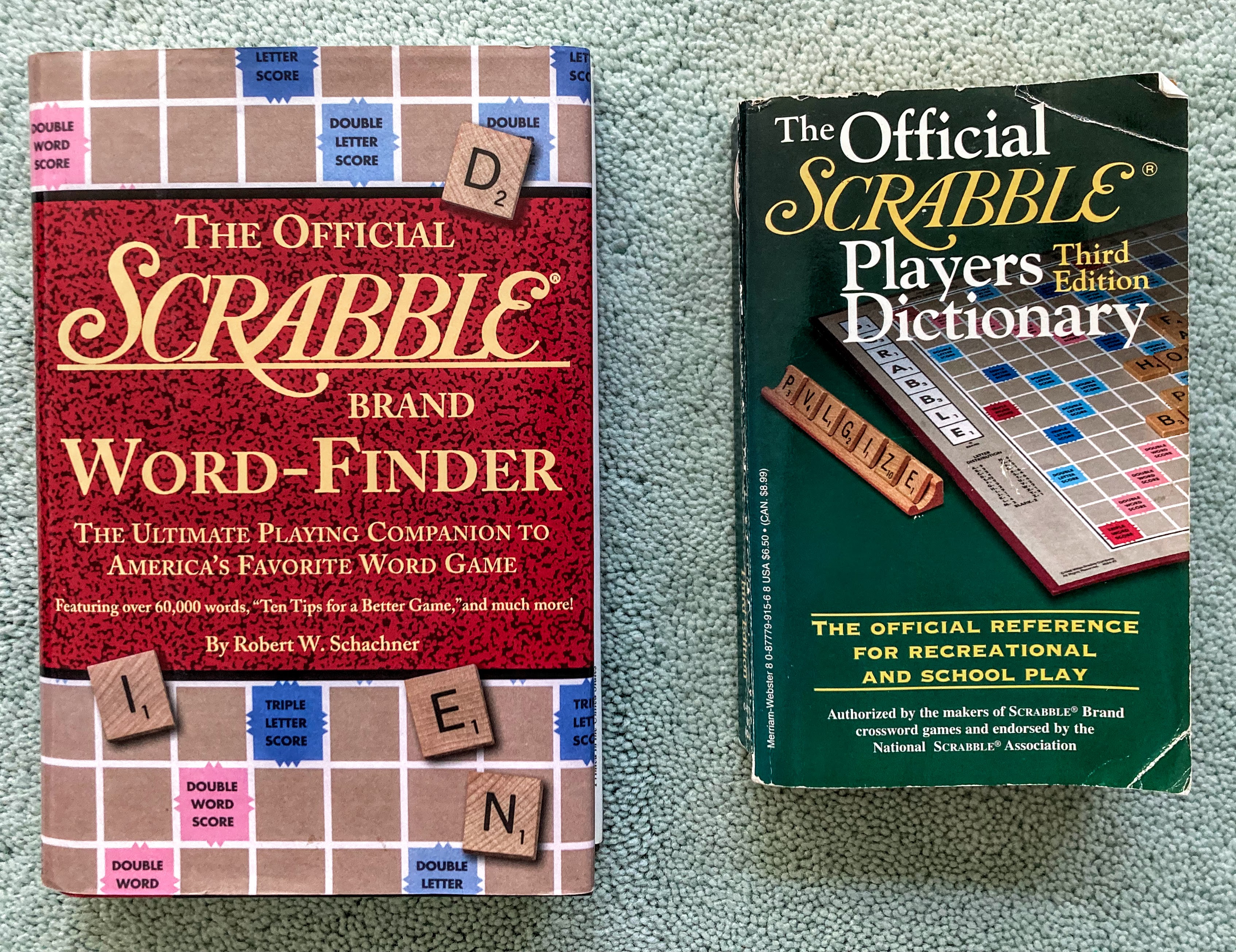
Besides a Shorter Oxford English Dictionary, here’s what every Scrabble player needs.
According to Wikipedia, the game was invented in 1938 by an American architect named Alfred Butts, who created it as a variation on an earlier one he’d invented, called Lexiko. The two games had the same set of letter tiles, whose distributions and point values Butts worked out by performing a frequency analysis of letters from various sources, including The New York Times.
The new game, which he called Criss-Crosswords, added the 15×15 gameboard and the crossword-style gameplay. Although he did manufacture a few sets, Butts was unsuccessful in selling the game to any of the major game manufacturers of the day.
Ten years later, James Brunot, one of the owners of the original Criss-Crosswords game, bought the rights to manufacture the game in exchange for granting Butts a royalty on every unit sold. He left most of the game (including the distribution of letters) unchanged, but rearranged the “premium” squares of the board and simplified the rules. He also renamed the game Scrabble.
In 1949, Brunot and his family made 2,400 sets but did not make a profit on the sales. According to legend, Scrabble‘s big break came in 1952 when Jack Straus, president of Macy’s, played the game on vacation. Upon his return to work, he was surprised to find his store did not carry the game. He thereupon placed a large order; within a year, “everyone had to have one”.
Over the years, the rights to the game changed hands several times, finally ending up with Hasbro (for the North American market) and Mattel (for the rest of the world).
Today, according to Mattel, Scrabble is produced in 28 different languages and more than 165 million games have been sold in 120 countries around the world since 1948. That’s an average of 1.5 million games sold globally each year, quite a record.
&&&
Wishing everyone a wonderful summer vacation, whether spent at home, the summer cottage or some distant exotic locale, playing board games or not.
See you again in late August.

You must be logged in to post a comment.