Last year (May 11, 2023), I came across a post by Molly Templeton on the TOR.com website entitled “Building our Personal Libraries, and the Books We Leave Behind“. In it, she speaks of the books she’s owned the longest:
They were, not surprisingly, children’s books from her youth. “The book I’ve owned the longest has zero cachet, zero cool, zero name recognition. It is not an old copy of my beloved The Castle of Llyr, or a well-worn copy of Mercer Meyer’s Herbert the Timid Dragon. It is an early reader called Tuggy, unexpectedly stamped “Bailey Hill High School” on the inside cover, in between scrawls of crayon.“
Why does she hold onto these books? “There’s no real reason for me to have these books. They don’t say much about me, other than that—like so many kids—I like stories about animals and the world around me. They’re bedraggled copies, not the kind of thing a person collects. I don’t have kids to pass them on to. You could say they’re sentimental, unnecessary, even clutter. But they mean something to me. They’re part of my story. And isn’t that, when you boil it down, why we keep anything—most of all books?“
As an owner of many books (I hesitate to call it a library) I can relate to her post. Any of my long-time readers will know that I often talk about those I’ve owned since childhood (and can’t bear to throw out or give away).
Her post came about as a response to someone who wrote an article denigrating personal libraries. She then went on to discuss the evolution of her collection, what came, what stayed, what was discarded, those that were gifts, those that were signed, those that left lasting impressions, those that were barely recalled, even one that she hated.
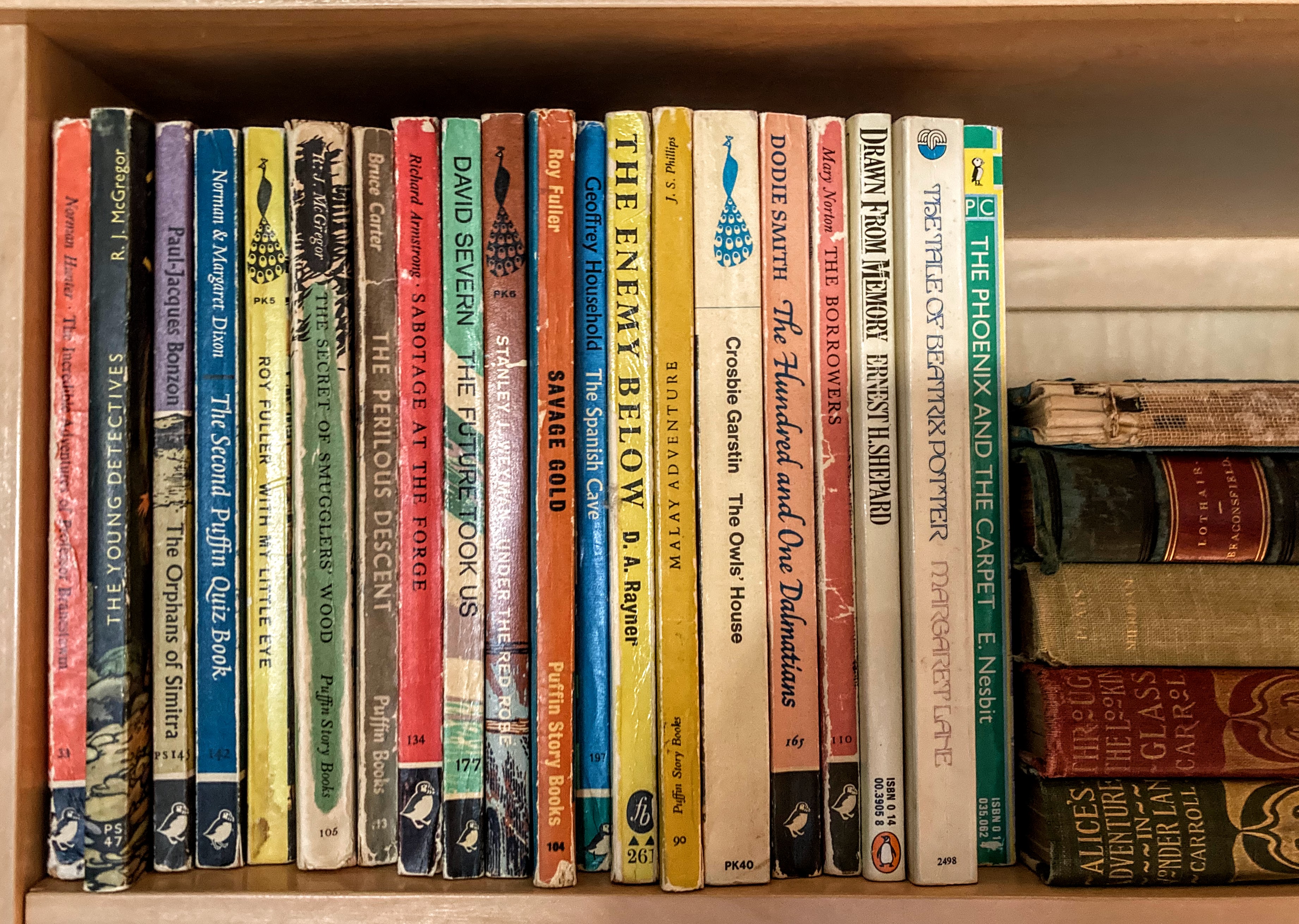
My shelf of childhood pocketbooks, all from the late 50’s and early 60’s
“The library is a story about how much I love my books: enough that I’ve been willing to move hundreds of them across the country multiple times.” I,too, understand this truth. I’ve moved umpteen times, back and forth across the country or within a city. Over time the collection has grown to include several bookshelves, at one point significantly added to when my mother downsized and insisted I take much of what she owned. Only once, in a move where the new owners purchased much of the furniture we owned, did I leave behind a portion of the collection. Let me say, it was not easy saying goodbye, even to that 10%.
And as she says, it’s a story of much, much more – how they’re categorized, what and how one reads, what we did with that knowledge, ultimately who we are and what we value. They reveal much about our likes and interests, our longings, our connection points.
My grandaughter once asked me what was my favorite book. I’ve written before about the exquisite Cider With Rosie by Laurie Lee, but the following may be my most prized possession amongst the collection of books. Worn out and ragged, barely held together by masking tape, it was a school prize; but for what year I do not recall. The book’s publication date is 1954 (New York: Hanover House); the author is James Fisher; the art editor is F.H.K Henrion and the artists were Kempster and Evans. All are worthy of mention here.
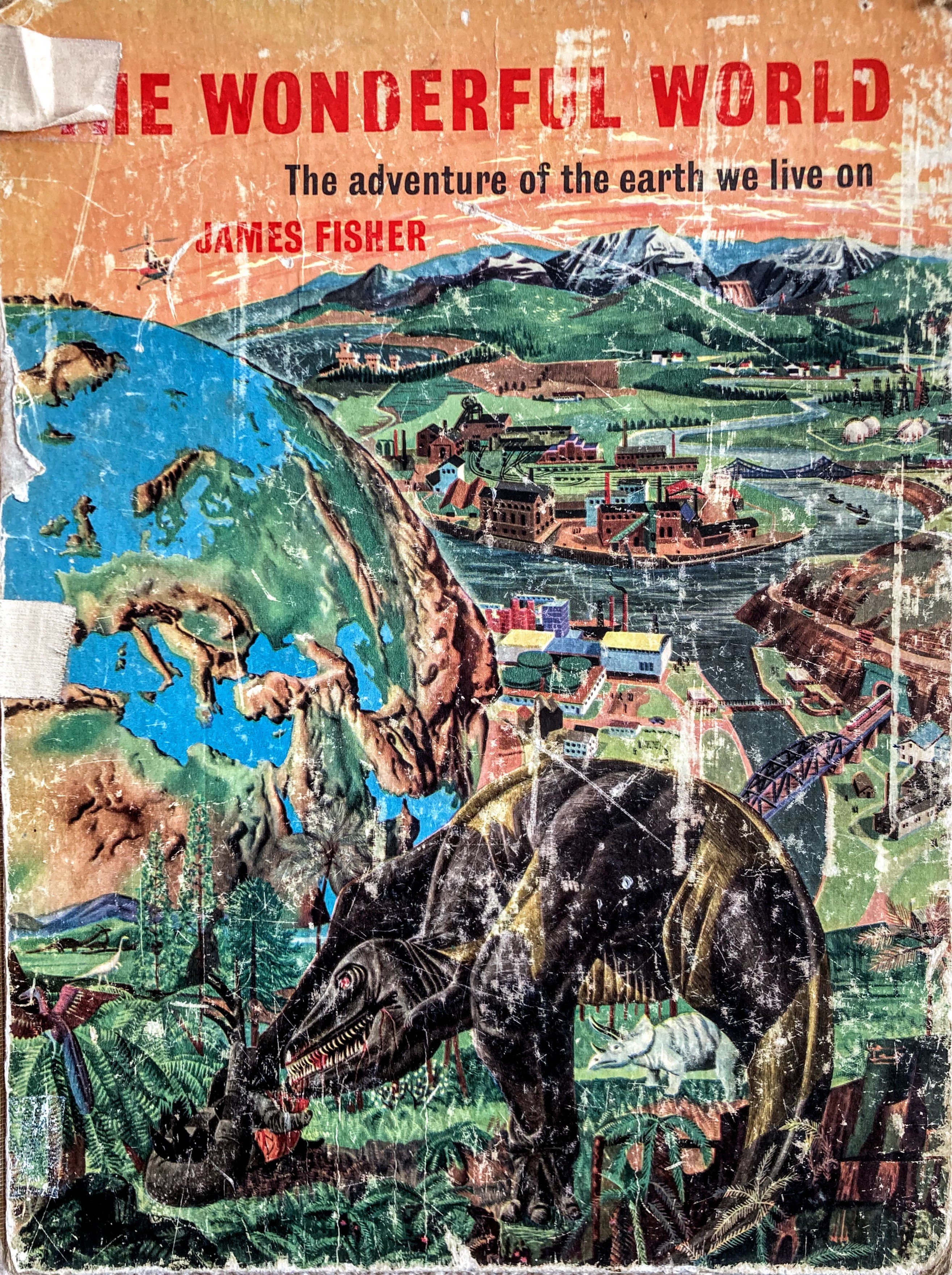
The Wonderful World deal withs how the world began, the face of the world and the world of mankind. In fact, it was the the tremendous illustrations that grabbed and held my attention time after time. In the introduction to the book the following is written: “The paintings sum up and interpret the story with emotional impact and scientific accuracy.” That is exactly how I would have described them; they are beautiful, evocative, full of color and optimism.
Remember this was not only a world before the internet but also color television! As you can see, I turned to this book often, thrilled by the stories they revealed; even after so many years and with so many advances in photography and illustration, they resonate with me still. I suspect the book had a great impact upon me, fostering my love of art, design, illustration and the natural world. Here are but a few examples:
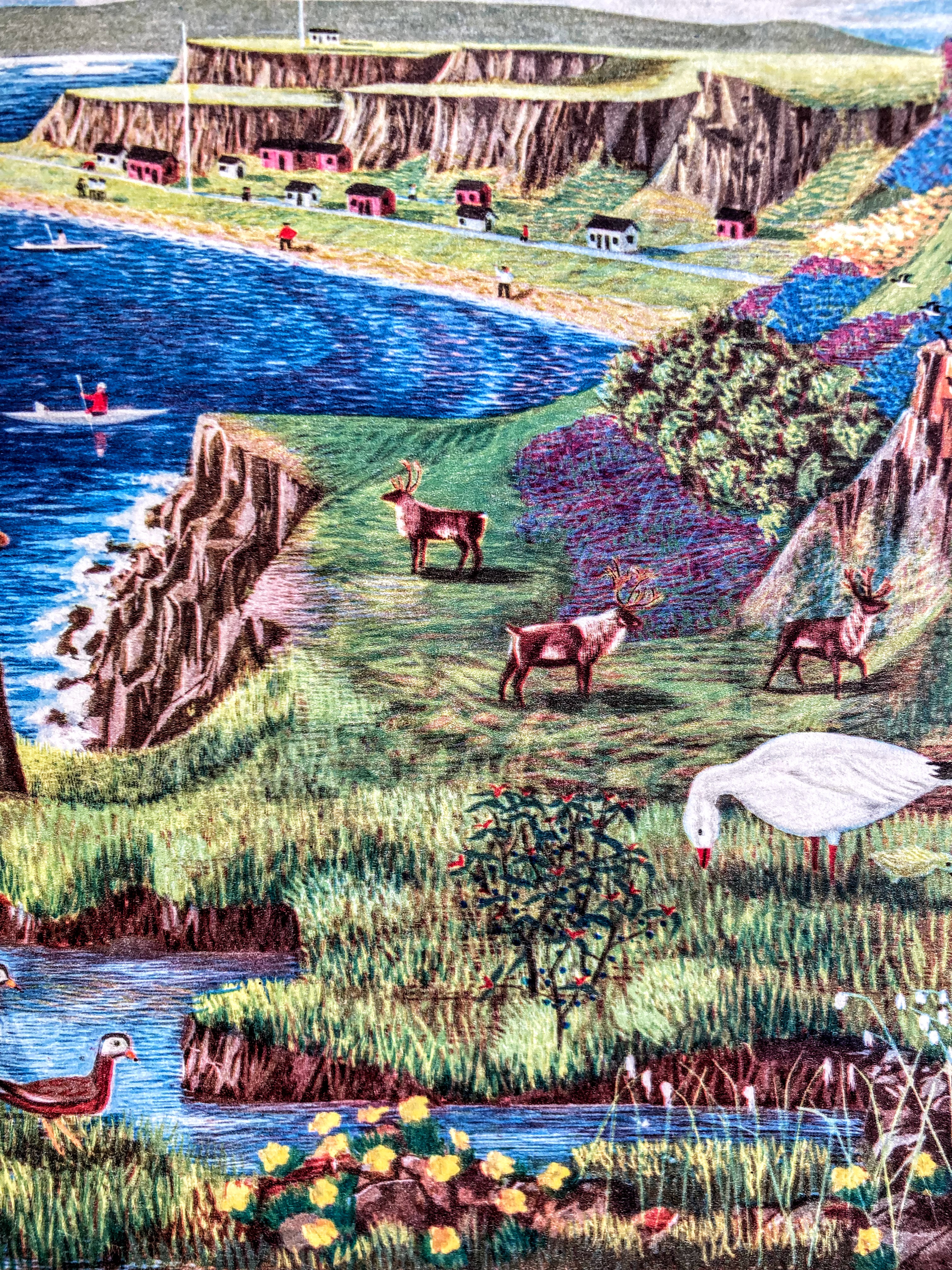
Life In Cold Countries
You can still buy a copy of this book on Amazon ($23.18 in hardcover).
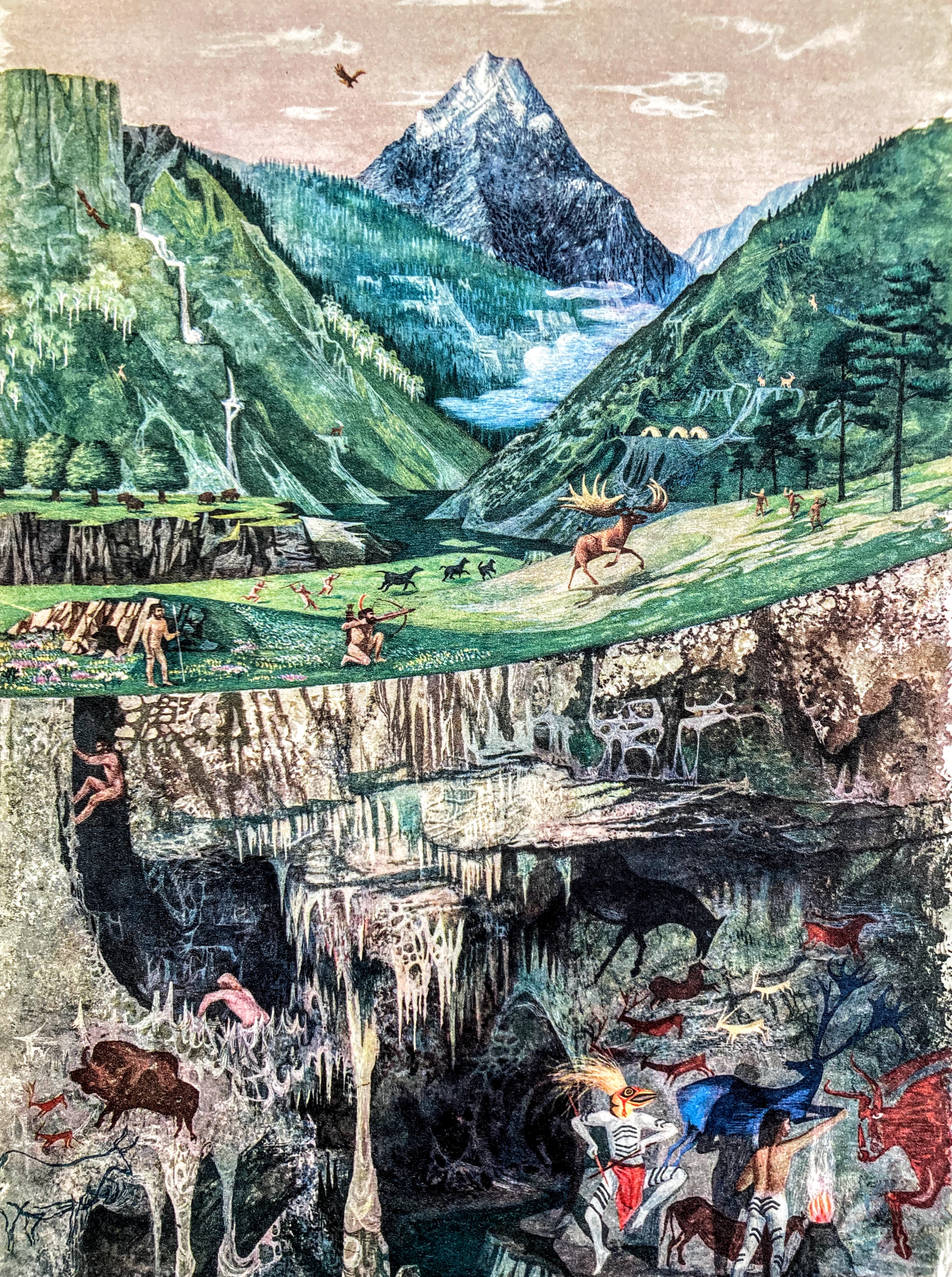
Fourth Age of Life
Fisher (1912 – 1970) was a British author, editor, broadcaster, naturalist and ornithologist, with over 40 publications to his name, mainly about birds, including two follow-up books, The Wonderful World of the Sea (1958) and The Wonderful World of the Air (1959). Sadly he died prematurely, aged 58, in a car crash.
According to Wikipedia, “it is likely that his writing and broadcasting played a significant role in the growth of interest in birdwatching in the United Kingdom in the post-Second World War period.” A public appeal allowed the seabird island of Copinsay, Orkney, to be purchased as a permanent nature reserve dedicated to his name.
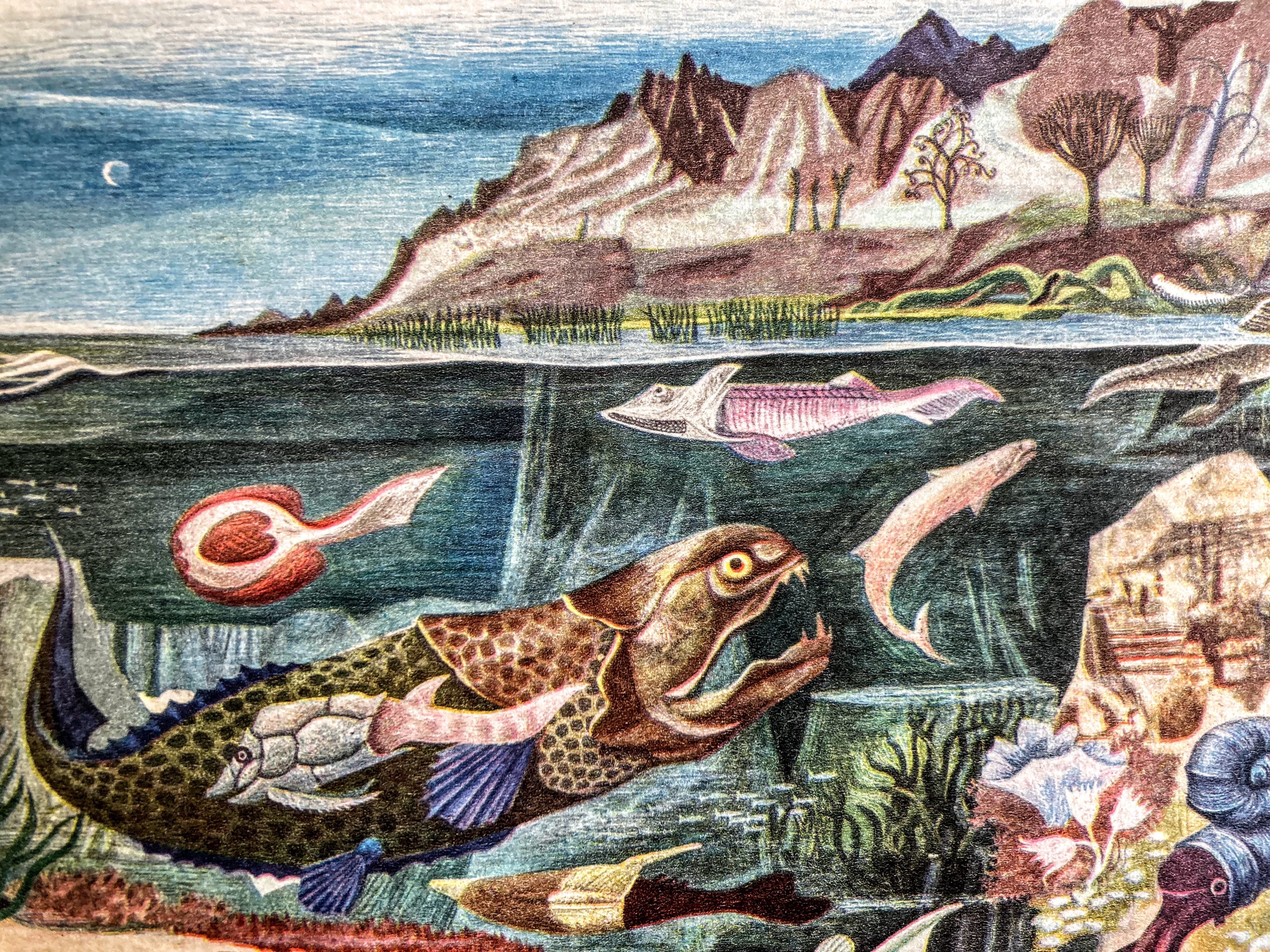
First Age of Life
Frederick Henrion (1914-1990) was a German graphic designer, who studied with the great French poster artist Paul Colin. He had the good fortune to move to England in 1936. During the war he was interned on the Isle of Man but ended up working for the Ministry of Information designing posters for the war effort. After the war he became a pioneer in the world of corporate logo design (KLM, Tate & Lyle, the Post Office) and exhibition design (the 1951 Festival of Britain).
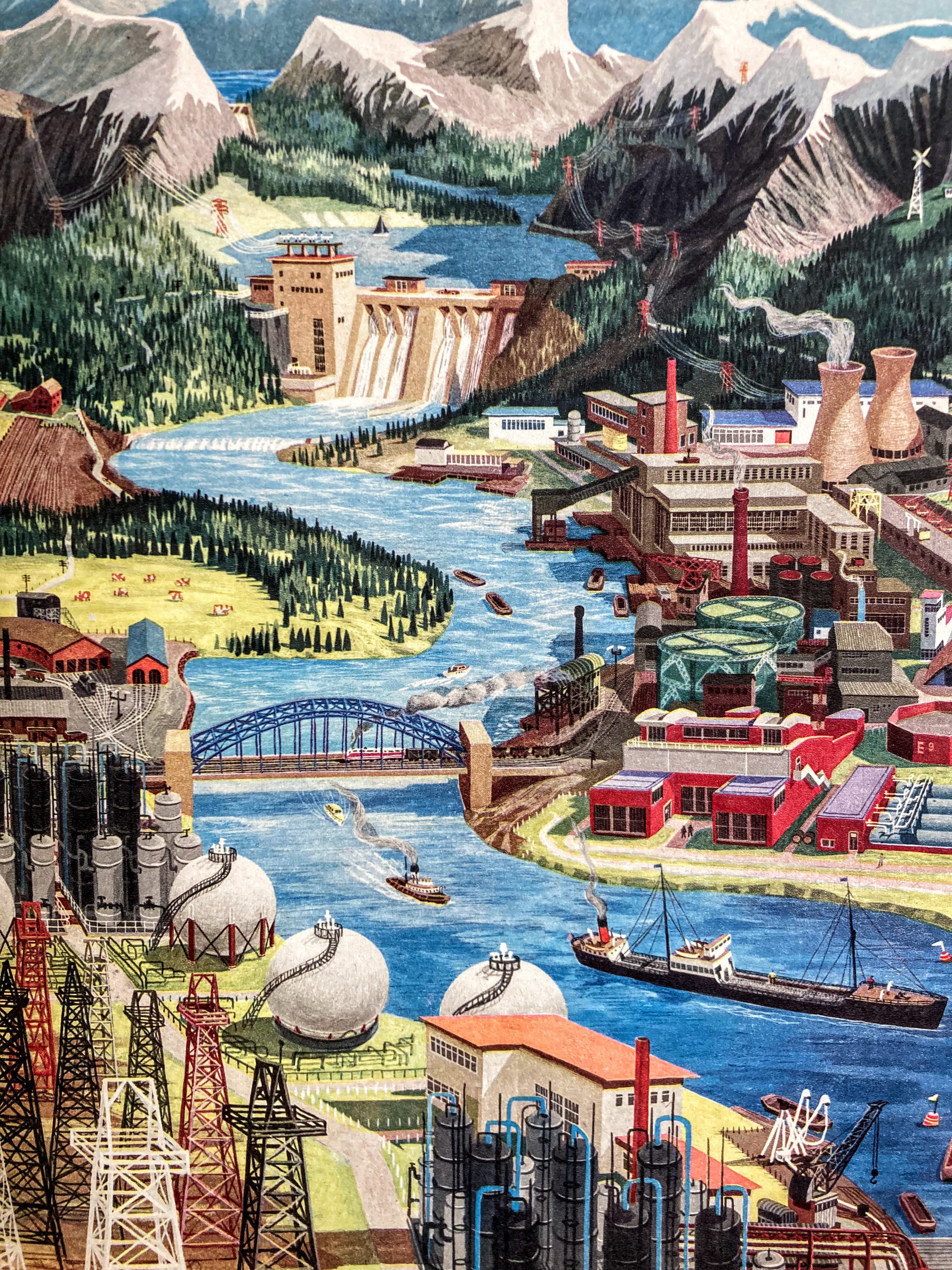
Man and Power
William Kempster (1914–1977) was a British artist, considered an “adventurous printmaker”, best known for his 1966 FIFA World Cup stamp, the mural British Air Transport, which was commissioned by the British Airports Authority in 1969 for Heathrow Airport and his exhibition work for the Central Office of Information and Festival of Britain in 1951, illustrating aspects of British life and work.
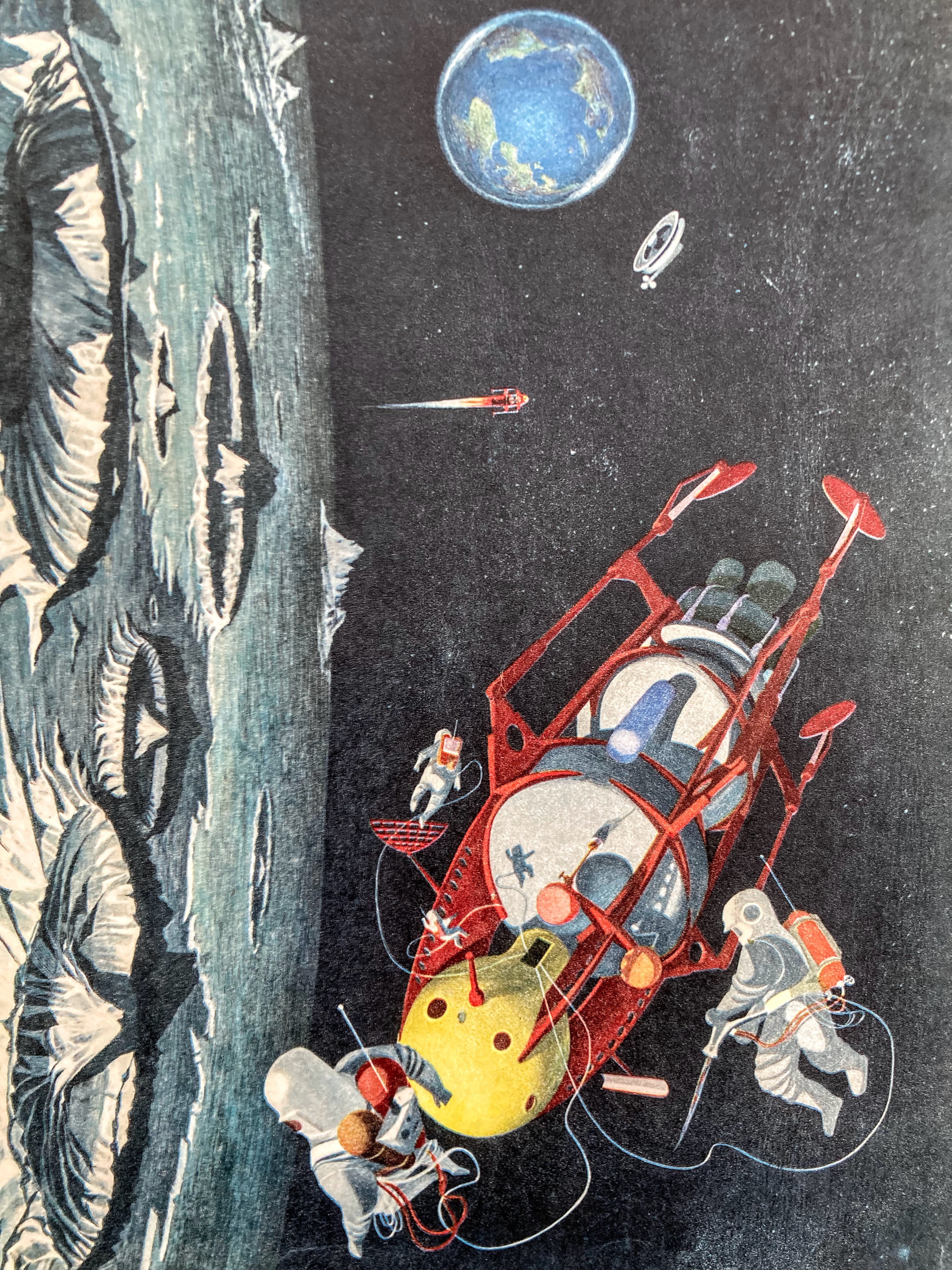
The Last Secrets
As for his co-illustrator, Barry Evans (born 1923), he’s best known as a mural painter and illustrator. Having studied at the Kingston School of Art and Royal College of Art, he went on to work for several periodicals (Lilliput, Picture Post, The Economist), and produce record sleeves and posters for the British Tourist Authority. His extensive work as a muralist included work for the Festival of Britain (Farming Pavilion and Dome of Discovery) and work as far afield as Jamaica, Tel Aviv, Brussels and Detroit.
And to close, I’ll leave the last word to Ms. Templeton:
“You don’t have to keep books to be a reader. And you certainly don’t need a reason to keep them. But if you grew up on stories, if your memories are infused with what you read where and when and who you talked about it with, books aren’t that different from photographs. They remind you how, and when, and why, and what you did with that knowledge, and how it fits into your life even now.
“You could substitute records, or movies, for books; more likely, you have some of each. If you are a collector at heart, you collect things that matter. And for some of us, that’s stories, most of all.”

You must be logged in to post a comment.