
My use of diaries (see my last post, of Sept. 28, 2024) and the need for more space in which to keep up my daily record grew as I reached the age of maturity.
When the meager Letts journals no longer sufficed, I turned to whatever I had access to at year’s end: plain or lined notebooks, some aimed at travels, some at daily events, purchased from whatever shop came readily to hand.
This evolution provided more freedom, and led to poem writing, collecting items of interest from the daily papers and jotting down notes and ideas for future use.
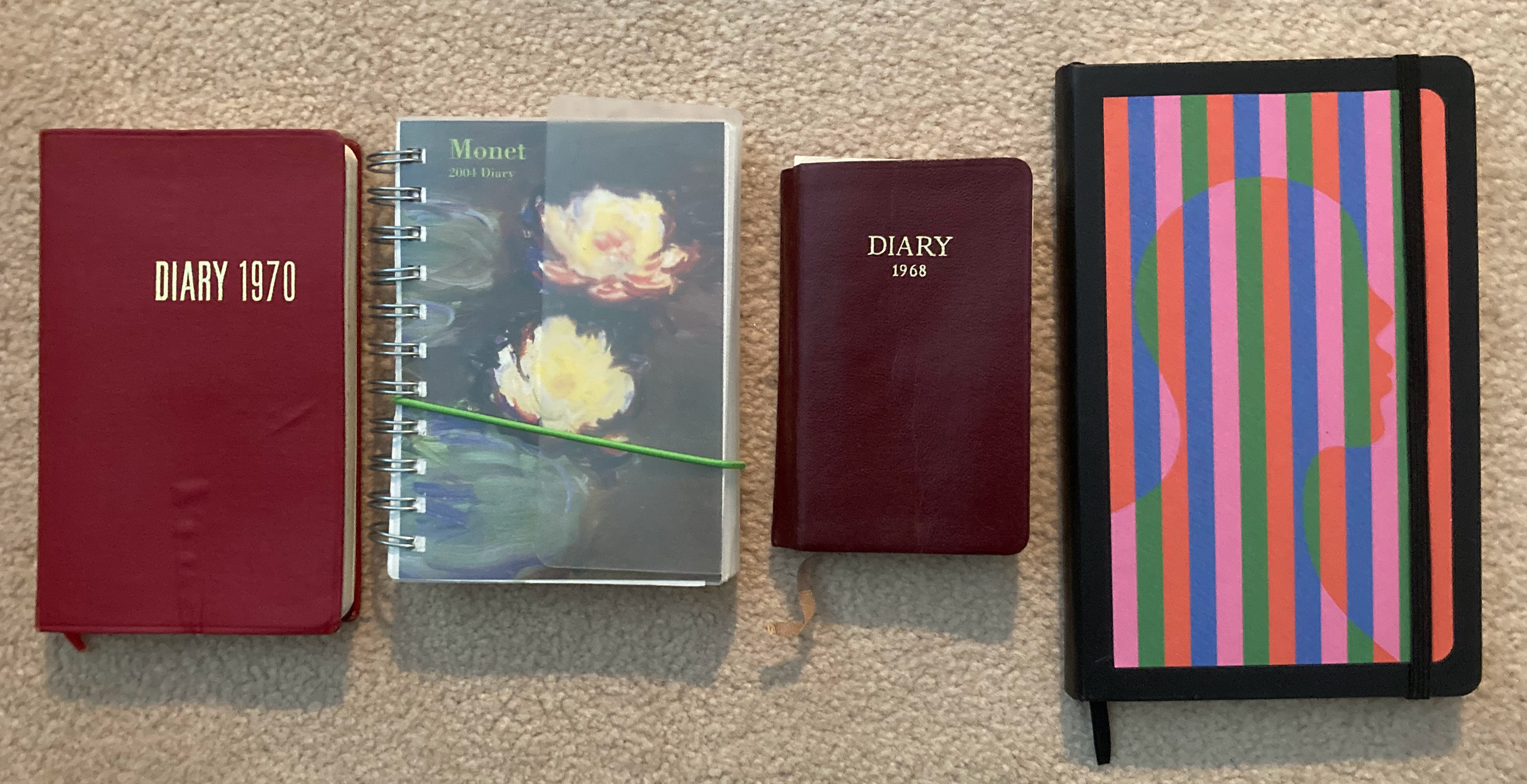
Then, as the use of the computer became ubiquitous, I ventured into online records.
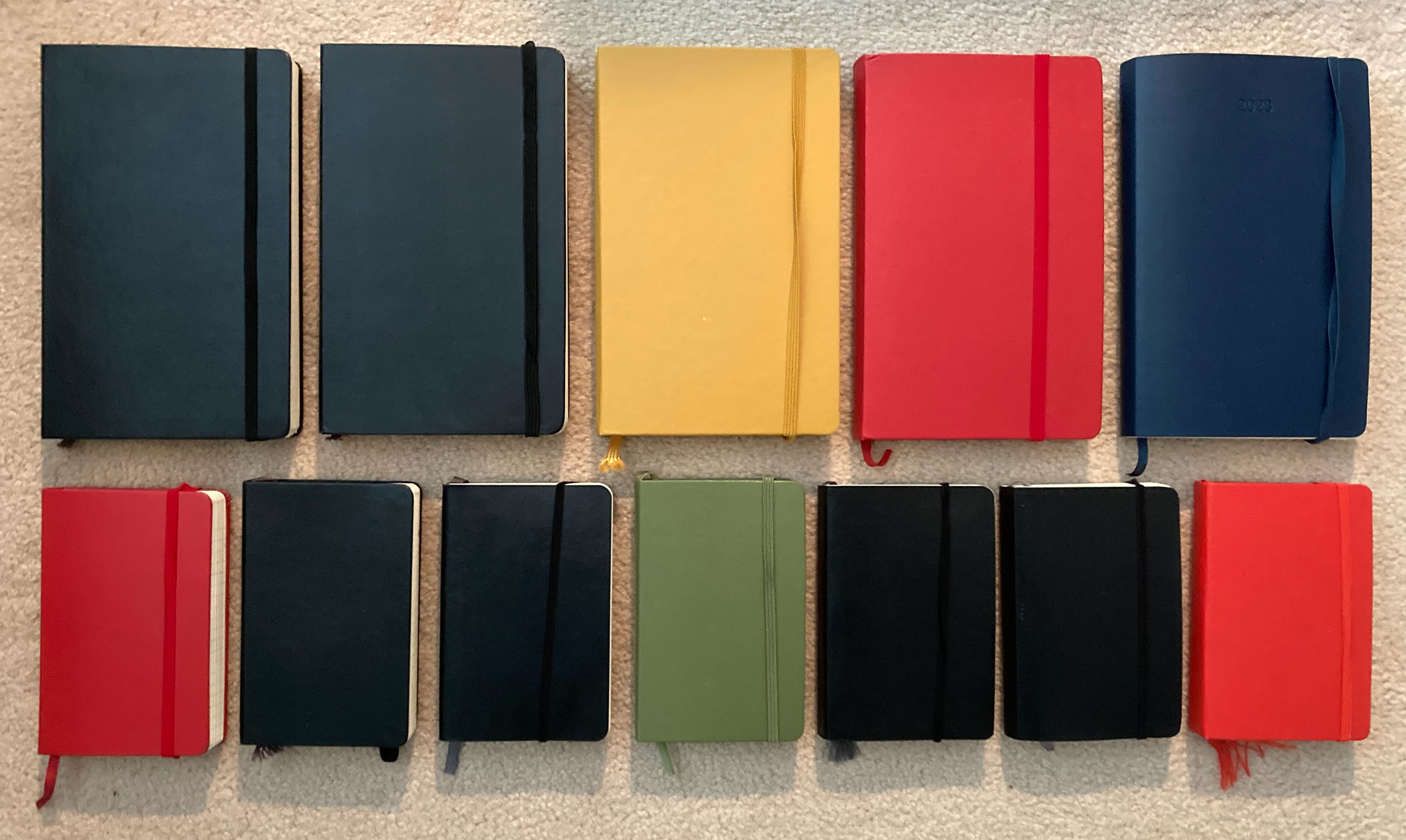
In my later years, however, needing a clear daily regimen I opted for the Moleskine line of journals. As is declared in the company’s online introduction to their diary selection, their grandiose manifesto is the following:
“At Moleskine, we believe in the timeless power of handwriting as an essential expression of human civilization, a powerful act to unleash human genius and foster the development and sharing of literacy and knowledge.”
Although I’m not quite so ambitious, I do applaud the noble sentiment.
According to Wikipedia, Moleskine’s notebooks are based on notebooks distributed in Paris during the 19th and 20th centuries, handmade by local bookbinders who supplied the stationery shops around the turn of the 20th century. They are fashioned after author Bruce Chatwin‘s descriptions of the notebooks he used to gather his quotes and observations.
Today, the notebooks are designed in Italy but manufactured in China.
I’m now on my 12th Moleskine diary, all one page per day, but as you can see, of differing sizes, colors and covers, some hard, some soft, usually depending upon what’s available at year’s end when I go searching the local shops. Recently, I seem to require the larger version, usually purchased from the Vancouver Art Gallery gift shop.
Here is a sample of one diary entry from 1975:
“New York, low man on the totem pole of the Canadian delegation to the 19th session of the Governing Council of the UN Development Programme, January, 1975.
Tuesday
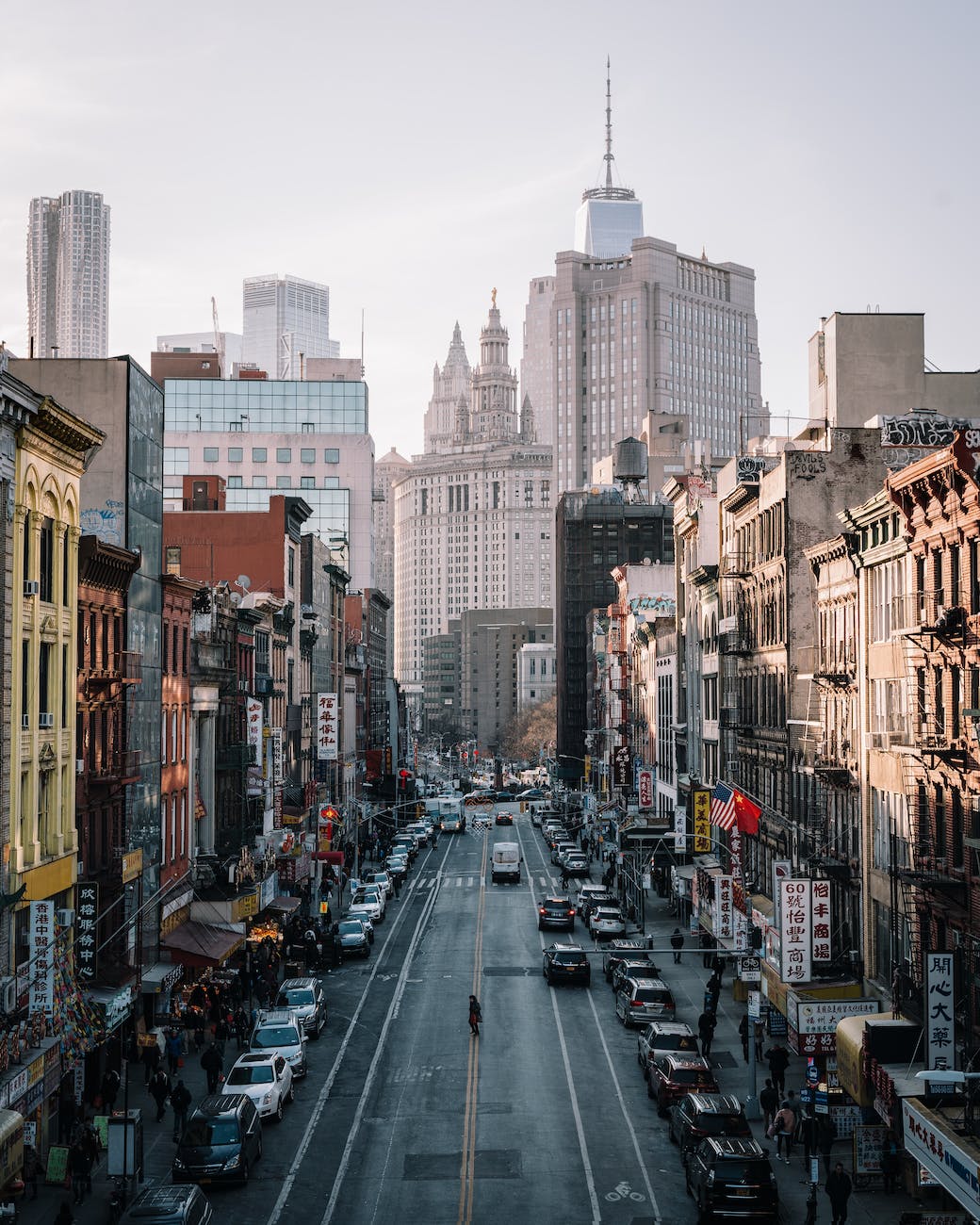
My first trip to New York. An exciting prospect, and much more pleasant done on an expense account. One can eat very well on $16 a day. I’m staying at The Beekman Tower Hotel, a pre-war World War II edifice but nicely kept up and well furnished. By my normal hotel standards, it’s lavish: a sitting room with color tv, dining table, kitchen (no utensils), bedroom, great view of Manhattan from the 19th floor. It has an excellent restaurant at normal expensive prices. Most of the nearby shops and restaurants are full of fresh flowers and plants, which I love: it’s like being in a garden (well, almost, it’s still January).
New York is very exciting. One is nervous about walking the streets at night. You hear so many stories of danger although I did so in the middle of a storm last evening, through some very grubby streets and felt quite apprehensive. No matter, I’m here today safe and sound. Canadian mission colleagues tell me to carry just enough money for a “fix”, i.e. $30 or $40, and you won’t be harmed. The Central Park stories are correct – don’t go looking for trouble.”
“I’ll have to go out on a more pleasant evening; I’ll probably get a better impression of the city.
We came into Manhattan with your typical (almost a stereotype) taxi driver. Was named Horowitz, a doodler in his spare time. He proceeded to show us a scrapbook full of fantastic doodles and other pages crammed into various parts of the car. Very good humor; started off with Polish jokes, then turned to Newfie jokes when he found out we were from Canada. Talked about sports and betting and his aunt who tells the best dirty jokes, etc. New York is full of yellow taxis; sometimes it’s like watching a herd descending on you, like lemmings rushing to their doom.”
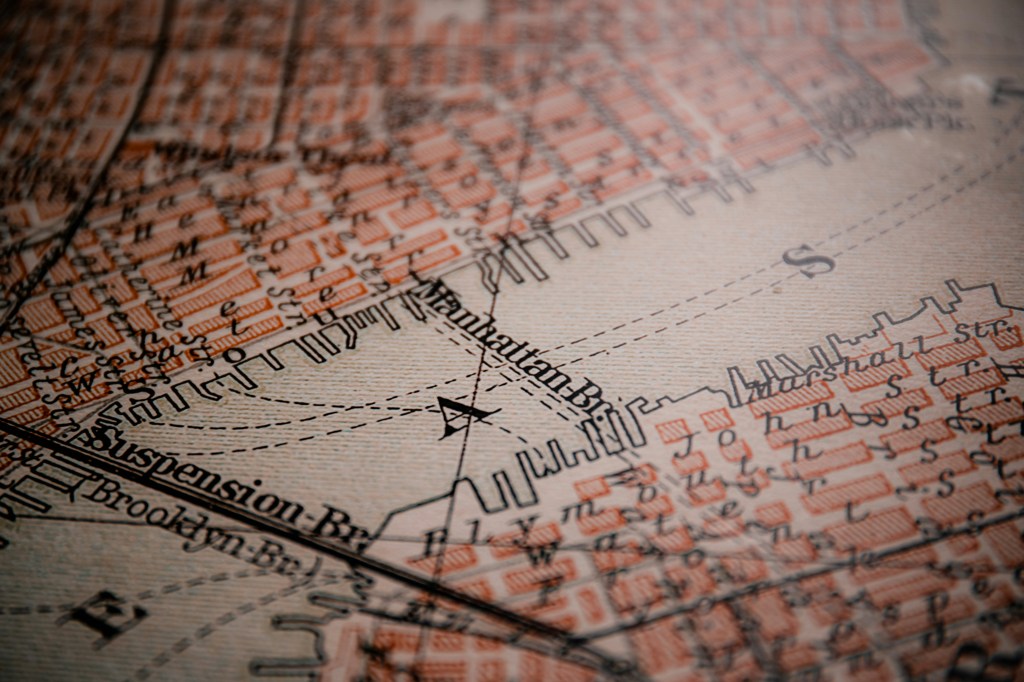
“Since arriving, I’ve had little to do but observe the goings on. The item I came down for early was postponed. Indefinitely! Fortunately, postponement was our aim; unfortunately, since I was interested in seeing the discussion unfold and knew a great deal about the topic, I felt rather let down.
Every delegate around the table seemed to be thinking the same. No one wanted to talk about it and when the meeting opened they all looked at each other to see who was going to propose postponement. Finally, we and the US put up our hands. The US was recognized and suggested the delay. No one had anything else to say and so the discussion ended. Watching the proceedings so far I get the feeling that a very strong, dominant personality could get anything they wanted.
It’s like those meetings where everyone looks at everyone else and is too afraid to say anything. Very little leadership anywhere. As the draft statute meetings were cancelled, I sat in on the Budgetary and Finance Cttee. Not my field and not easy to follow when you’re jumping into a discussion midstream (to mix a metaphor). So, it was not terribly interesting. Still, at least I got to see a committee in action. Tomorrow things will improve as the rest of the delegation arrives and the Governing Council really gets underway.
Typical New York scene: after and before work, millions of dog owners head out, searching for a tiny piece of dirt – lawn for the dog – and usually settle for the middle of the sidewalk.
I usually eat at one of two places. Breakfast at Larry’s, a Greek diner, run by two real characters, both very friendly. One, who does all the serving, has such a thick accent, he has to repeat everything twice. It’s always cold inside (colder outside in mid-January) but breakfast is good and cheap: $1.75 for coffee, orange juice (real!) and French toast.”
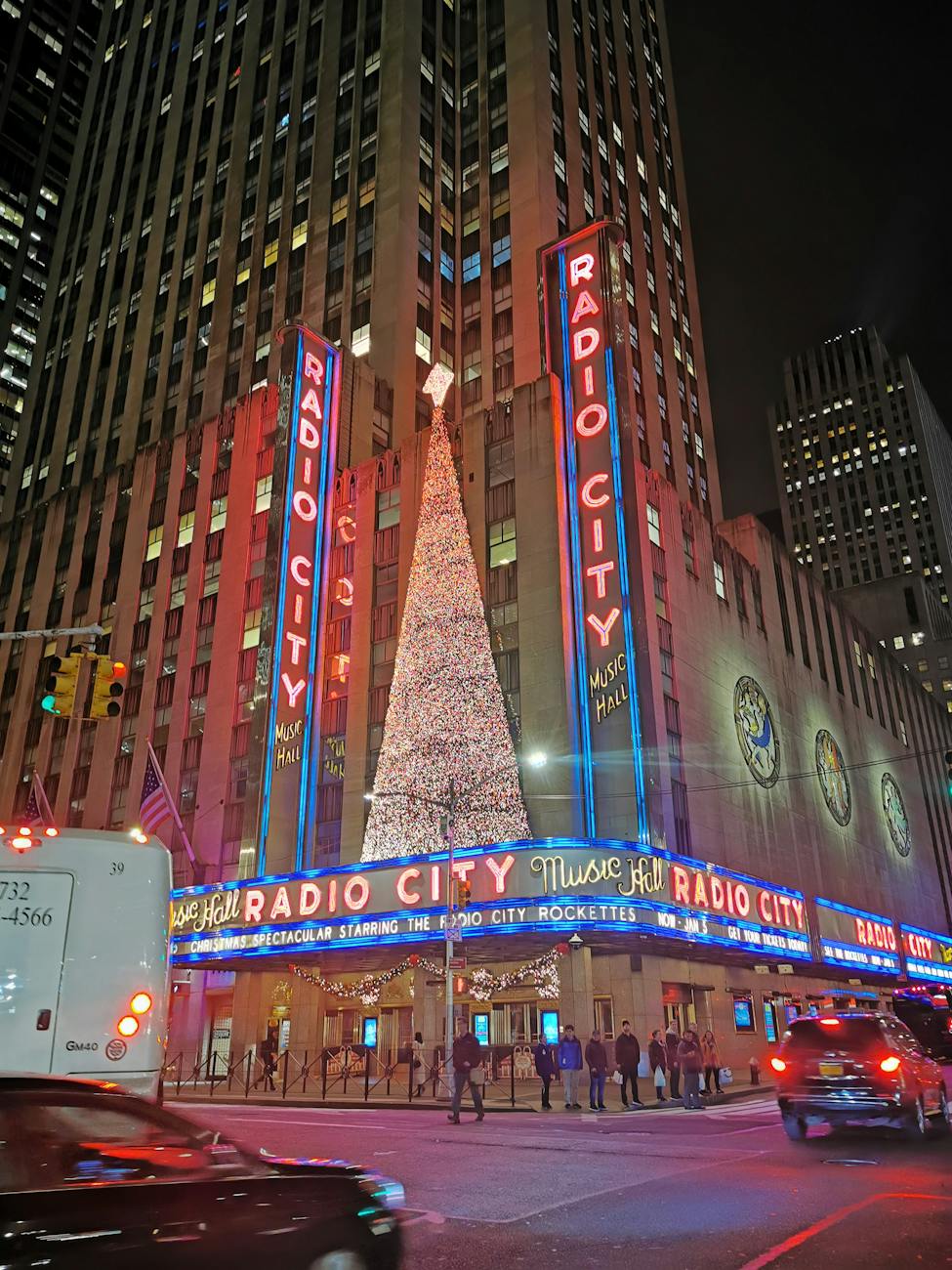
The New York Times columnist, Ginia Bellafante, describes the city’s miserable status in the mid-1970’s (Jan. 26, 2024):
“There was a lot going on. In June, police officers started showing up at New York airports to hand out ‘Welcome to Fear City’ pamphlets, which warned the newly landed not to take public transportation or walk around after 6 in the evening. On Oct. 17 [1975] came the morning news that the city would face bankruptcy in a matter of hours if it could not come up with the $453 million it owed creditors. The national unemployment rate was around 9 percent.”
It was a rough place indeed. I was warned by the local staff not to walk too far south. I love walking and did so anyway, for many hours in the evening. Found lots of homeless living in cardboard boxes, was never bothered by anyone.
I even took the subway out to the Bronx Zoo (I also love zoos). That was more nerve-wracking, especially when I had to transfer to another train right in the middle of the borough. The views of the devastated neighbourhoods when the train ran above ground made me think of bombed out European cities post World War 2. Thankfully things improved over time.

You must be logged in to post a comment.