
I don’t know who came up with this quote, but it’s certainly catchy.
Up north, the federal government – recognizing the importance of studying the past – is marking Canada History Week, (#CanadaHistoryWeek).
I’m a huge history buff, although I’ve never restricted my reading to matters Canadian. Far from it.
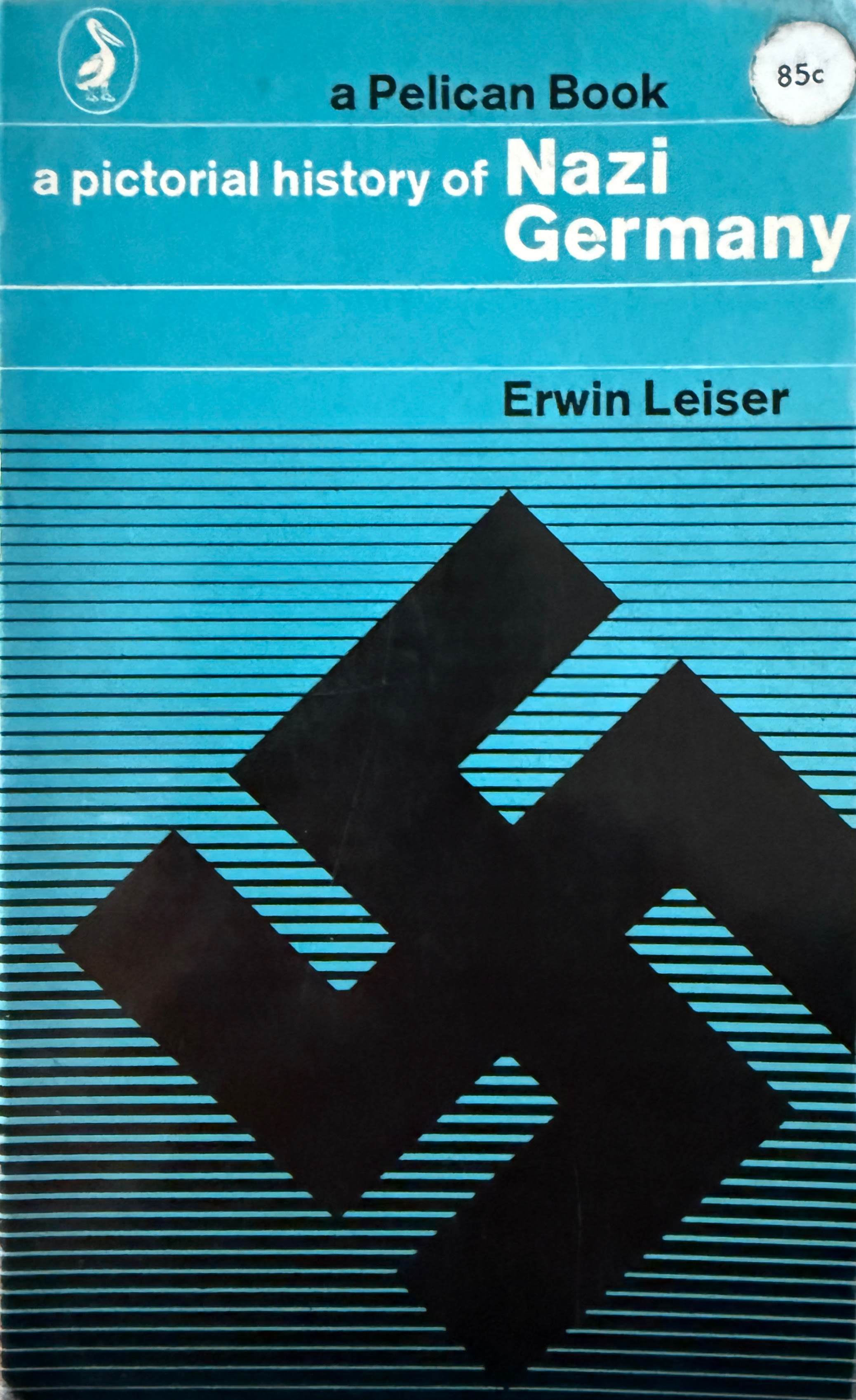
In fact, I’m interested in all kinds of history, owning some 70 books on a variety of subjects. It’s an eclectic array, covering warfare, Christianity, Civil War (both the American and English ones), international relations, Nazi Germany,
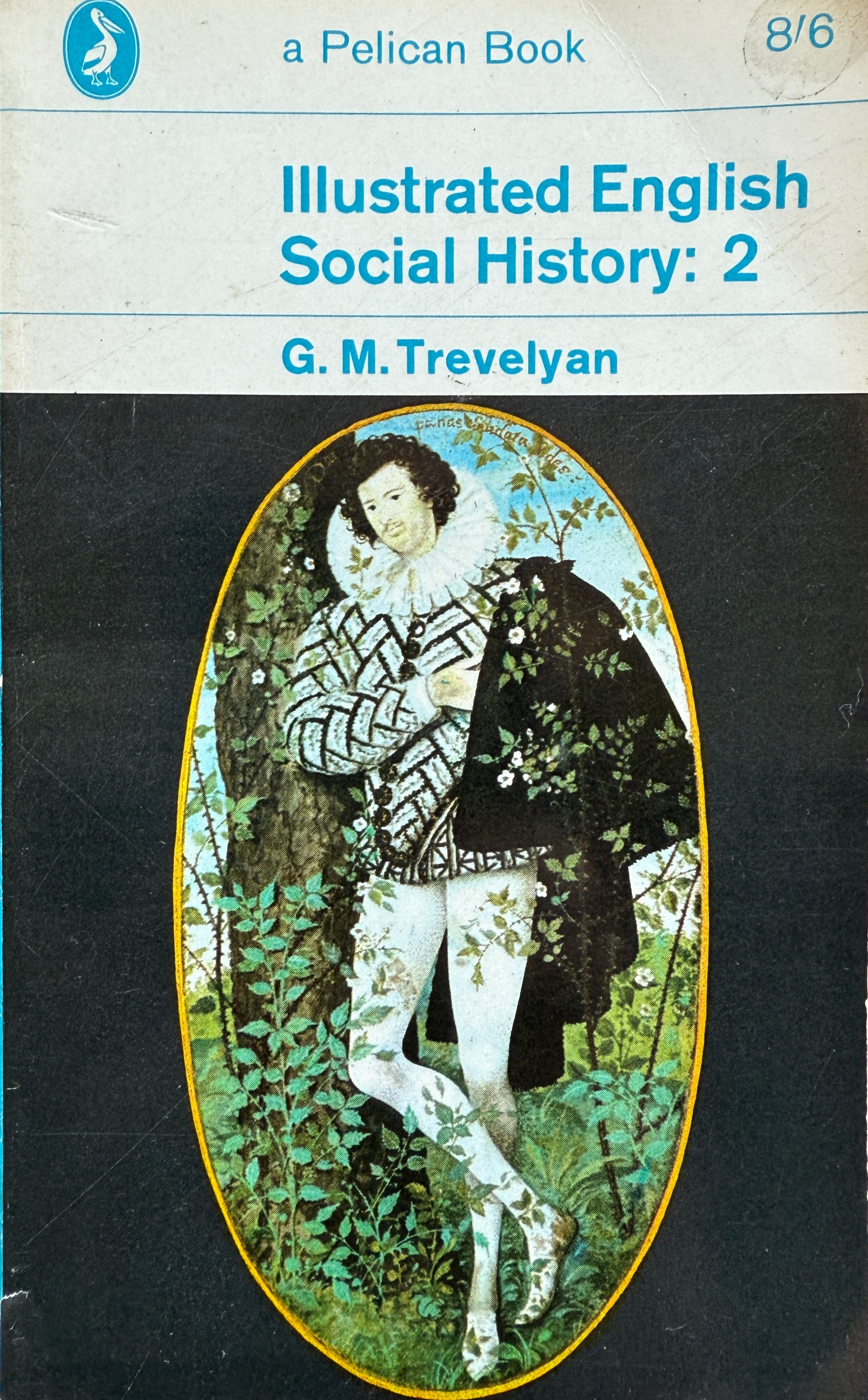
Elizabethan society,
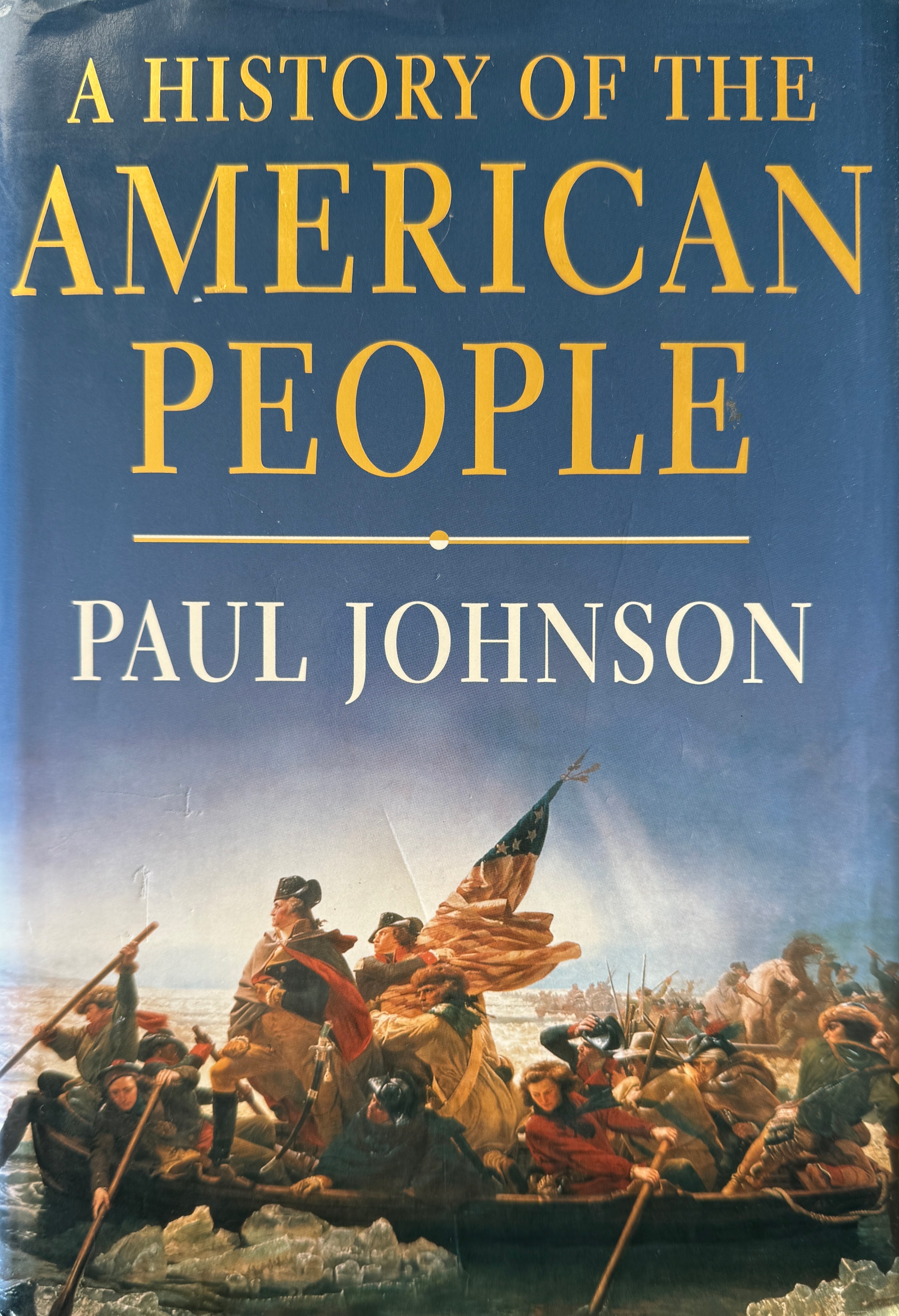
posters, the American people,
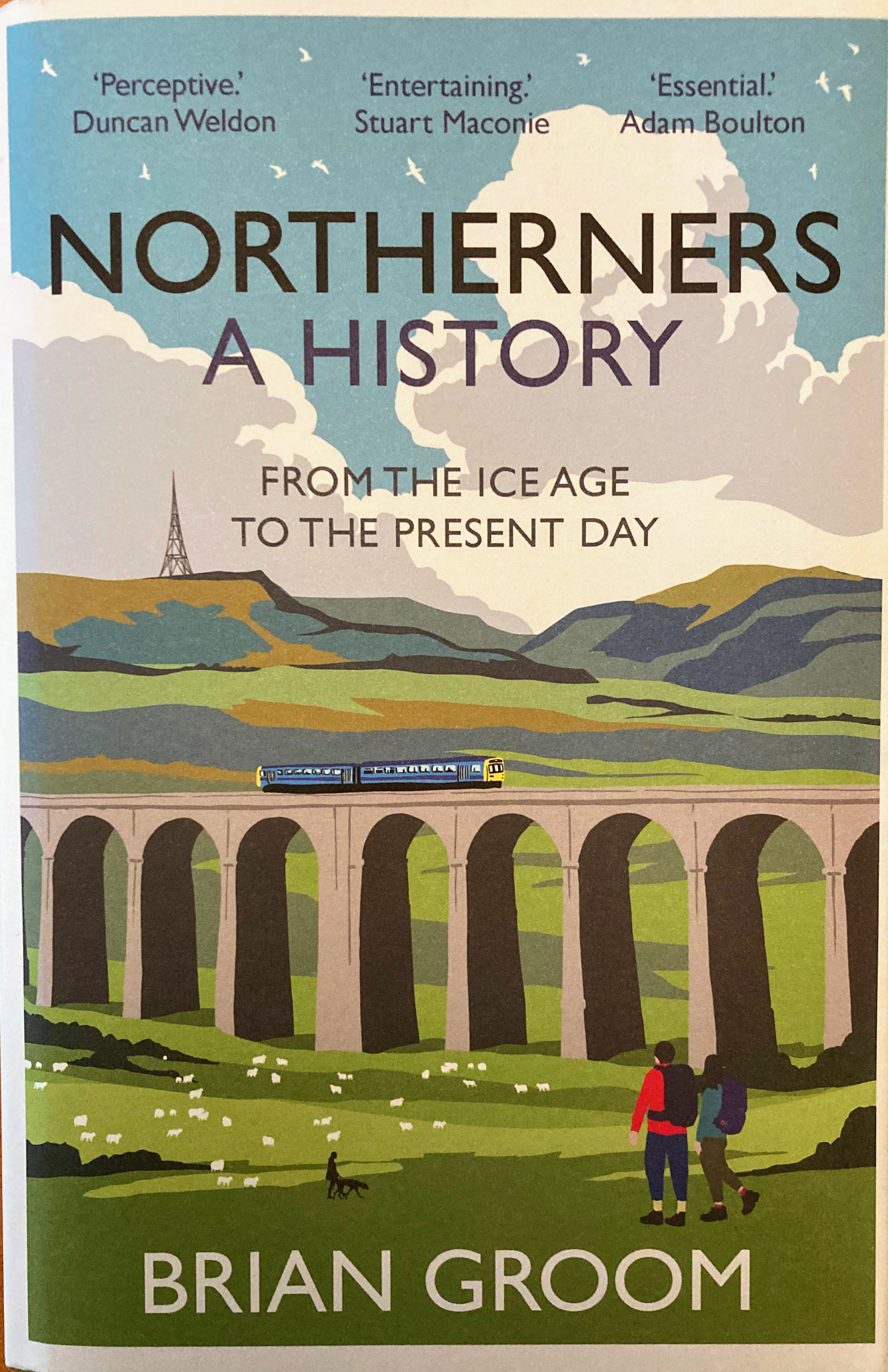
16th century European exploration of the “new world”, Africa, the natural world and Northern England.
And those are just some of the ones with “history” in the title. My bookshelves also hold several encyclopedias on subjects such as cats, decorative arts and music, as well as biographies, memoirs, surveys on art and design and historical atlases.
My most recent discovery was The Origins of the Modern World (A Global and Environmental Narrative from the Fifteenth to the Twenty-First Century) by Richard Marks (Rowman & Littlefield, Lanham, Md.). First written in 2002; this is the fourth edition (2020) of the book:
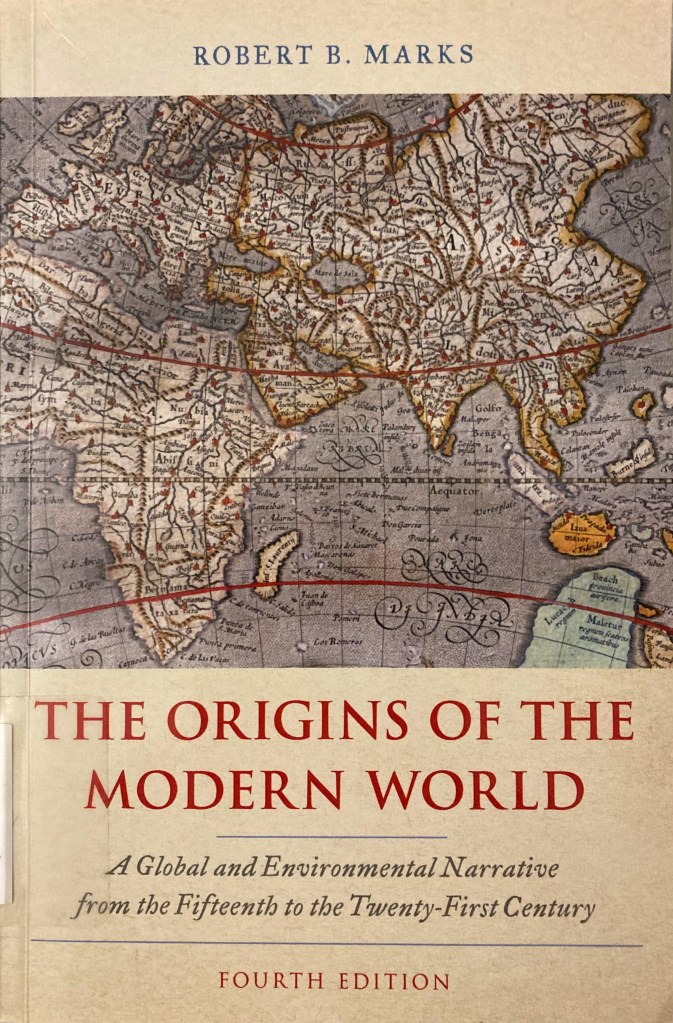
What is different about Marks’ book is the non-eurocentric view of the rise and fall of the world’s empires over these past six centuries.
To my mind, reading history and writing works of fantasy go hand-in-hand. J.R.R. Tolkien (Lord of the Rings), C.S. Lewis (Narnia), George R.R. Martin (Game of Thrones) and Robert Howard (Conan the Barbarian) all come to mind.
And not just fantasy writers but science fiction ones as well. In a recent (Nov. 11, 2024) issue of Reactor Magazine, James Davis Nicoll talks about how SF authors have often harkened back to antiquity, to the Roman Empire in particular. He looks at five authors, starting with Isaac Asimov’s Pebble in the Sky (1950):
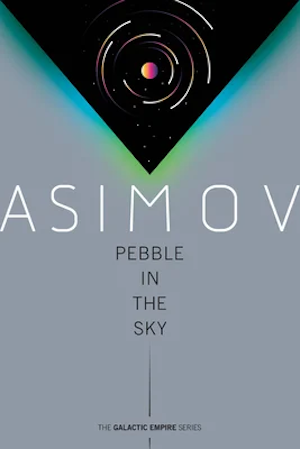
“A scientific mishap propels Joseph Schwartz through space/time to a desolate world. What at first appears to be an alien planet is none other than Schwartz’ native Earth, transformed by time and atomic war. A once-verdant world is now a dying planet, its impoverished population reduced to a bare twenty million people.
“As Schwartz discovers, the Earth is now a province of the Galactic Empire. Empire and Earth enjoy the same cordial relationship that existed between Vespasian’s Rome and the Zealots’ Judea. Earth craves independence. As the Empire has one populated planet for every human living on Earth, the balance of power favors the Empire… thus the crime against humanity that certain Earth extremists are now plotting.
“Asimov was kind enough to record his formula for success in the form of a poem:
So success is not a mystery, just brush up on your history, and borrow day by day.
Take an Empire that was Roman and you’ll find it is at home in all the starry Milky Way.
With a drive that’s hyperspatial, through the parsecs you will race, you’ll find that plotting is a breeze,
With a tiny bit of cribbin’ from the works of Edward Gibbon and that Greek, Thucydides.
“This approach worked out quite well for Asimov. One could say it was the foundation on which his reputation rested.”
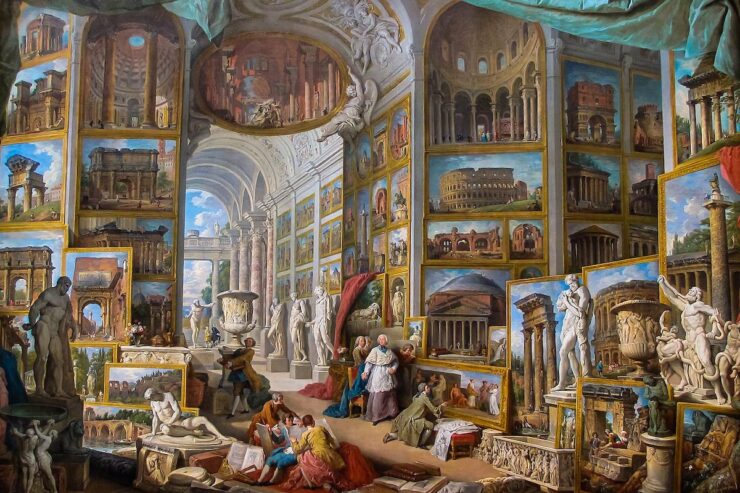
“Gallery of Views of Ancient Rome” by artist Giovanni Paolo Panini (1758)
It seems only natural that a writer of fantasy should also love stories of history, for world creation is part and parcel of that genre. History of any kind, era and place can provide inspiration for creating immersive worlds and compelling plots:
- World-Building: Ancient civilizations, trade routes, political alliances, religious practices, etc. provide models for realistic kingdoms, cities, and cultures.
- Complex Characters and Motivations: History is full of nuanced, multifaceted figures, facing moral dilemmas and personal struggles, the basis for characters with similar complexities —heroes with flaws, villains with relatable motives, and authentic supporting characters.
- Themes of Power and Conflict: History showcases how conflicts arise not just from ambition but from factors like resource scarcity, political differences, or territorial disputes, recurring themes that can fuel plots, making conflicts feel relevant and grounded, even in a magical world.
- Magic and Belief Systems: Studying ancient religions, superstitions, or the evolution of science provide ideas for rules, rituals, or divine hierarchies that feel organic within imagined worlds.
- Political Intrigue and Social Structure: History is rife with examples of political maneuvering, alliances, betrayals, and social stratification, real-life dynamics that can be used to craft intricate plots and explore the complexity of power, from courtly intrigue in castles to uprisings among the oppressed.
- Linguistic and Cultural Nuances: Languages, dialects and cultural traditions of the past provide a base for creating plausible fantasy societies that feel both logical and immersive.
- Inspiration for Plagues, Wars, and Revolutions: Major historical events, such as the Black Death, the Crusades, or the Industrial Revolution, offer compelling scenarios and ready-made blueprints for world-altering events in a fantasy universe.
- Morality and Ethics: History is filled with gray areas, where the “right” answer is rarely clear, situations upon which writers can craft complex storylines, asking questions about justice, sacrifice, loyalty, and corruption.
By drawing from history, one can create worlds that feel lived-in and vibrant, with believable details and resonant themes that captivate readers, and ground fantasy in a familiar reality, making the magical feel real and the epic more impactful.
In a future post, I’ll look at two of my favourite history books. Both have enough intrigue and adventure to produce several fantasy tales.

You must be logged in to post a comment.