
Full marks for anyone who figured out what a dendrophile is and knows the roots of the word: the Greek dendron (tree) and philos (loving).
The truth is that I’ve always loved trees.
It seems highly appropriate: I live in Canada. The country abounds with nature, parks and trees. And everyone must know by now that the country’s national symbol is the maple leaf.
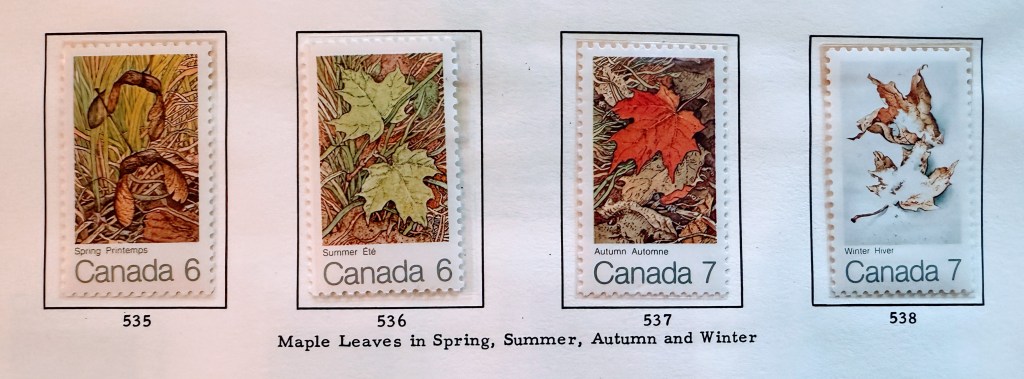
Frome the author’s stamp collection, a 1971 issue, when stamps were reasonably priced.
As a child I was always drawing pictures involving trees. And thanks to my parents’ terrific file keeping, these pictures from the mid-1950’s still exist.
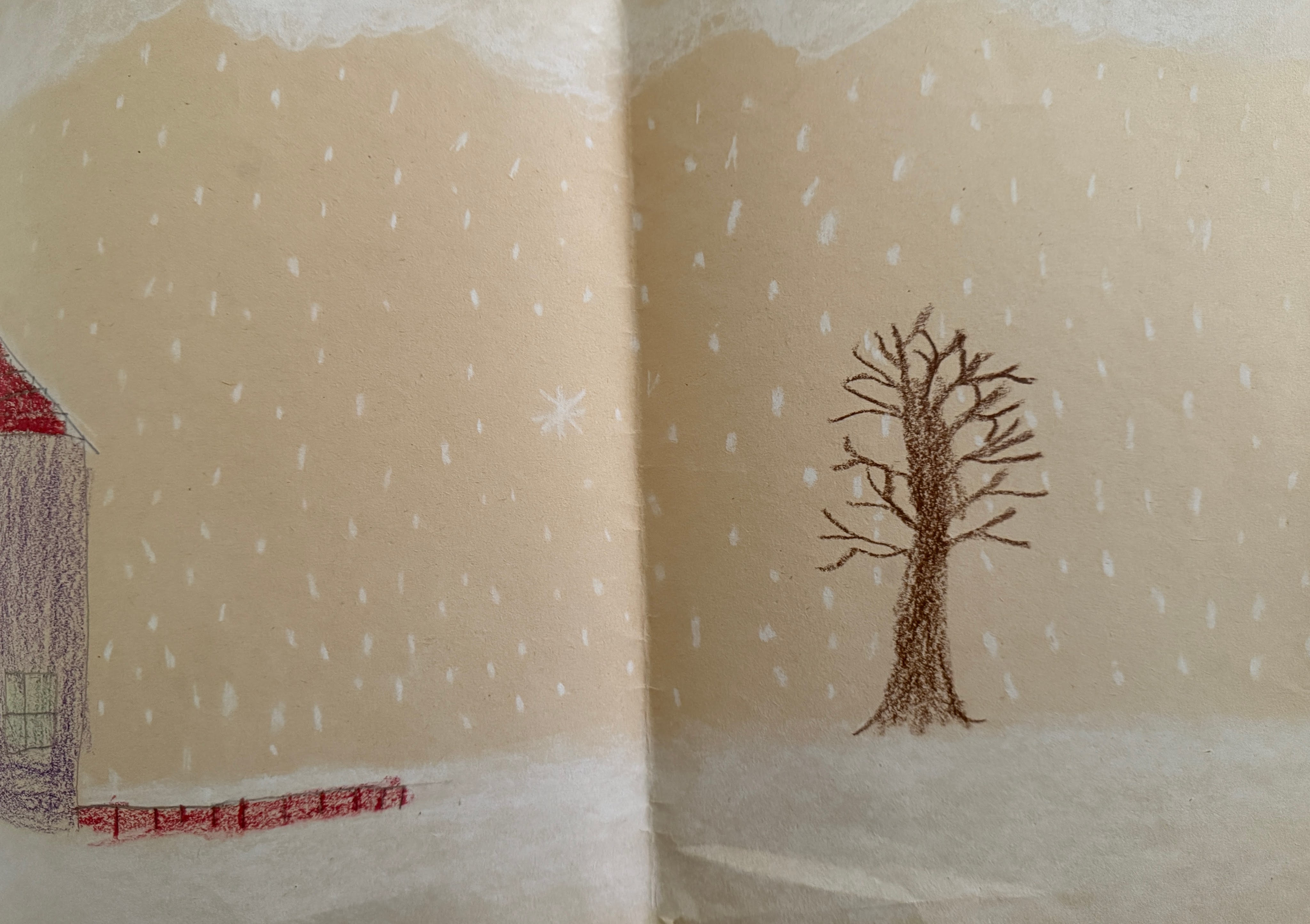
Appropriate winter scene in Winnipeg.
Growing up in south Winnipeg our home was on the edge of the city. Down the block and for miles beyond was open undeveloped prairie, through which several unpaved country (dirt) roads invited us onto weekend family walks through glades of poplars and birches. Especially in fall, when an abundance of leaves and seed pods were available for collecting (certainly for school projects). For better or worse, it’s all suburbs now, full of paved streets and large houses.
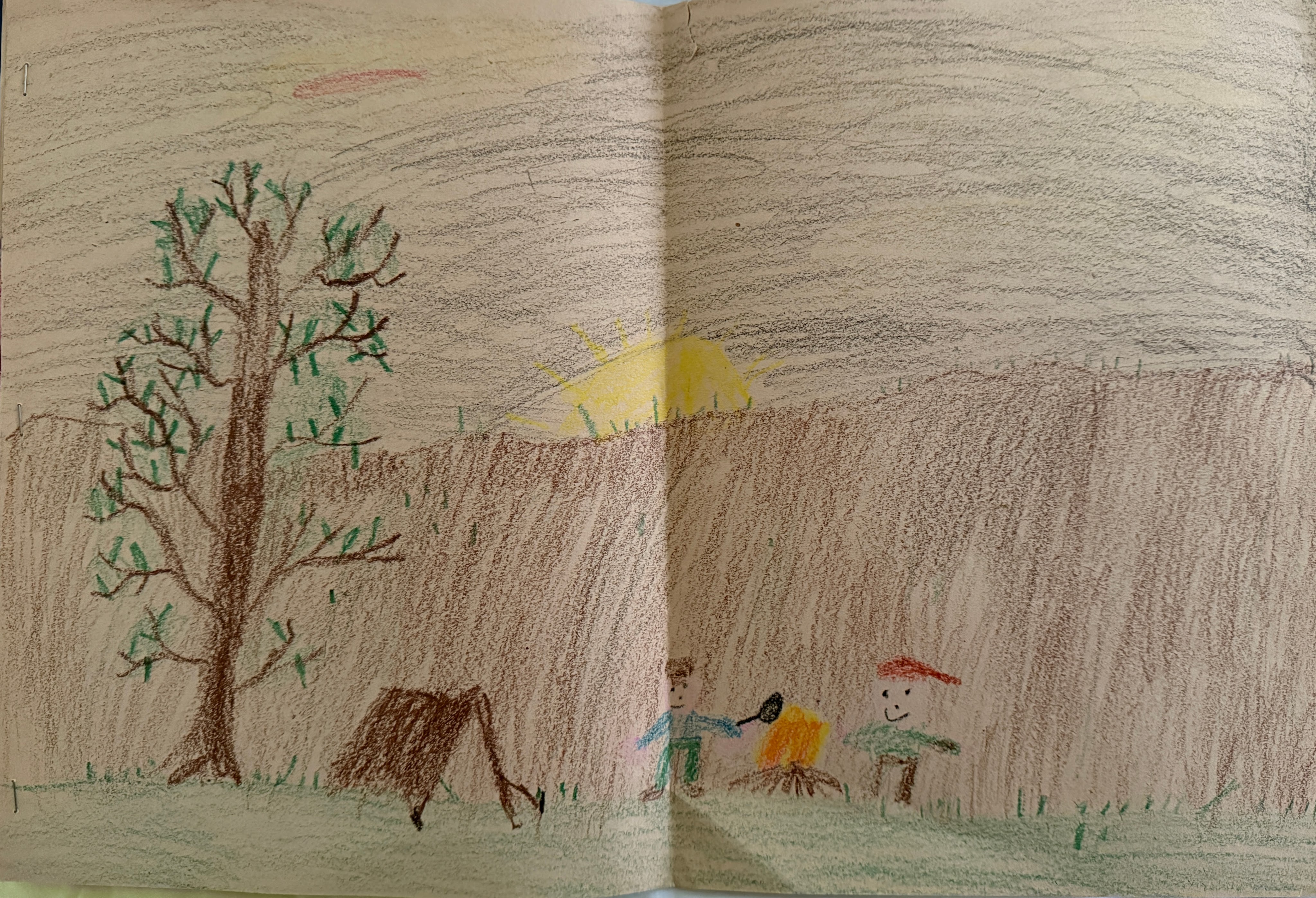
Summer camping trip; glad to see the smiles.
As an adult, on my birthday, which happens to fall in late October, when the leaves are at their most colorful in the northern hemisphere, my favorite treat is to visit the local arboretum or public garden, wherever I reside. And on my sojourn I happily check out the trees’ status and collect a few fallen leaves.
In Winnipeg, aside from those neighboring fields, the parkland of choice was the nearby Assiniboine Park. In Ottawa, it was the Federal Government’s Central Experimental Farm (CEF), a research establishment run by Agriculture and Agrifood Canada.
The CEF’s arboretum, which covers 26 hectares (64.2 acres) of rolling land alongside Dow’s Lake and the historic Rideau Canal, contains over 2000 different species and varieties of trees.
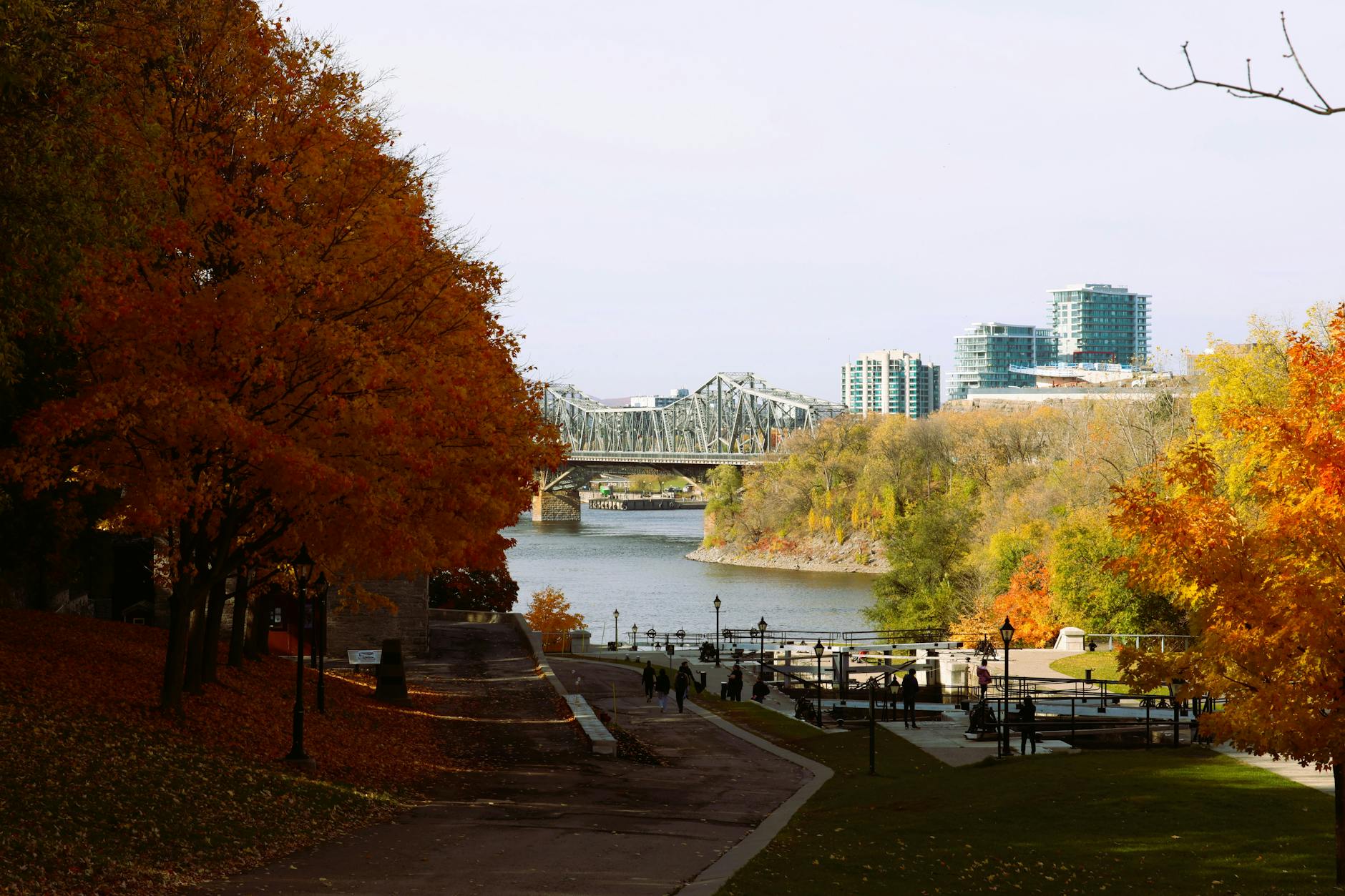
Included in the CEF collection are the classics of North American forests: maple, oak, pine, spruce, cedar, birch, beech, elm, poplar and willow. The most unique species is the Dawn Redwood, thought to be extinct until specimens were discovered in China in the 1940’s, often referred to as a “living fossil”.
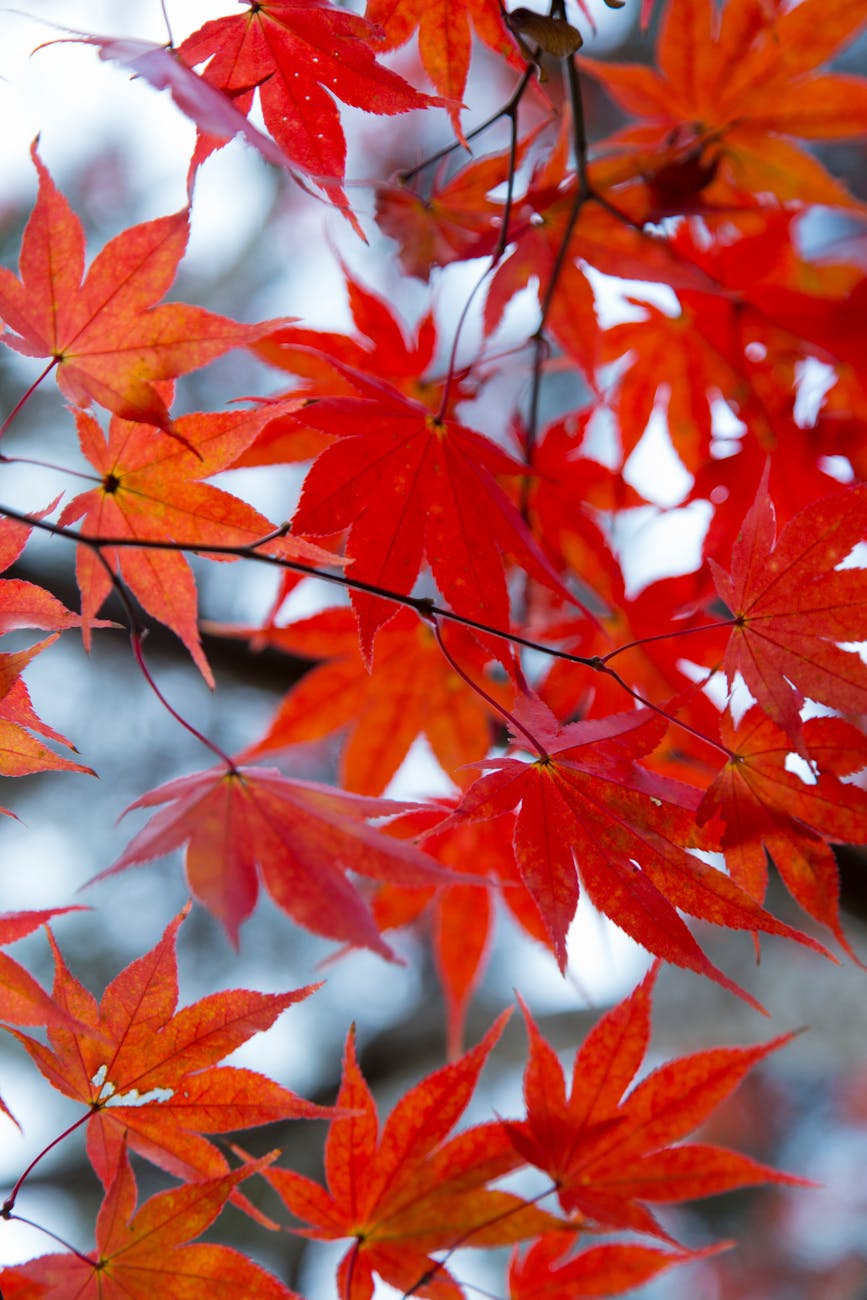
I include many kinds of trees in The Ravenstones. Not surprising given several of the series’ settings: the boreal forest of northern Canada where our protagonist discovers his two bird companions (Book 1, Eirwen and Fridis); the mysterious and tempting forest of Utgard (Book 2, The Invasion of Aeronbed); and the dangerous rainforest of Blakvul (Book 5, Death and Life).
Much of the action overall takes place in and around forest locales of deciduous or coniferous woods, where birds, big cats, bears and wolves take shelter. In Book 3, Olwen and Eisa, I even invent a tree species that has special meaning for the characters (you’ll have to read the book).
Here is the reference book I used when researching the subject:
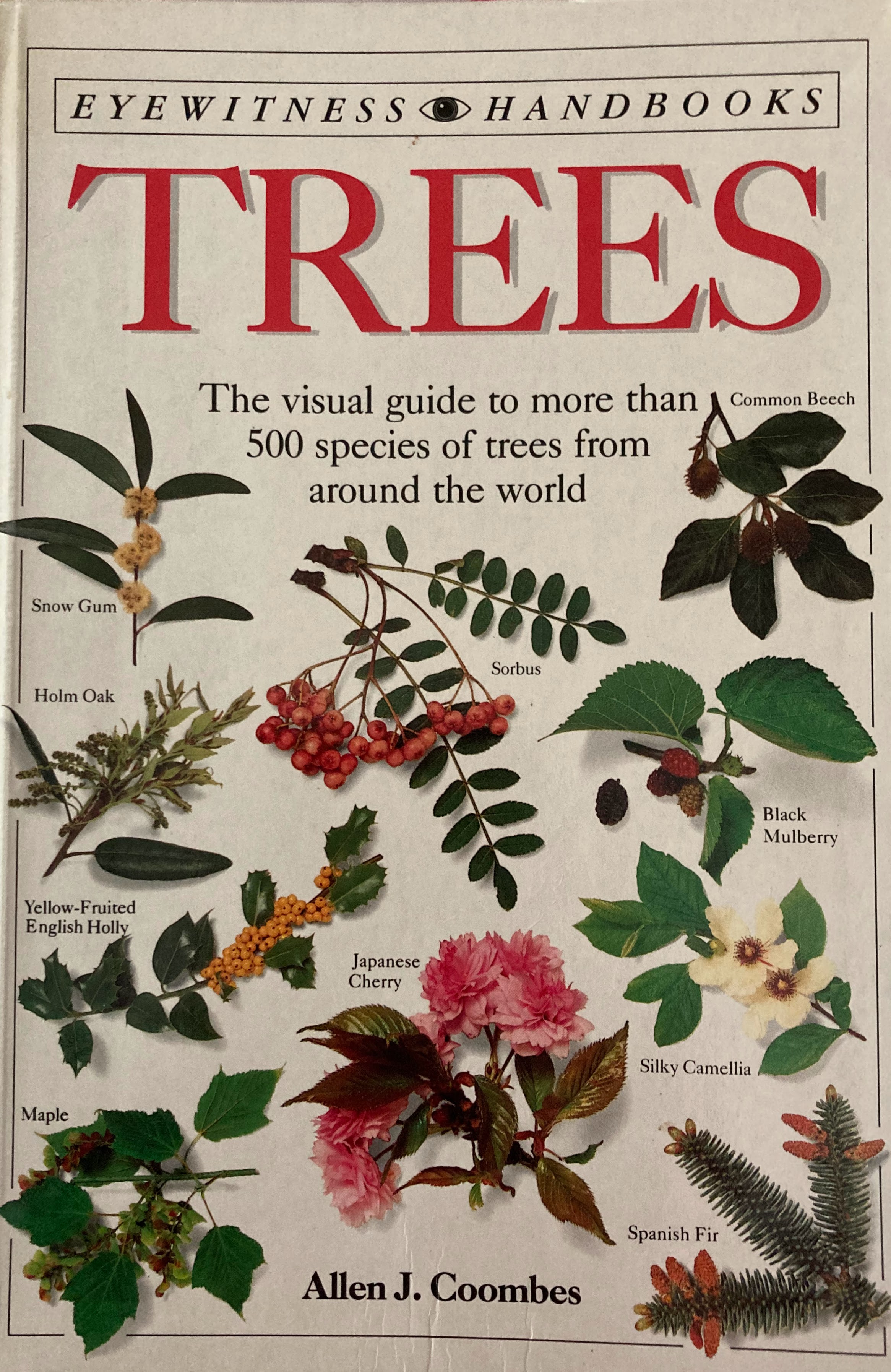
London: Dorling Kindersley (Stoddart), 1992
So, having provided this long introduction, what’s this post all about? A book, naturally.
It seems trees have been on my mind of late. On February 8 of this year, I posted about Haida Gwaii’s famous (and lamented) Golden Spruce (drawn from a book by John Vaillant). In that article, my focus was on the the west coast rainforest.
Now, another book on trees has crossed my path, one that I came across only this past week on a BC ferry trip home from Vancouver Island. The book is even recommended by Mr. Vaillant. The author, Amanda Lewis, is an editor, writer and publishing strategist, who – as I do – lives in the Pacific Northwest.
She had the great idea to visit all the biggest trees in British Columbia over the course of one year. Quite a task, given the amount of forests and remote locations we have here. When that challenging reality dawned, her goal inevitably evolved.
To quote from her website: “Lewis reframed her search for trees to something humbler and more meaningful: getting to know forests in an interconnected way.”
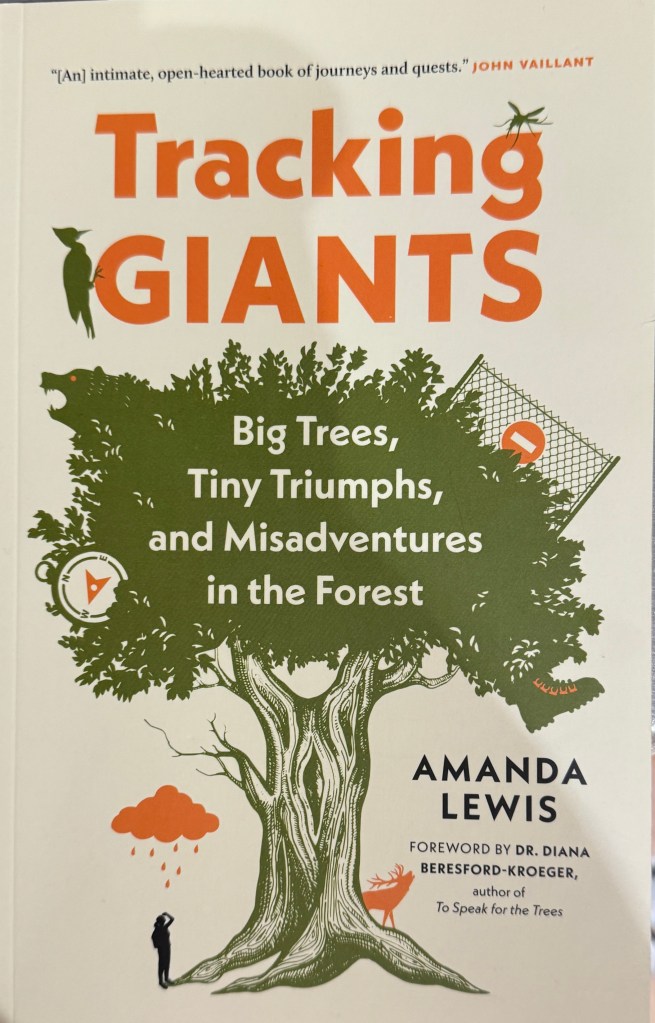
Vancouver: Greystone Books, 2023
The book is divided into 12 chapters and Lewis searches out 33 species in all. Some chapters deal with only one specie, e.g. chapter 8, the Pacific yew, others a multiplicity, e.g. chapter 11, the subalpine larch, cherry plum, bigleaf maple, coastal Douglas fir and arbutus.
I wondered whether Lewis, as a Vancouverite, might even be a neighbor. But no, as she describes her 20 minute “leisurely drive” from her apartment in East Vancouver to Jericho Beach in her exploration, I realize her urban scene is a far cry from my life in Delta’s farmlands.
Still, I know the Jericho Beach area well, having enjoyed many pleasurable walks back and forth along the waterfront out to the Spanish Banks. Here, Lewis searches for the Scouler’s willow, eventually finding a row of three willows “twisting skyward” (p.23). She doesn’t say exactly where but I do recall a small stand of willows by the duck ponds. Next time I visit, I’ll be sure to check them out more closely.
To quote from one review: “Tracking Giants is dotted with beautiful descriptive passages and local tree history… Anyone who reads this book will find themselves looking at trees in a new way, searching the sky for their crowns, and will marvel at not just their beauty, but their necessity.” (Quill & Quire) Amen to that.
And for anyone who cares about the subject, check out Lewis’s engaging website for a list of her favourite books on trees and forests.
But this delightful book is much more than a quest to find or an appreciation of the province’s true “champions”. It’s full of self-deprecating humor; insights about life, nature and the journey itself; along with plenty of fascinating detail about B.C.’s many logging communities, forest management practices and old-growth forests.
And much more. In sum, it’s well worth a read.

Leave a comment