
Regular readers of this blog will know that I usually focus my attention on either books or art, or even better, something that combines the two: illustrated books, for example, especially ones dealing with children’s fairy tales. And, for me, winning the trifecta would be an illustrated book about book illustration!
But that is not the case today.
I am writing about another passion of mine: heritage conservation.
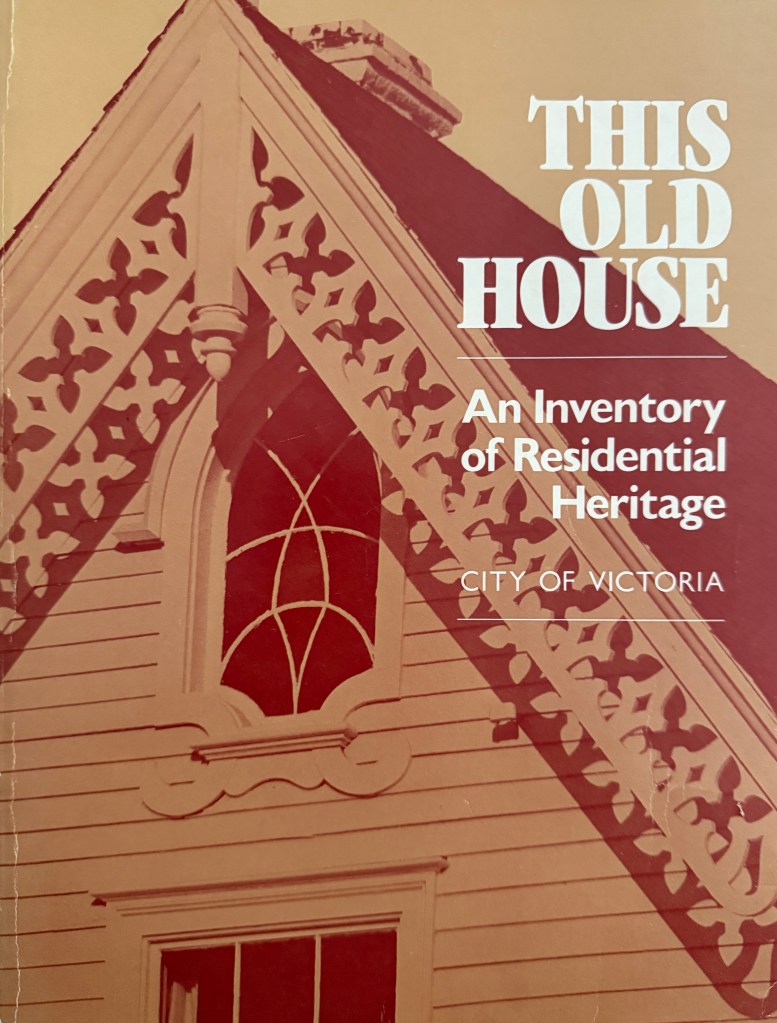
My go-to heritage guide: City of Victoria, 3rd printing, 1991
I’ve always been a devotee of architecture, urban design, historic houses – having lived in one or two over the course of my life – and heritage streetscapes. Back in the first decade of this century, I became quite involved in the cause of preservation when appointed Chair of the Oak Bay Heritage Committee (now known as the Heritage Commission) .
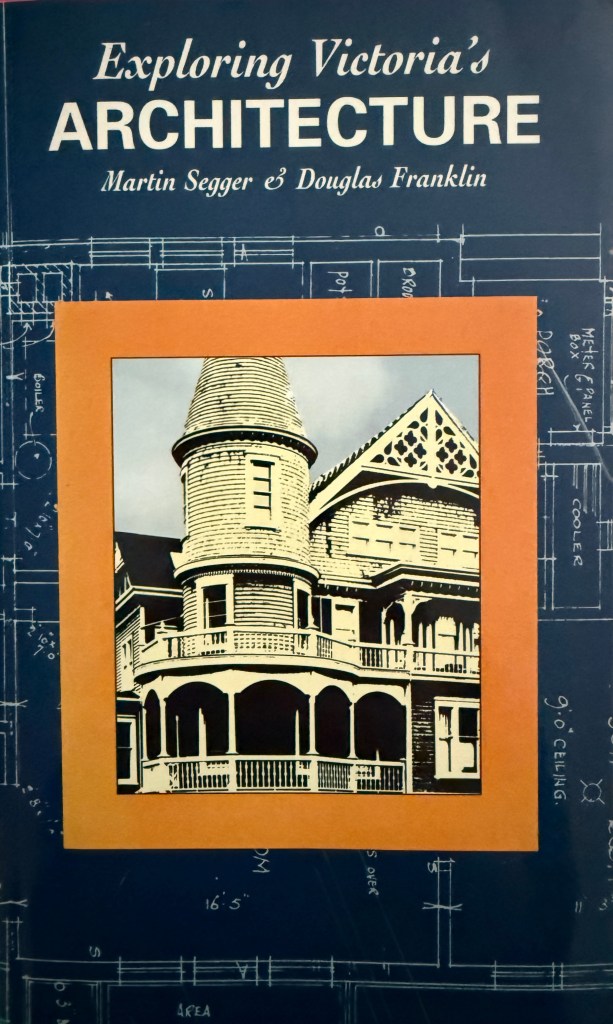
The guide to Victoria’s heritage architecture: Victoria, Sono Nis Press, 1996
The District of Oak Bay is a village of about 20,000 souls, making it the smallest of the 13 member municipalities of British Columbia’s capital, Greater Victoria. The community, dating back to 1906, has a modest but charming high street (where national chain stores are prohibited), sea views, plenty of green space and an array of both modest (but expensive) and not-so-modest (super expensive) residential houses built in the pre- and post-World War 2 era. Unsurprisingly, any new development proposal becomes a highly charged political issue.
With its sublime climate, access to parks and amenities and ease of living, in my view, Oak Bay is one of the very best places to live in Canada.
But, as usual, I digress. This week’s post, stemming from an article I read a week ago in Canada’s national newspaper, The Globe and Mail, is about preserving our disappearing heritage stock.
The article’s headline is: “Owner of four iconic Vancouver houses decides to sell after 52 years”. [Although I include the link, I’m not sure it will work for everyone.] Veteran real estate reporter Kerry Gold goes on to discuss how the drive for more (affordable) housing has pushed a family who, over many years of care and expense, devoted themselves to preserving a row of four arts and craft era houses into selling. The houses are not on the city’s heritage register and may well disappear under a new owner.
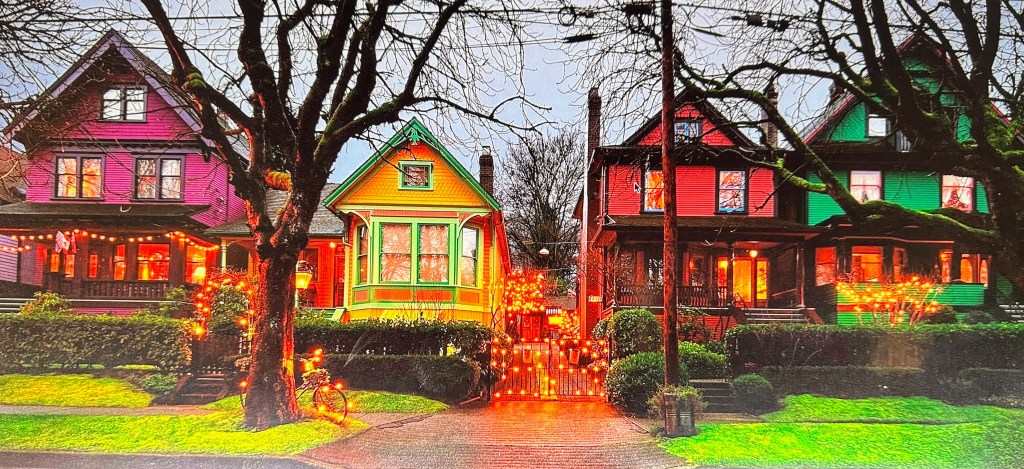
Photo from the article, courtesy of the Davis family
The article states:
“Since 1973, John Davis has been working on the restoration of a collection of brightly coloured heritage houses on West 10th Avenue, in Vancouver’s Mount Pleasant neighbourhood. The eye-catching project, undertaken by his mother, father and brother in the early years, became a landmark for anyone who walked along the leafy street west of Main Street, in the block between Columbia and Manitoba streets.
“They bought up eight houses in total, restoring them to their Victorian and Edwardian glory, painting them the bright jewel colours, becoming Vancouver’s version of San Francisco’s famous “painted ladies.” All the houses have heritage plaques. Inside Mr. Davis’s house is a wall of framed heritage awards. But theirs was a labour of love, a passion that took a lot of expense, without any government subsidy or tax breaks, and a ton of work. The eight houses were purchased through mortgages, divided up into suites to cover the payments, and four were sold off. Today, the Davis brothers own four houses that have 15 spacious rental suites.”
The story goes on to discuss the Davis family, its legacy to the city and the challenging issue of increasing density in a settled and – for the current inhabitants – pleasing community. Needless to say, with the drive to increase the availability of housing at a price people can afford, that conflict is being replicated across the country. Unfortunately, the loss of such rare examples of this period of design (any period, for that matter) would be a tragedy for anyone concerned with heritage preservation.
Finally, let me share with you the following:
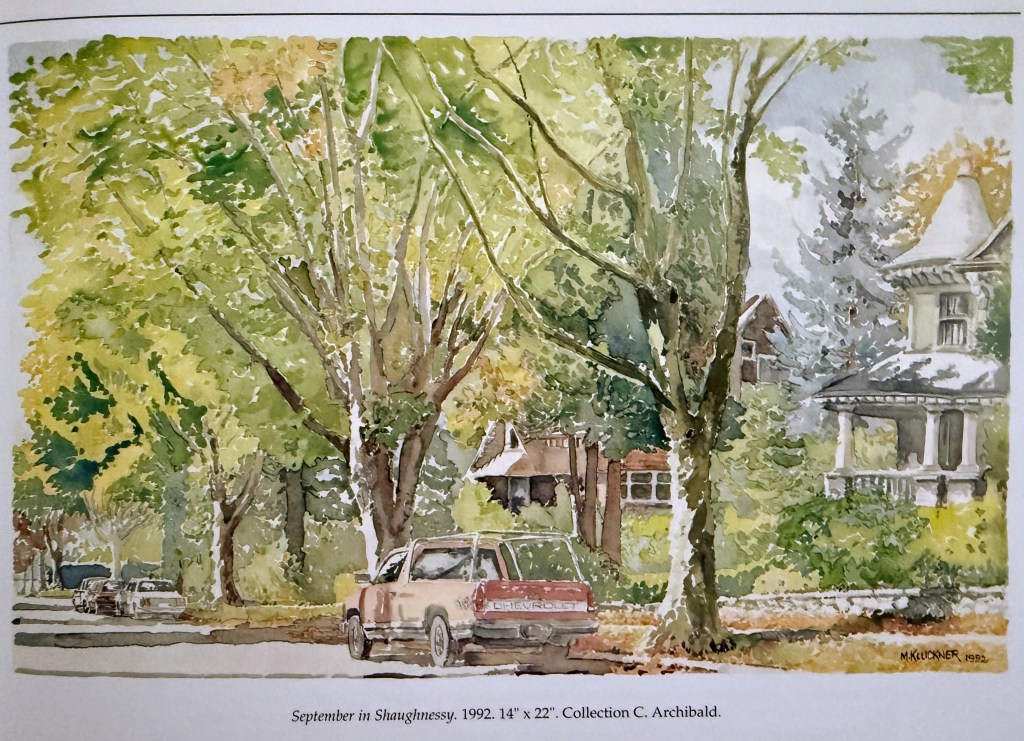
The accomplished B.C. watercolourist, Michael Kluckner, published Victoria The way It Was in 1986 and Vanishing Vancouver in 1990, recording much of what existed in these two cities, but has disappeared or remains at risk. The above evocative illustration is an excerpt from his follow-up 1993 book, British Columbia in Watercolour, which records the “mansions, cabins, churches, front porches and gardens, roadside shacks and grand panoramas that are the essence of the province.” (p. 9)
Fortunately, for those interested in the province’s heritage, many prime examples still remain, especially in the downtown core and inner residential neighbourhoods of Victoria, as well as the Kitsilano neighbourhood of Vancouver.
So, on a happier note for you fans of heritage housing, here are:
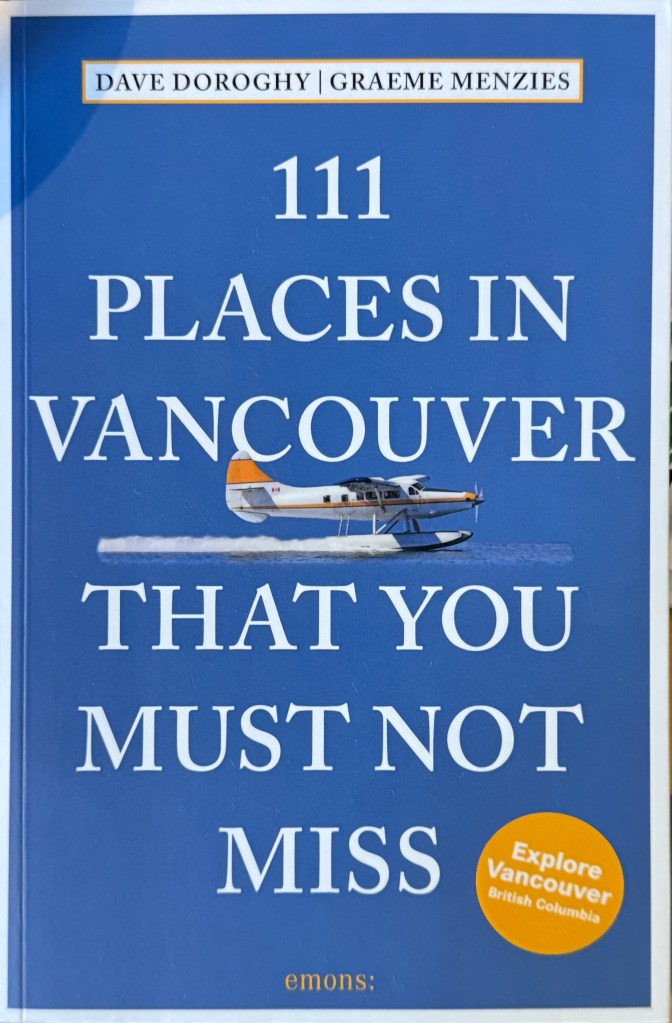
The very first of the 111 suggestions not to be missed is the 1700 Block of Dunbar Street (between 1st and 2nd Avenues), a unique block of “nothing but pure, unaltered 1911.” (p. 10)

Leave a comment