In my view, no other author epitomizes this season of celebration more than Charles Dickens.
Hans Christian Andersen met Charles Dickens twice, first in 1847 and then again in 1857. Although the first encounter was brief and cordial, on the second visit, it seems the celebrated Danish author overstayed his welcome.
Regular readers of these posts will know that I’m a fan of both authors, and I write this post having recently reread The Cricket on the Hearth.
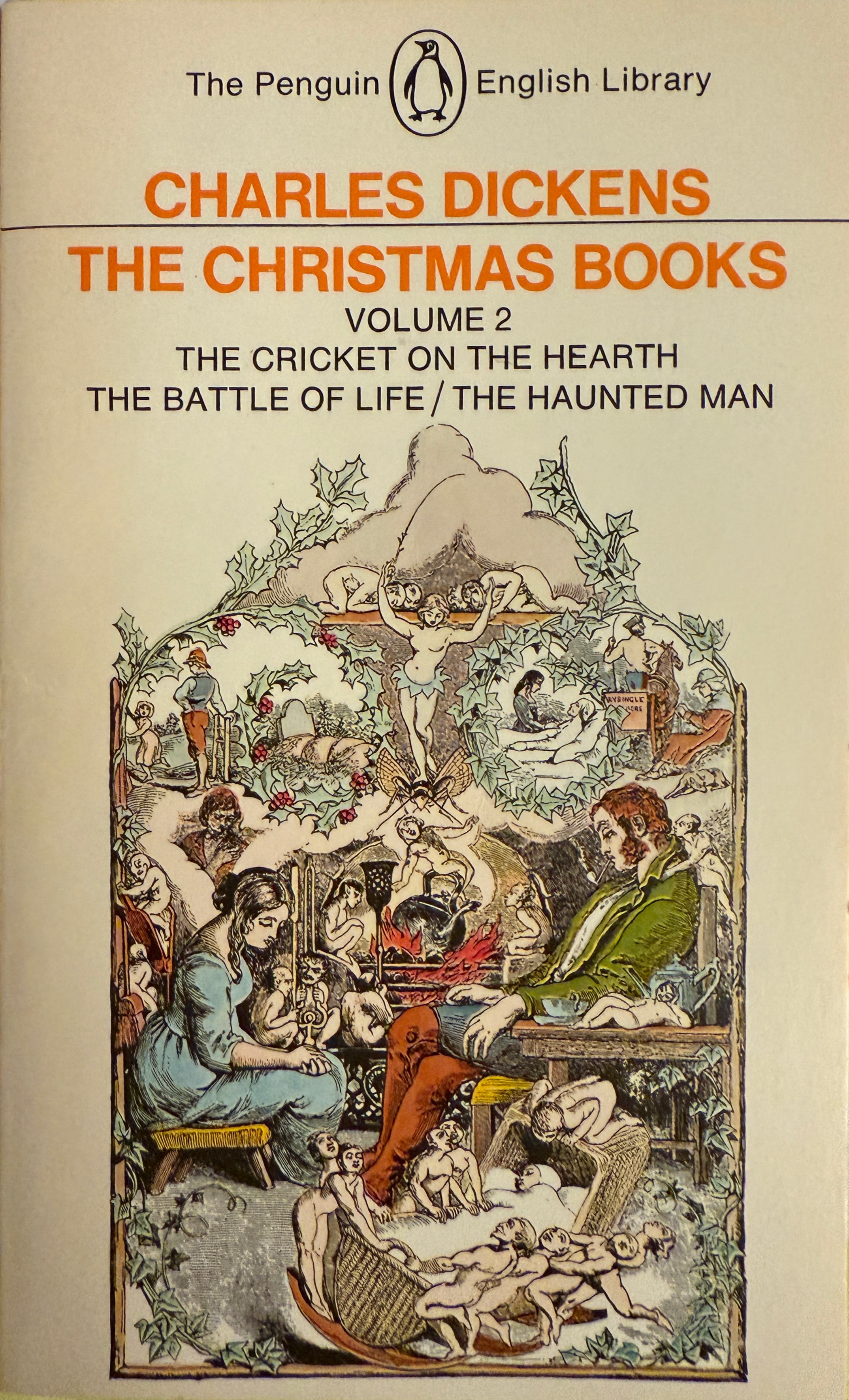
I purchased this two volume Penguin collection back in the early 1970’s and, to get in the festive mood, I pull it out at Christmas time to read one of the five selections.
Cricket makes a change from A Christmas Carol, which is the favorite Christmas tale of most folks (me included) and has been filmed several times (my choice being the 1951 classic, starring Alastair Sim,which I’ve probably seen 40 or 50 times). For those who want a free viewing and hold a library card, it’s available on Kanopy.com.
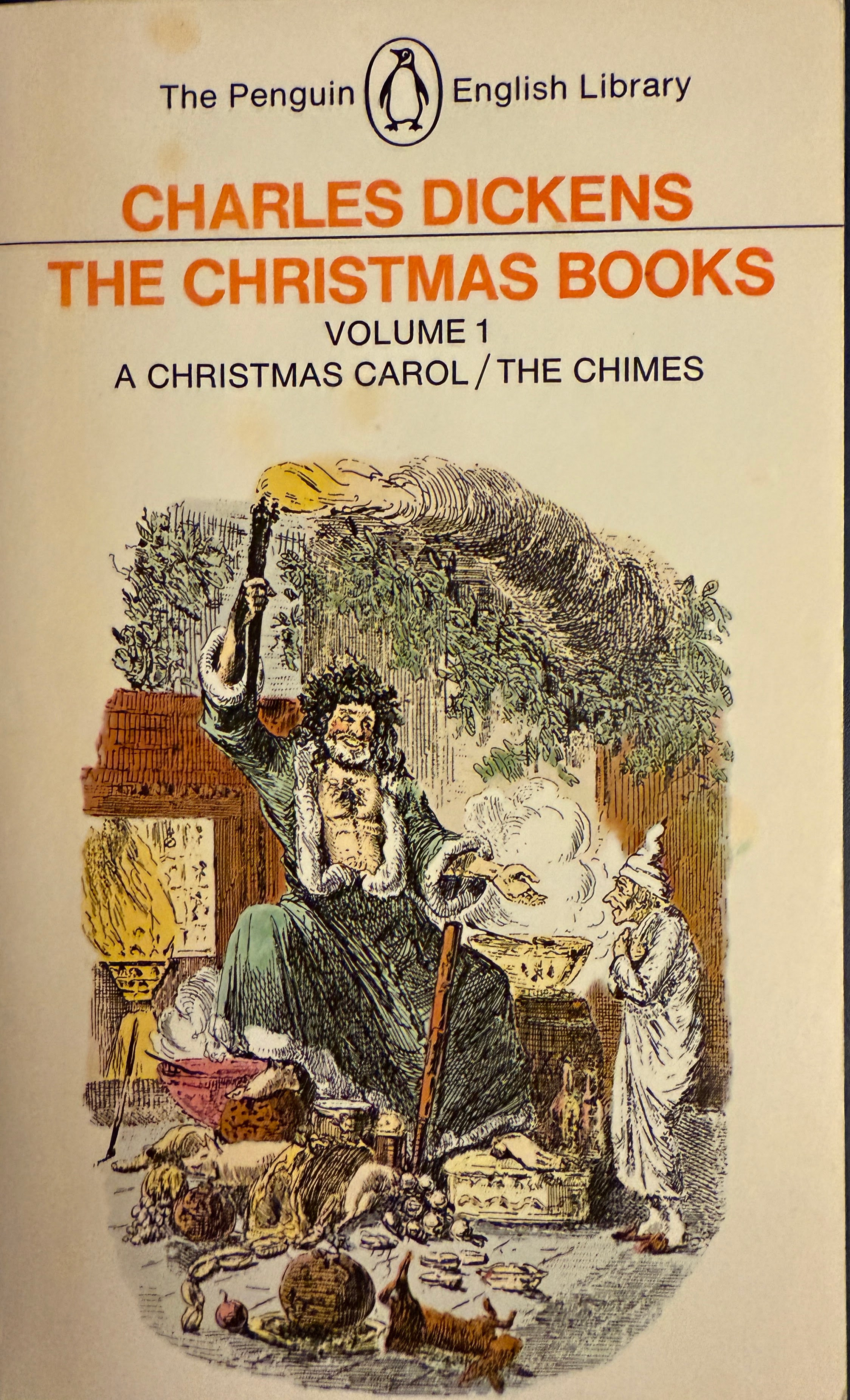
Now the reason I write about Andersen’s visit is that my curiosity was piqued by this most recent reading. Dickens rarely goes off in flights of fancy in his books, anthropomorphizing objects or animals as he does in writing about the competing cricket and tea kettle in the opening of The Cricket on the Hearth.
So, I wondered – did Andersen – one of the masters of anthropomorphic writing – have an influence on Dickens? The short answer is, if he did, it wasn’t due to one of those visits, for Cricket was written in 1845, two years earlier than Andersen’s visit. This fact then got me to wondering – how often did Dickens indulge in such a writing technique?
While The Cricket on the Hearth remains his most overt use, Dickens employed anthropomorphism across various works to add depth, whimsy, and moral insight to his storytelling, especially with the Christmas tales:
A Child’s Dream of a Star (1850)
In this short story, Dickens anthropomorphizes stars, presenting them as sentient, almost divine entities. They keep watch over humans, guiding and comforting them. The stars symbolize lost loved ones, conveying themes of death, remembrance, and the afterlife.
The Chimes (1844)
In this novella, part of his Christmas series, Dickens gives the church bells anthropomorphic qualities. The bells, representing the conscience of society, are portrayed as mystical, moralizing characters who guide the protagonist, Toby “Trotty” Veck, through a transformative experience.
The Haunted Man and the Ghost’s Bargain (1848)
In yet another one of his Christmas stories, Dickens personifies the concept of memory and loss through a ghostly figure. While the ghost, more a physical manifestation of the protagonist’s memories, isn’t an animal or object, the anthropomorphic treatment of abstract ideas aligns with the spirit of anthropomorphism.
The Story of the Goblins Who Stole a Sexton (1836)
This story, a precursor to A Christmas Carol, appears in The Pickwick Papers. The goblins, displaying human emotions and reasoning, personify supernatural forces that teach a miserly sexton, Gabriel Grub, the importance of kindness and compassion. (Not so different to Ebenezer Scrooge’s ghostly visitors.)
The Lamplighter’s Story (1848)
In this short piece, Dickens personifies street lamps, portraying them as silent observers of human life. While the lamps do not speak, their presence is imbued with a sense of awareness, given a role as witnesses to human actions and emotions.
For readers who wish a larger dose of Dickens and his Christmas stories, I’d recommend Norrie Epstein’s 1998 compendium, The Friendly Dickens (Viking Penguin). The book provides a “lively, accessible companion” to all things Dickens, devoting 23 pages alone to A Christmas Carol, which was written in six weeks in 1843 in an effort to boost Dickens’ flagging income.
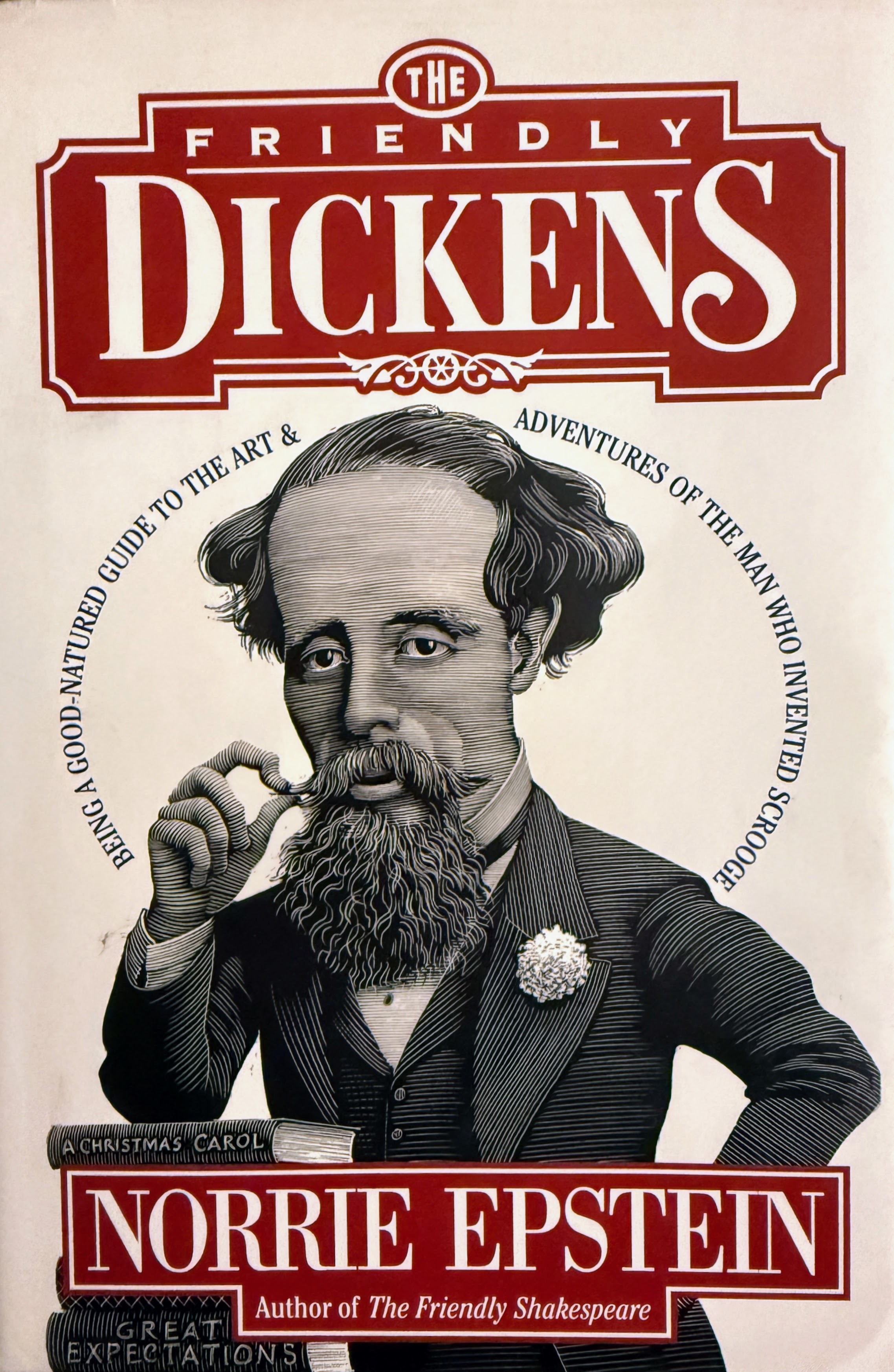
Ms. Epstein notes the fact as one of literature’s “little ironies”. While the publication of A Christmas Carol did not turn his fortunes around, his later dramatic readings of the tale did: they earned him more money than any of his books (p. 185) and ended up creating a whole new literary genre, the annual Christmas book, which would, in turn, spawn the Christmas family TV special, records and movies (p. 190).
& & &
So, on that happy historical note, let me wish all my readers a very Merry Christmas and Happy New Year.
See you again in 2026.

Leave a comment