
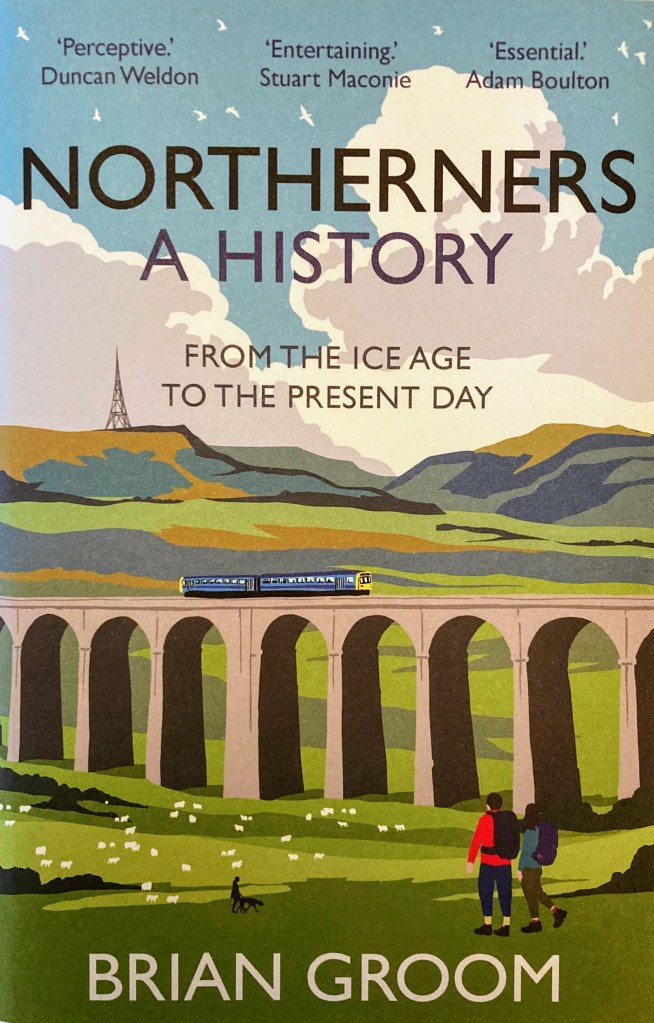
“Trouble At Th’ Mill” is the title of chapter 14 of a book I’m currently reading, Northerners, A History, the story of the North of England from the Ice Age to the present day (HarperCollins, HarperNorth, 2022).
The expression is also the title of one of my very favourite Monty Python sketches, Trouble at The Mill or, if you prefer, The Spanish Inquisition.
For those of you who skipped British history in high school, the saying goes back to Great Britain’s industrial revolution (1760-1840), an event that dramatically transformed the country and had its origins in those same northern counties.
“There’s Trouble At Th’ Mill”, became a catchphrase in England during the 1960’s, thanks to a Granada TV serialization of the 1932 trilogy, Inheritance, about a textile mill-owning family in Lancashire dealing with Luddites (and much else). [Starring the great John Thaw of Inspector Morse fame, 1987-2000.] Naturally, it gave those followers of the Monty Python series another reason to repeat the sentence.
Not that this post’s purpose is to tell the history of 19th century England. In fact, its rationale is something completely different (to make use of another Monty Python catchphrase).
The point is I hate having to part with anything, especially treasured books. However, sometimes sacrifices are required to reduce one’s footprint in life.
Several years back, during one of our house moves, I sacrificed a four volume boxed set of G.M. Trevelyan’s Illustrated English Social History (in perfect condition I hasten to say).
Having purchased the books back in the 1960’s, used them often during my university days and carried them around ever since, I still prized the set and was sorry to part with it.
Thus, it was a serendipitous pleasure (see my Oct. 15, 2022 post on serendipity) that, on my last birthday, my grandaughter surprised me with the gift of Volume 2, which covered the period of Shakespeare and the four Stuart Kings:
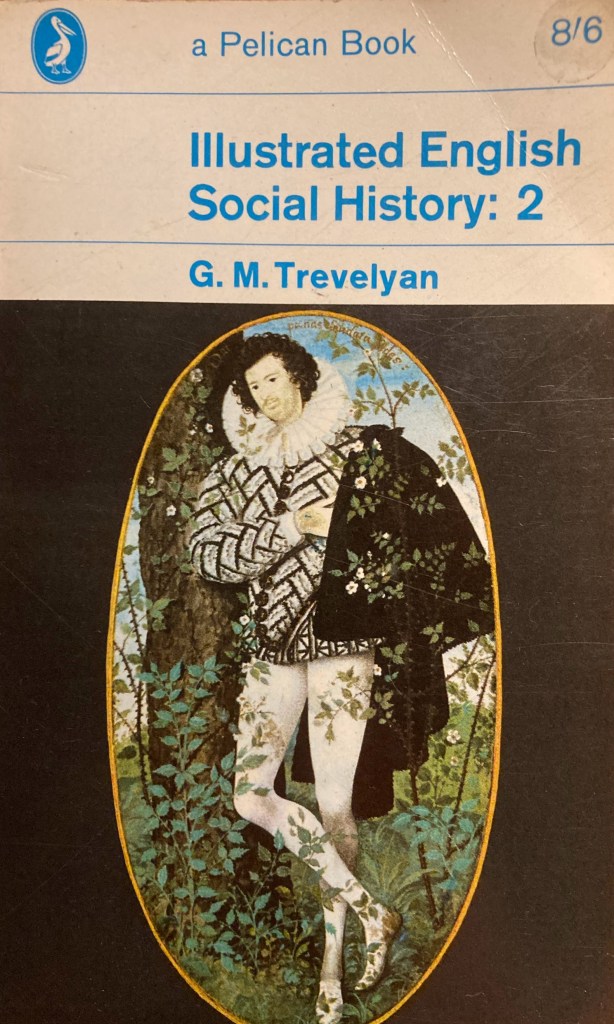
Since she was not aware that I’d previously owned the whole set I take her decision to buy the book as demonstrating how in sync we two are.
The author George Macaulay Trevelyan (1876-1962) was born at the apex of the British empire, into a world of privilege, a family of Whig (Liberal) politicians and merchants from Lancashire, England, the place one might claim as being the very heartland of the Industrial Revolution.
And here is where we make the connection to the book that I’m currently reading. Trevelyan was the great-nephew of Thomas Babington Macaulay, (1800-59), the eminent civil servant, Whig politician and historian, who hailed from Northern England and who figures prominently in Northerners, praising the positive aspects of the industrial revolution: increasing wealth, declining urban mortality and booming employment, despite its economic and social woes, (p. 213).
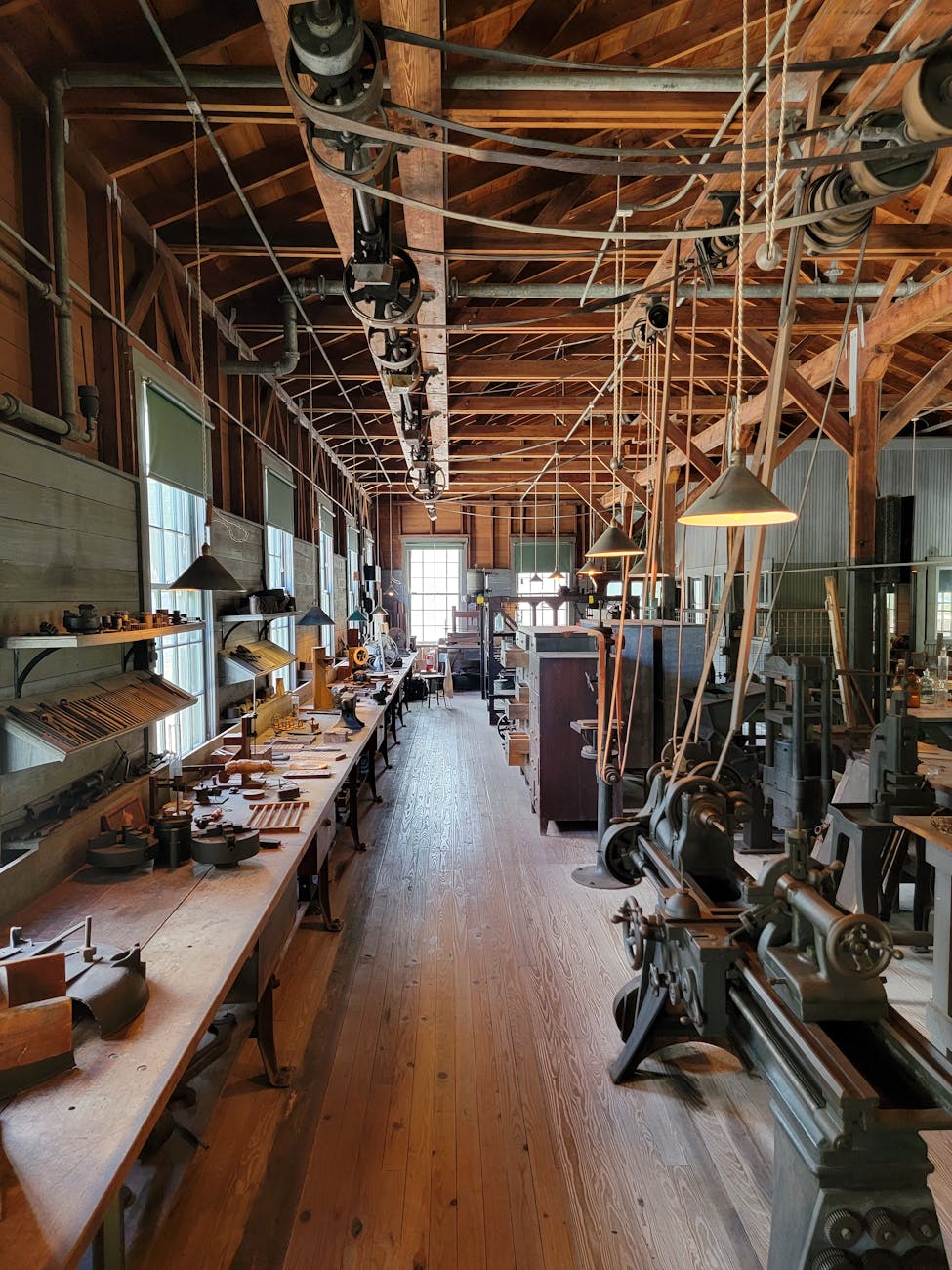
In point of fact, although the first part of the 19th century witnessed significant labour unrest, the second half was “much calmer, helped by the growing prosperity in which many working class people shared. Class conflict was deferred until the twentieth century, when industrial wealth began to contract and working class standards levelled off or fell.” (p.163)
Indeed, the “Victorian age was one of self-congratulation in which school textbooks assured children that they belonged to ‘the greatest and most highly civilized people that the world ever saw’,” leading Macaulay to conclude that there’s ‘as much chance of a [political] revolution in England as of the falling of the moon’.” (p.163)
Macaulay’s conclusion was spot on, and he was right about a lot of things. Not only that, the accomplished author and civil servant was also incredibly quotable (see Brainy Quote). I’ll leave you with a few examples:
- The highest proof of virtue is to possess boundless power without abusing it.
- A good constitution is infinitely better than the best despot.
- Nothing except the mint can make money without advertising.
- Disinterested intellectual curiosity is the life-blood of real civilization.
- Education . . . has produced a vast population able to read but unable to distinguish what is worth reading.
In these challenging times, I’d say each one is worth recalling.
& & &
Finally, let me wish all my readers a Happy Easter.

You must be logged in to post a comment.