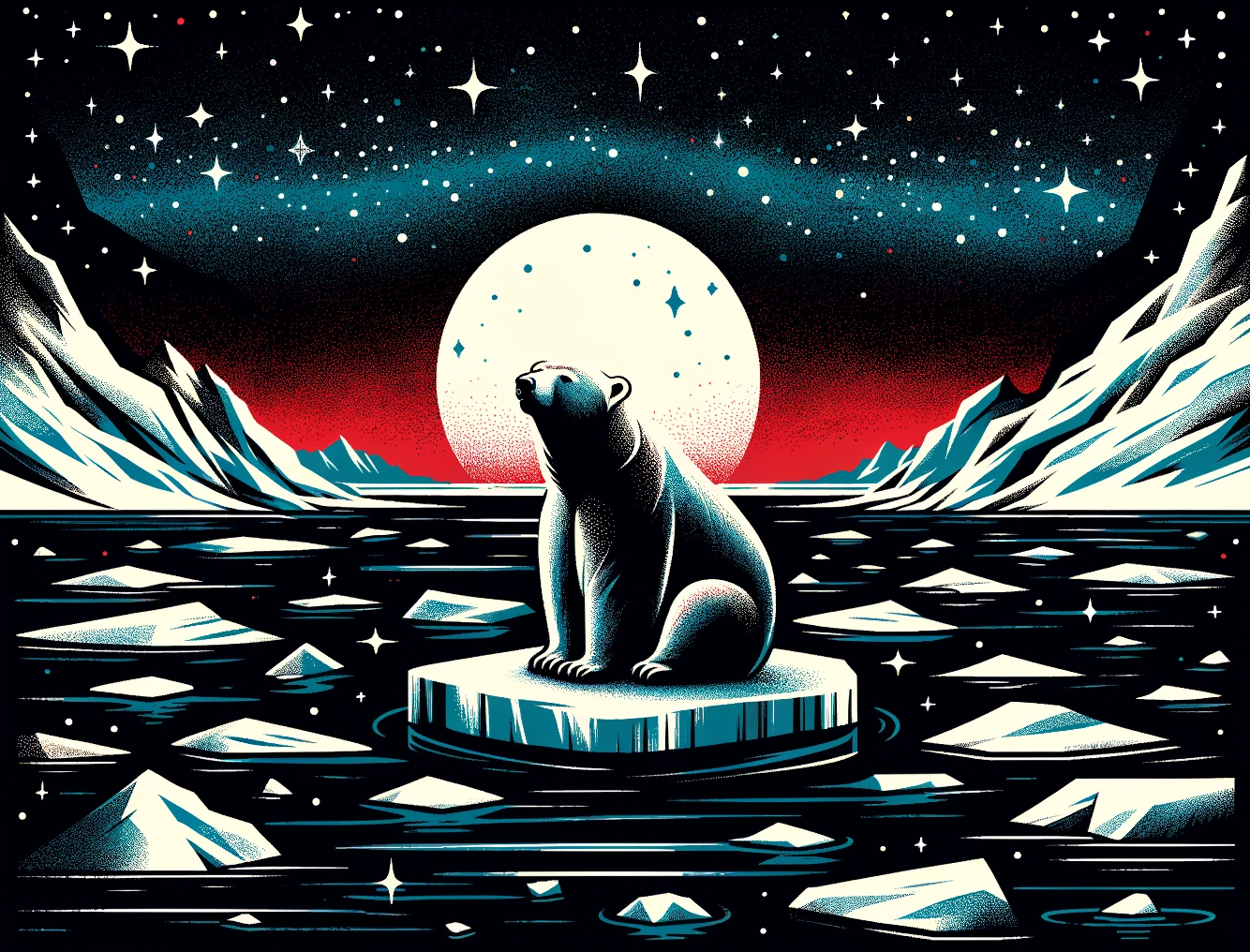
I write about animals. A fantasy series involving wolves, bears, big cats, donkeys, birds and even one red fox. Anthropomorphized, of course.
But this essay is about something different. It’s about philosophy and an approach to life. And the question is—which one would you choose to be?
In 1953, the British philosopher Isaiah Berlin published a relatively slim essay with a deceptively simple premise. Titled The Hedgehog and the Fox, the essay took its inspiration from a cryptic fragment attributed to the ancient Greek poet Archilochus (and given the recent release of The Odyssey, we’re all in a Greek mood these days): “The fox knows many things, but the hedgehog knows one big thing.”
Berlin initially deployed this dichotomy as a playful literary parlor game—a lens through which to analyze the worldview and inner conflicts of Leo Tolstoy.
However, the metaphor escaped the confines of literary criticism. Over the decades, it mutated into one of the most enduring psychological and philosophical frameworks of the modern era. It forces us to confront a fundamental question about how we process reality: is it better to view the world through a single, unifying lens, or to treat it as an ever-shifting kaleidoscope of disparate facts?
To understand the weight of Berlin’s essay, one must first look at the anatomy of these two distinct intellectual archetypes.
The Anatomy of the Hedgehog
Hedgehogs, Berlin declared, relate everything to a single, central vision. They possess a primary organizing principle—a core system, an unchanging truth, or a grand narrative—through which they understand and interpret everything that happens.

For the hedgehog, complexity is an illusion. Beneath the chaotic surface of daily life lies an underlying order that can be decoded if you just hold the right key.
Hedgehogs, it seems, are the builders of grand theories and the drivers of massive historical shifts. They possess an enviable clarity of purpose. Because they know their “one big thing,” they’re rarely paralyzed by indecision. When a crisis strikes, the hedgehog does not hesitate; they apply their foundational rule and charge forward.
In intellectual history, figures like Karl Marx (who viewed all human history through the lens of class struggle) or Sigmund Freud (who anchored human behavior in the unconscious and libido) are quintessential hedgehogs. In politics, leaders like Winston Churchill or Ronald Reagan operated on deeply internalized, unshakeable convictions that guided them through immense geopolitical storms.
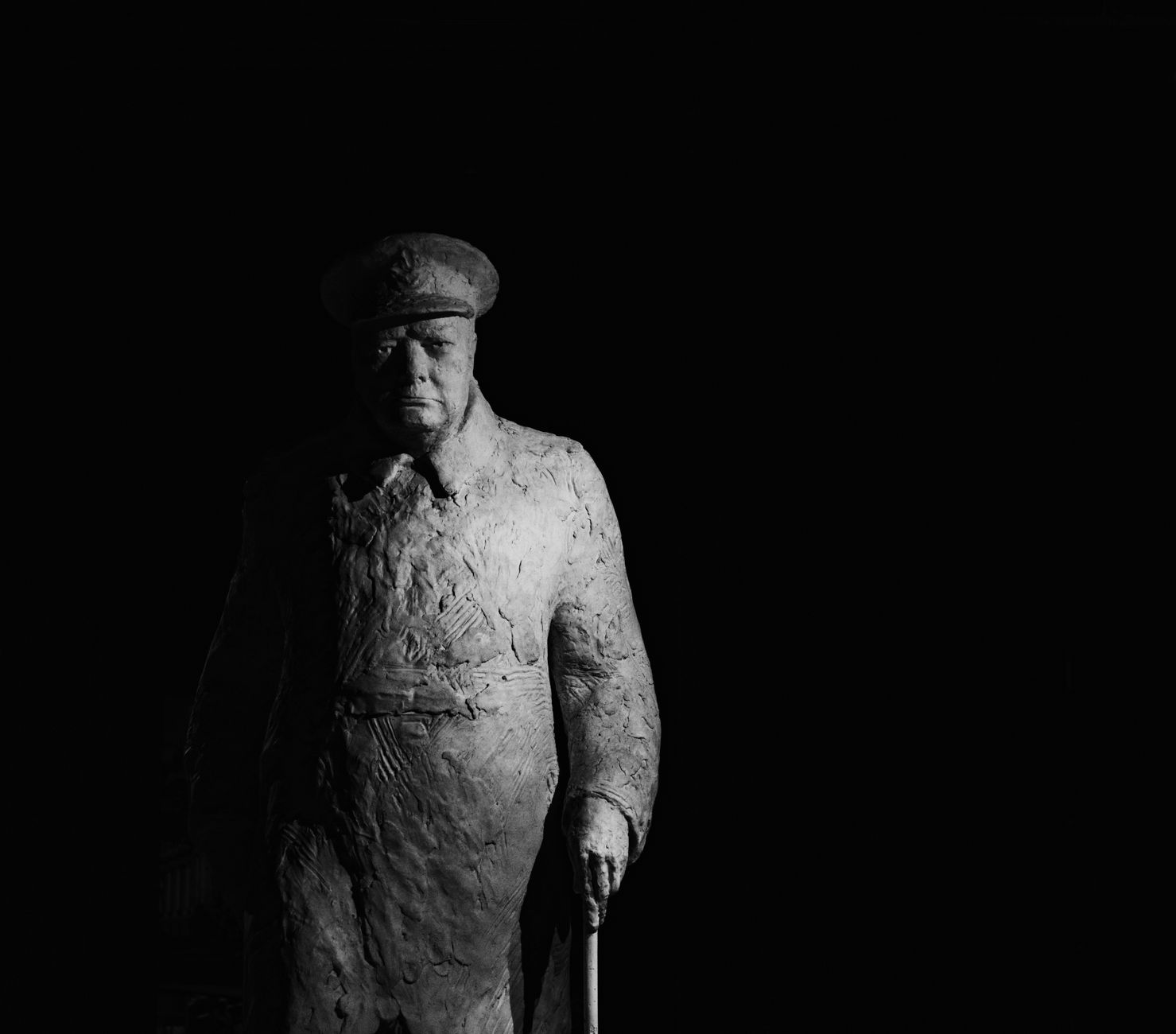
The strength of the hedgehog is focus. The threat they pose to the rest of us, however, is fanaticism and intellectual blindness. When the world contradicts their core theory, a hedgehog is intensely tempted to ignore the data to preserve the beauty of the system.
The Anatomy of the Fox
The fox, by contrast, pursues many ends, often unrelated and even contradictory. Foxes do not believe in a single grand narrative. Instead, they view the world as complex, fluid, and fundamentally decentralized. They synthesize vast amounts of disparate information, drawing from science, art, history, and personal experience without trying to fit it all into a neat, tidy box.

Foxes are comfortable with nuance, ambiguity, and doubt. They’re quick to say, “it depends,” or “on the other hand.” Where a hedgehog sees a straight line, a fox sees a tangled web.
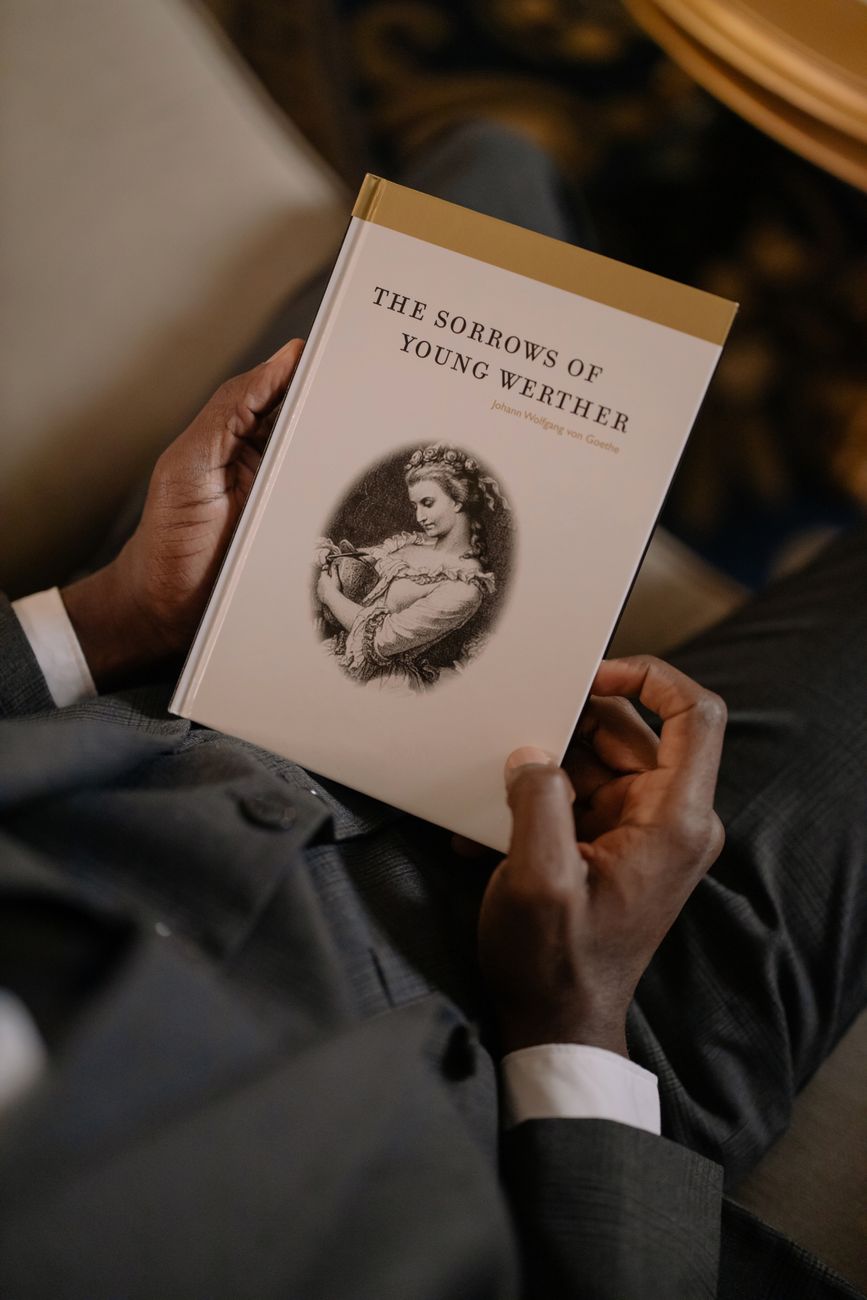
Historical figures like William Shakespeare, Johann Wolfgang von Goethe, and Aristotle embody the fox. They shifted styles, explored conflicting perspectives, and refused to lock their thinking into a singular ideological prison.
The strength of foxes is adaptability. Because they are not wedded to a single outcome or theory, they can pivot beautifully when reality throws a curveball. The danger for the fox, conversely, is paralysis through analysis. By seeing every side of an issue, they can easily become indecisive, scattering their energies and failing to leave a definitive mark on the world.
Tolstoy’s Agony: Berlin’s Core Argument
While the world has adopted the hedgehog-and-fox divide as a neat personality test, Isaiah Berlin’s original point was far more tragic. His essay focused on Leo Tolstoy, the author of War and Peace and Anna Karenina.
According to Berlin, Tolstoy was a fox by nature, but a hedgehog by conviction.
“Tolstoy was by nature a fox, but believed in being a hedgehog; his gifts and achievement are one thing, and his beliefs, and consequently his interpretation of his own achievement, another.” — Isaiah Berlin
As a writer, Tolstoy possessed the ultimate fox-like genius. He could inhabit the minds of emperors, soldiers, society matrons, and peasants alike. He observed the microscopic details of human life with staggering, non-judgmental clarity. He knew that history was not driven by grand political theories, but by millions of tiny, chaotic, unpredictable human choices.
Yet, Tolstoy desperately wanted to be a hedgehog. He craved a single, overarching moral and religious answer to the meaning of life. This internal friction tortured him. In his later years, he suppressed his brilliant, multi-faceted literary instincts to preach a rigid, simplistic form of Christian anarchism and asceticism.
Berlin’s essay serves as a profound warning: forcing a natural fox into a hedgehog’s cage causes deep psychological and creative agony.
The Modern Verdict: Who Wins?
In the decades since Berlin penned his essay, empirical research has actually put his theory to the test. In a landmark, twenty-year study on political and economic forecasting, psychologist Philip Tetlock tracked over 80,000 predictions made by hundreds of experts.
The results were stark: Foxes routinely outperformed hedgehogs in predicting the future.
Tetlock found that high-profile experts—the kind who frequently appear on television (now social media) to proclaim with absolute confidence how a war will end or where the economy is going—were often classic hedgehogs. They had a single big theory (e.g., “the market always corrects” or “authoritarian regimes always collapse”) and squeezed every event to fit it. When they were wrong, they rarely admitted it, chalking it up to bad timing or anomalous events.
The foxes, who were more cautious, self-critical, and willing to pull data from completely unrelated fields, vastly outperformed the dogmatic hedgehogs. The foxes understood that the world is a chaotic system where small, unpredictable variables can derail the grandest theories.
The Synthesis: Cultivating a “Fox-Like” Mind with “Hedgehog” Core
Does this mean the hedgehog is entirely obsolete? Not quite.
While foxes make better forecasters and navigators of daily complexity, human progress still requires the fierce, unyielding drive of the hedgehog.
Steve Jobs can be considered a hedgehog with regard to his vision for elegant, user-centric technology; and his singularity of purpose disrupted multiple industries. Martin Luther King Jr. was a hedgehog about civil rights, anchoring his entire life to a single, unshakeable moral truth.
Perhaps the ultimate goal of modern intellectual life is not to choose a side, but to master a dynamic synthesis:
- Be a Hedgehog in your values: Establish a core, unshakeable set of foundational principles that define who you are and what you stand for.
- Be a Fox in your tactics: Remain hyper-observant, flexible, and willing to learn from any discipline to navigate the ever-changing terrain of reality.
In sum, by keeping our anchor deep like the hedgehog, while moving as nimbly as the fox, we can survive the complexities of the modern world without losing our souls along the way.
& & &
After all this consideration, I wondered whether I truly was one or the other. Or a combination. At first I concluded I was more like the fox, open to rethinking suppositions and responding to events on the fly.
But then I decided otherwise. More on those deliberations in a follow-up post.
& & &
Incidentally, the Ravenstones series contains no hedgehogs. One red fox does make it into the story, arriving in volume 3. He goes by the name of Vulpé (Latin scholars will appreciate the little joke), and he made it onto the cover of Volume 6 (available on Amazon KDP), along with his only true friend, a swift who goes by the name of Motya.
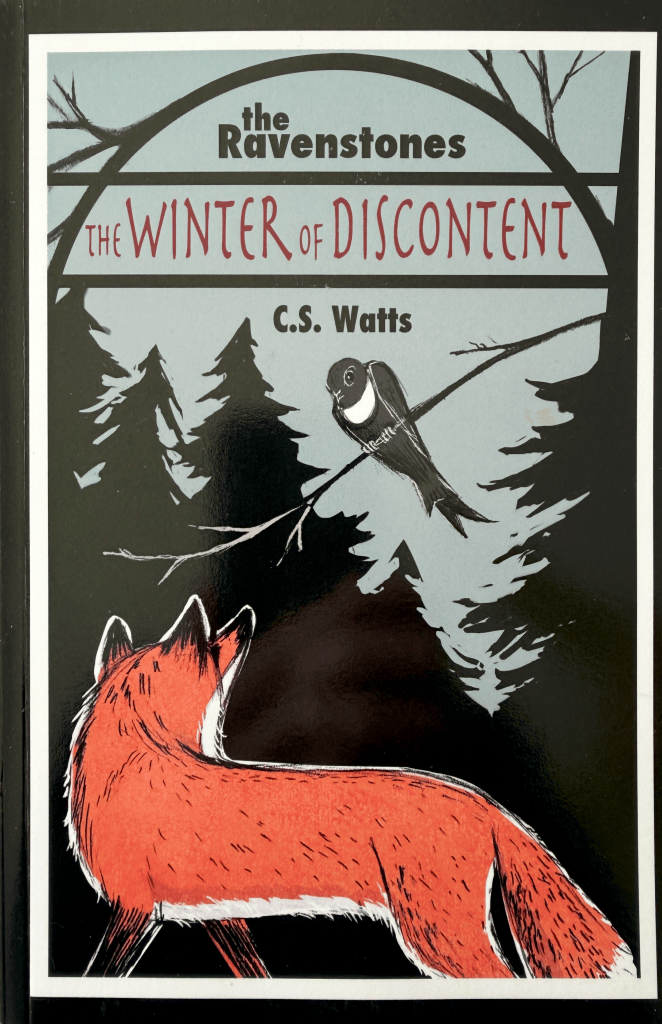
In my view, Vulpé’s character arc ended up being the most interesting and satisfying in the entire series (think of Soames Forsyte in the Forsyte Saga). Naturally, both Vulpé and Motya end up playing key roles in the final dramatic conclusion of the series.

Leave a Reply