Some readers ask me about the writing of The Ravenstones series.
How did it begin, for example? Why, after a long career in government, advising on matters of state, policy and intergovernmental relations, did I embark on such an lengthy and different project?
In truth, the series didn’t start out the way it evolved and finished. The original idea had been to craft a short, heavily illustrated book for young children, much like The Velveteen Rabbit, no longer than 25 pages.
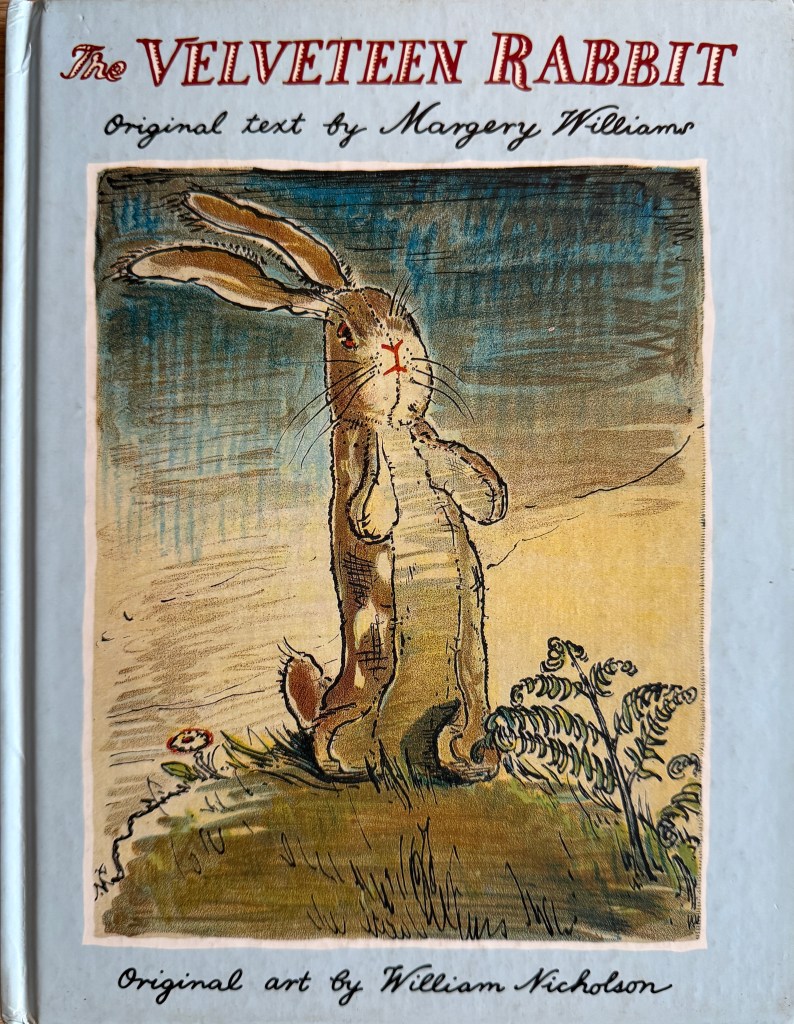
New York: Bantam Doubleday Dell, 1922 and 1991
My story began not with a stuffed rabbit but with a china polar bear that we’d recently acquired. On this day, back in mid-summer of 2006, I noticed the bear was placed, all by itself, in a deep window sill, one front paw slightly raised, in full sun, looking out into the back garden. The sill was made of black granite speckled with gold.
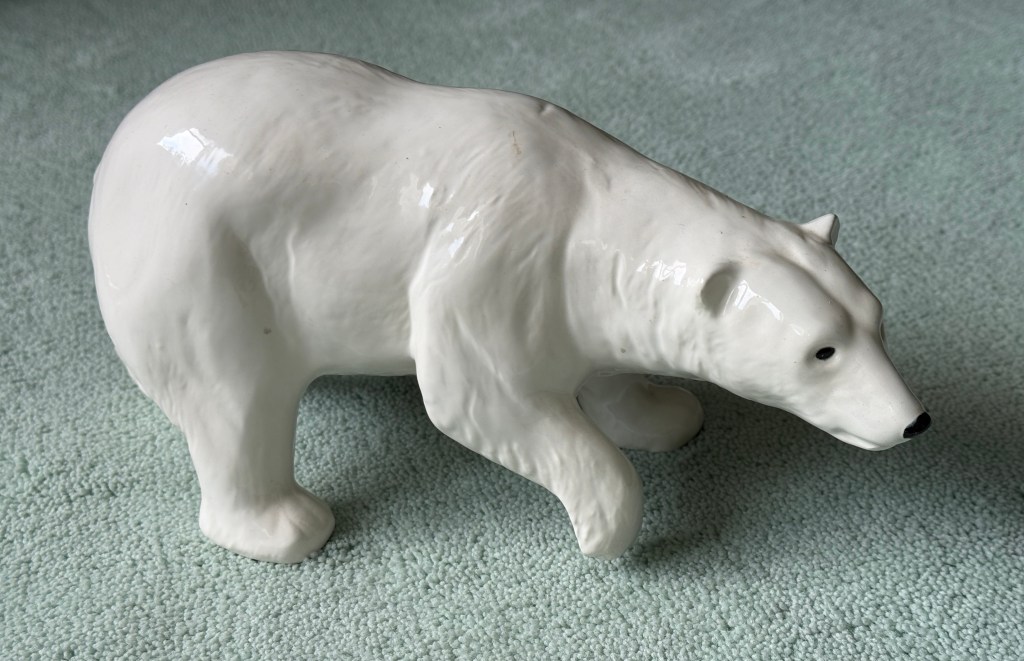
The bear no longer sits on that sill (that was many houses ago). But, to me, back then, it seemed as if the bear was waking up from a deep sleep one fine morning, the sun’s golden light sparkling off so many ice crystals.
The scene of the solitary bear resonated, and I began to write, with no real conclusion in mind and no storyline except for a china bear’s desire to become real. (Those of you who know The Velveteen Rabbit will be aware it’s hardly an original idea. If I’d pursued it, I’d like to believe I’d have created something completely original. I guess we’ll never know. Well, unless I take up that idea anew.)
Just as in the ensuing result (volume one), in the beginning, the bear had no name. The naming had to come in its own good time.
It wasn’t long before I abandoned the idea of a china bear wanting to become real. He was, to my mind, always real but, in true fantasy fashion, needing an epic, challenging quest. In the tradition of Narnia and Through the Looking Glass, he also needed a portal into another world.
So, the stage was set and I began to write that story: of a lonely bear whose friends had seemingly vanished while he slept.
Mere days later, I was sitting in the backyard when I heard the guttural sound of a raven. I glanced up to spot my second character, who the bear meets in chapter 3 of Eirwen and Fridis.
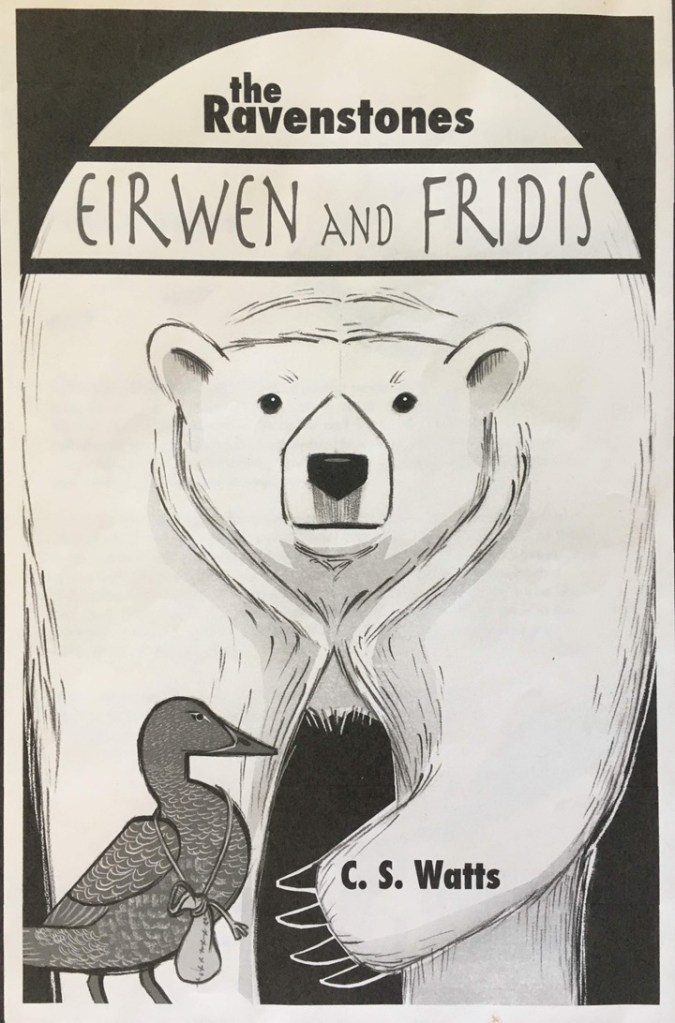
The story began to unfold from there. It had to begin in the forbidding Arctic and, as such, it had to involve animals appropriate to the locale. What could be more fitting to round out the team of protagonists than an Eider duck, a bird common to much of Canada’s northern shoreline.
The story evolved. The bear and duck, soon alone in a strange and mysterious land and missing the know-it-all raven, needed a fierce adversary, or several. A pack of wolves was made to order.
Those of you who’ve read further on will be aware that encountering the wolf pack was just the beginning of our heroes’ journeys. More adversaries, and many twists and turns awaited not just the bear but also the duck, who must undergo trials of her own.
&&&
I’ve always loved the fantasy genre (Lord of the Rings especially), mysteries and adventure stories. Plus, growing up with anthropomorphic tales (see my earlier posts), it all seemed fitting. What I’ve created in The Ravenstones represents an amalgam of these diverse threads.
As the story evolved and more and more characters (126 named) were added, I realized the telling of the entire saga would take added volumes. Seven of them, in fact.
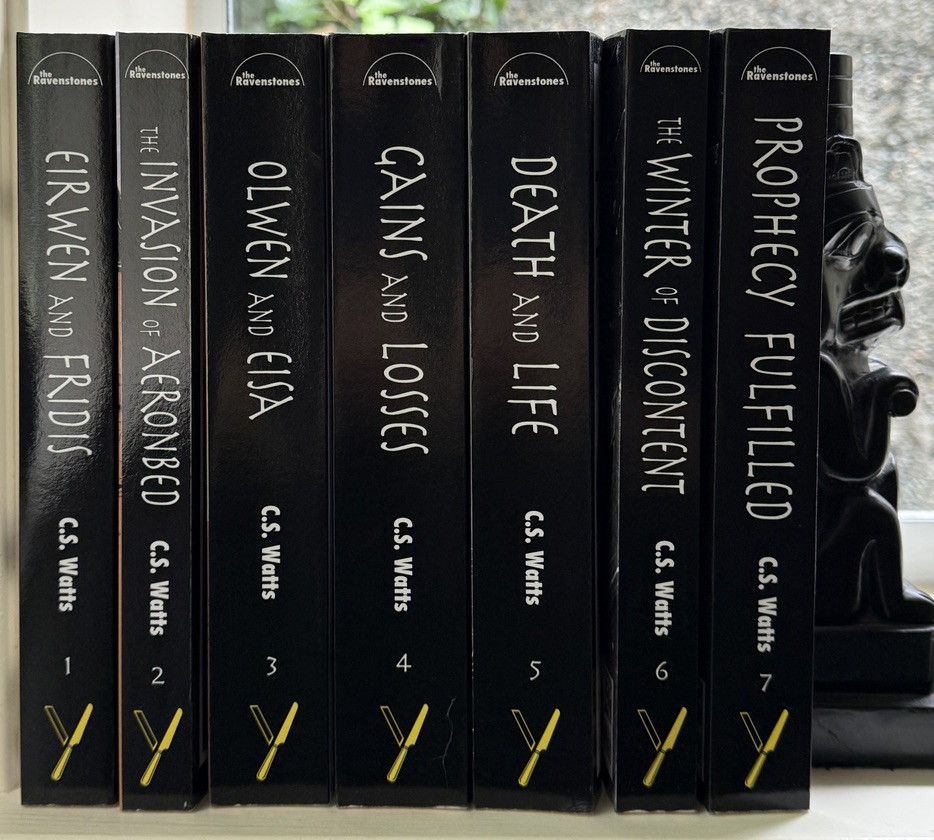
In the beginning I hadn’t even intended to publish the story. It was my son (then in university), who happened across a page open on my computer and suggested the tale was worthy of a wider audience.
Of course, the process of publishing took several years. The first draft of all seven volumes took six years to complete. The polishing and recrafting stage took another six before I was satisfied enough to proceed to publishing; the final editing and publishing another two.
Ultimately, The Ravenstones is a story of good and evil; friendship and faith; loyalty and sacrifice; light and dark; intrigue, ambition and deception; and, finally, growing up and letting go.
For the reader who loves fantasy, it has every essential element: colorful characters in a parallel universe, heroes and villains, humor and—best of all—a satisfying ending.
&&&
And to answer my second question above: what is the difference from policy work? I’d suggest not much in the end. Every cabinet memo, briefing note and policy proposal must tell a story, with a beginning, a middle and an end, finally coming to a resolution and a promise to readers that it was all worthwhile.
In sum, I’d say my work in government was excellent preparation for being a novelist.
For those who have started along our heroes’ journey, thank you for reading.
And for those who have not yet moved past my blog site, here is a link to my Amazon/KDP page:

Leave a Reply