
Regular readers will know the main focus of these posts is on books, illustrators and literature in general.
But every now and then I stray into personal asides and recollections. In such cases, a lot of ideas for posts are generated by media stories, especially The New York Times (NYT), to which I have a electronic subscription. Usually they trigger memories from my past. Way past.
In early July, reporter Julian Barnes wrote about an event that happened 50 years ago this September.
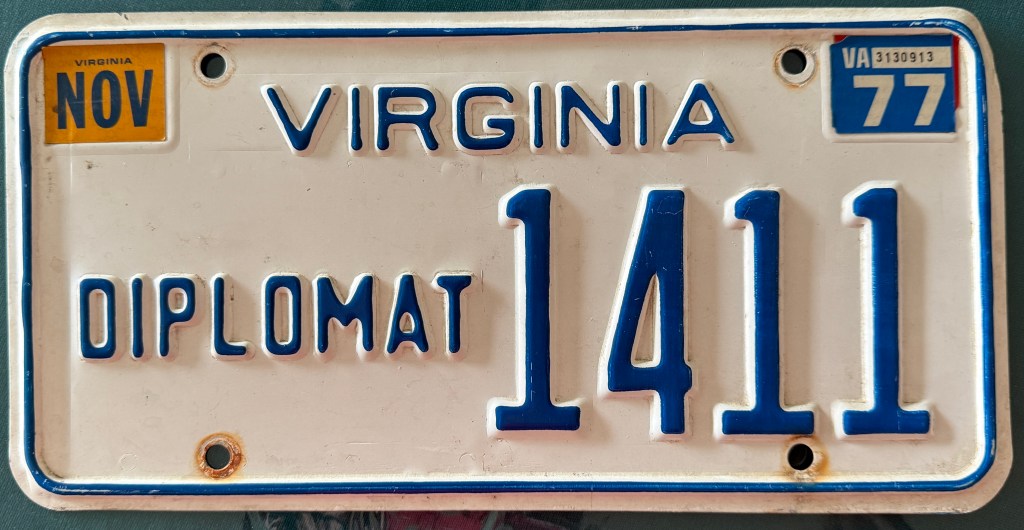
I had arrived in the U.S. capital in late August, 1976 to take up a position (my very first diplomatic post) at the Canadian Embassy (still have the license plate: rented a house in Alexandria as I couldn’t afford to live in DC):
Back then the Embassy was located at 1746 Massachusetts Ave., near to Dupont Circle. My office in the Public Affairs Bureau was located on N Street, just across the back lane.
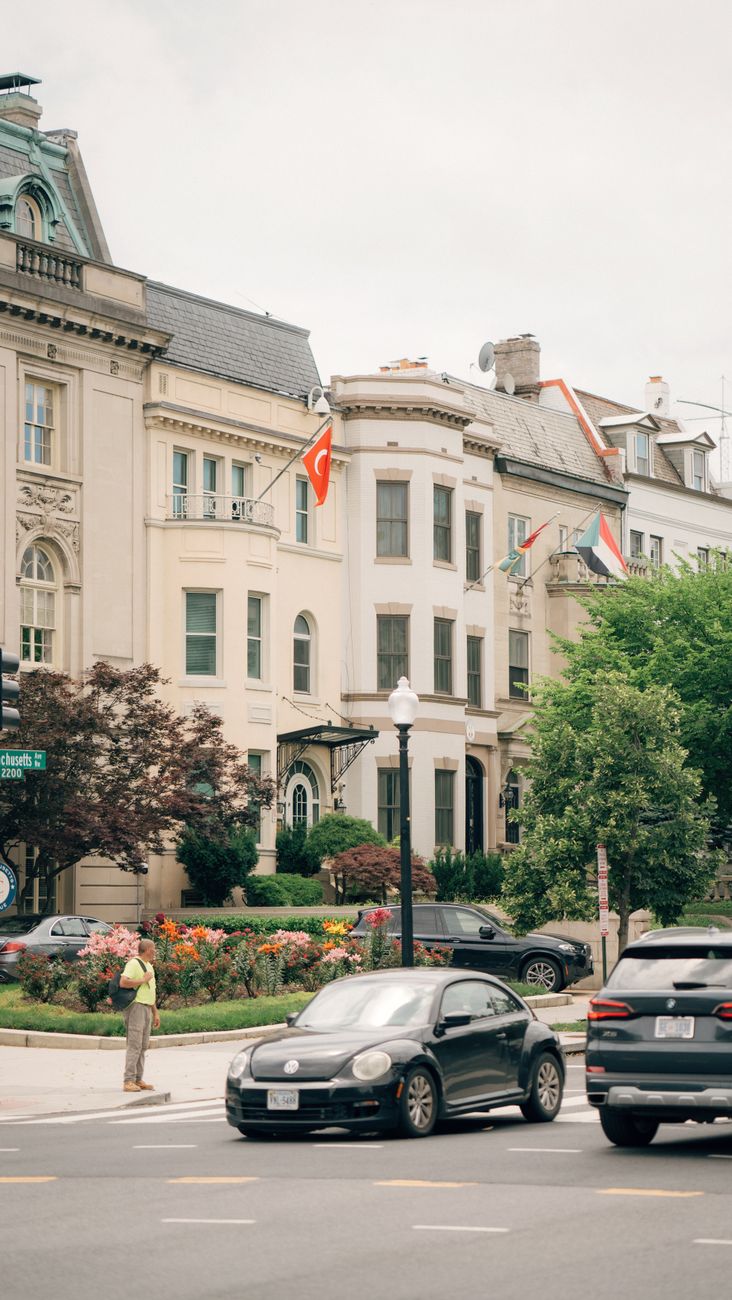
Back then, in the days before credit cards were so ubiquitous, one’s physical bank was important. Most embassy staff held accounts at the Riggs Bank (now a PWC branch) on the other side of the circle. On that September day (the 21st), in the morning, I went over to the bank to pick up a swath of cheques (safer, I was told, than carrying around wads of cash).
Here’s how the NYT story opens:
“In 1976, Armando Fernandez Larios slipped into the United States to help plan an assassination. He mapped the target’s routes to work, and collected details about his car, home and office in Washington. On Sept. 9, 1976, he passed the information to a Chilean intelligence agent in a bathroom at Kennedy International Airport in New York and then flew out of the country the same day to return to Chile.
“Less than two weeks later, a car bomb exploded on the streets of Washington, killing Orlando Letelier, a former ambassador from Chile and a vocal critic of the country’s dictator, Gen. Augusto Pinochet. Mr. Letelier’s American colleague, Ronni Karpen Moffitt, also died in the attack.”
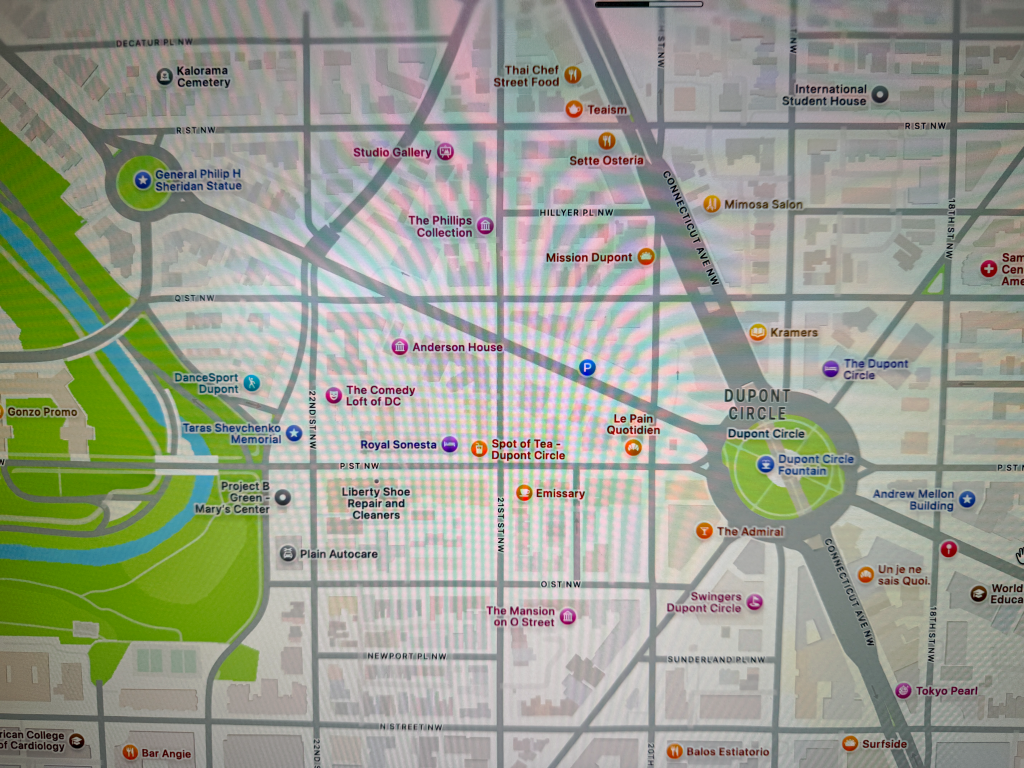
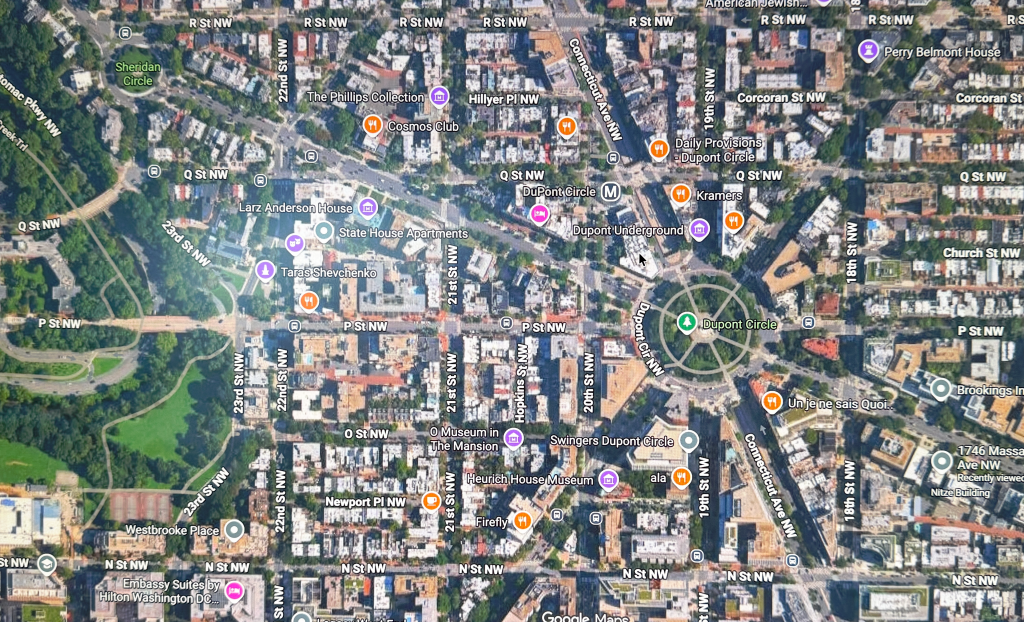
The blast occured as the car drove around Sheridan Circle (top left corner of these Google maps). One could hear the explosion all the way down the street to Dupont Circle, as I was crossing over to the bank that Tuesday morning.
Here is a link to Wikipedia’s article on the event.
Such was my introduction to the US capital. It would not be the only time political violence disrupted my posting in the city.
The second, the Hanafi Siege, was a terrorist attack, hostage-taking and standoff all rolled into one, lasting from March 9 to March 11, 1977. Three buildings (the District Building, the B’nai B’rith headquarters, and the Islamic Center of Washington) were seized by twelve Hanafi Movement gunmen, who took 149 hostages.
During the initial attack and takeover of the buildings, the assailants killed a journalist and mortally wounded a police officer; three others, including future Washington mayor, Marion Barry, were injured. After a 39-hour standoff, the gunmen surrendered and all remaining hostages were released.
While the District Building was situated near the White House, the Embassy was located between the B’nai Brith at 1640 Rhode Island NW and the Islamic Center at 2551 Massachusetts NW. The former was a mere 5-minute walk from my office. We were right smack dab in the middle of things.
The assault began at 2:20 pm in the afternoon. I recall coming back from a meeting, hearing the sirens, noticing the surprising number of helicopters flying about overhead and wondering about both as I parked in the Embassy’s parking lot. Only later did we find about the extent of the incident.
Naturally, the downtown core around these buildings, including our offices, was cordoned off.
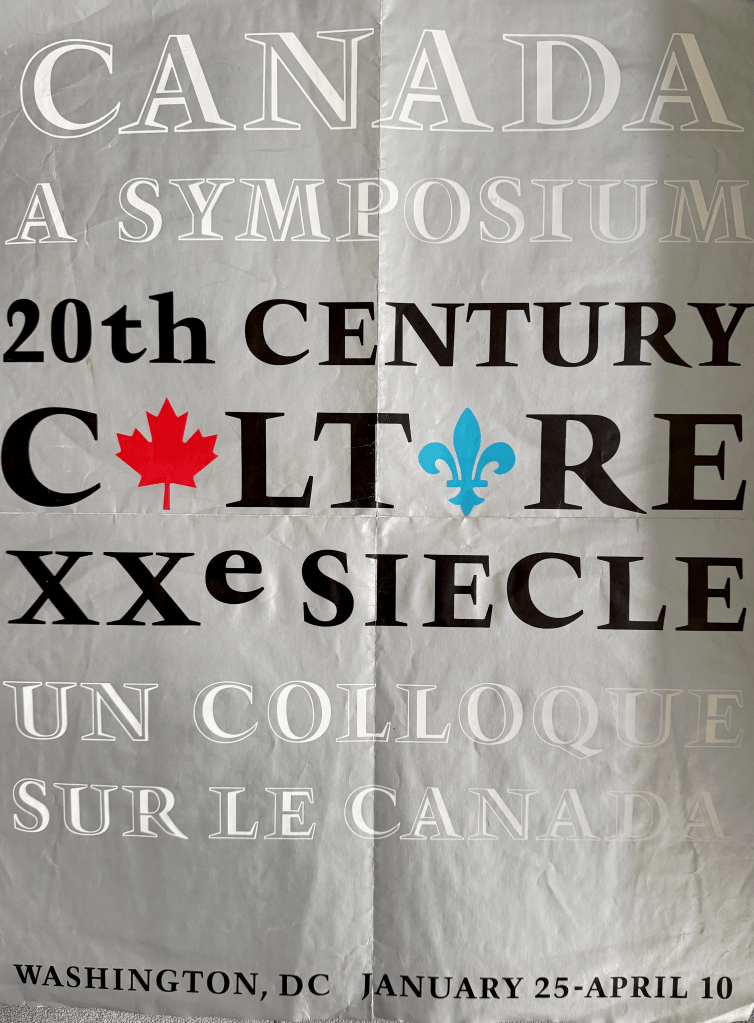
Now it so happened that the Embassy was in the middle of a three month long celebration of Canadian culture, involving lectures, art exhibitions, concerts, etc. I was responsible for the Embassy’s involvement in these events. And more to the point on the night of March 9, we had a panel discussion scheduled at the Hirshhorn Museum on “Film In Canada:
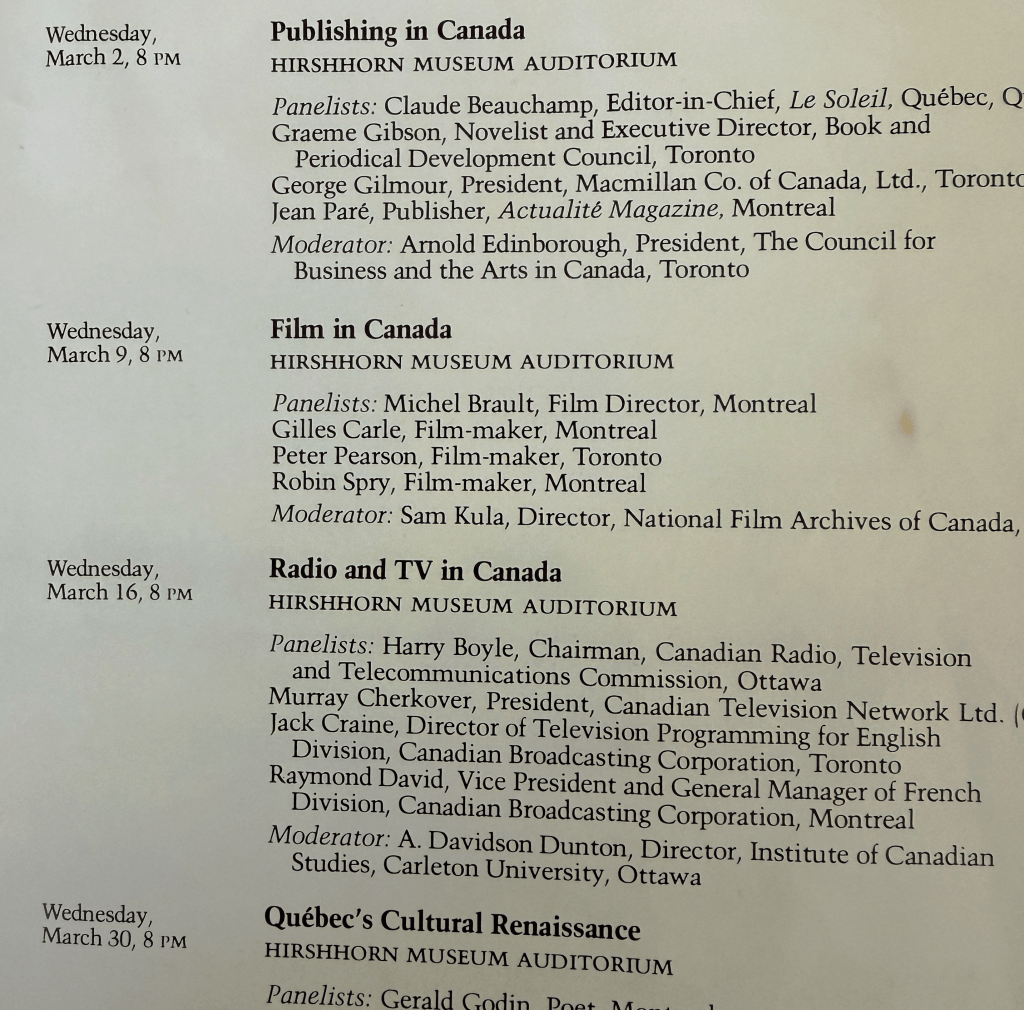
As the museum, part of the Smithsonian, was located a 10 minute walk from the District Building, it, too, was impacted by the events of the day.
Meanwhile, the panelists had already arrived; and since it was too late to cancel the event (in the days before the internet and instant communications), we decided to go ahead. Despite everything, duty called: I would not be deterred from attending, wanting to demonstrate the Embassy’s support for the symposium.
Unsurprisingly, few people attended. (Somewhere, in the archives of the Global Affairs Canada, are my detailed reports of every event of the 1977 symposium; a retrospective look back might be well worth the effort.)
It was pretty eerie driving through the empty streets and passing through the odd check point, something my diplomatic colleagues might have expected in a place like Beirut or Khartoum but not the capital of the United States.
It would not be the last time I encountered events like this during my career, for the seventies and eighties were a turbulent era, rife with political activism and a quick resort to extremism.
More than once, I had cause to think that if I’d been in the same spot on another day, my life would have been cut short: London and Brighton, England (the IRA); the Schiphol Airport in Amsterdam (Japanese Red Army); the Leonardo da Vinci-Fiumicino International Airport in Rome (Abu Nidal).
Generally, people today view the present as particularly difficult; most have forgotten or do not know how challenging life was in the past, both recent and long ago.
& & &
Now, since this blog is usually about reading, I want to give a shout-out to a very special bookstore.
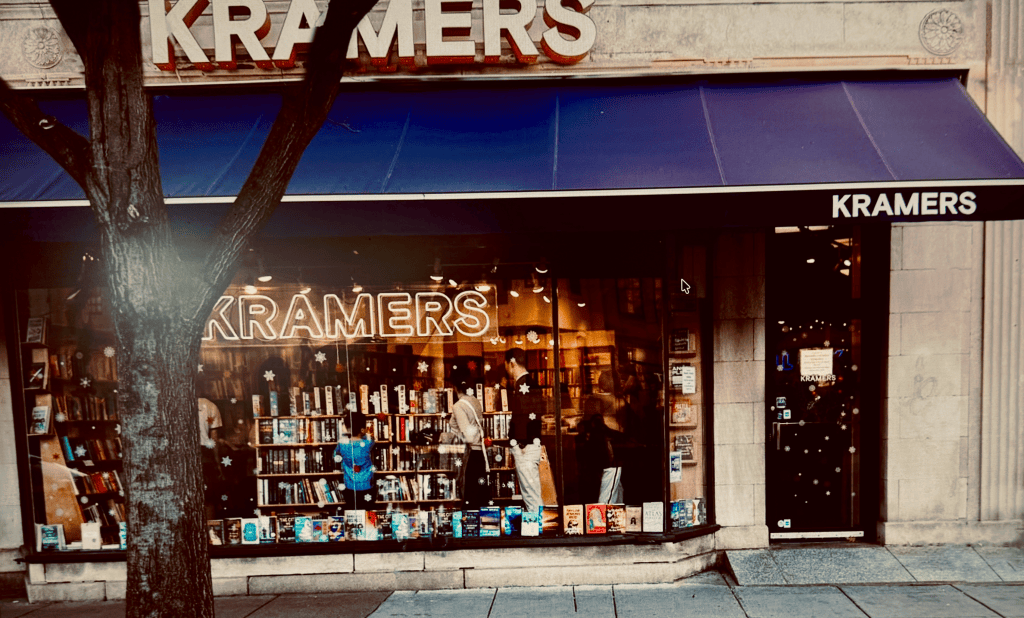
My favourite hangout back then was a joint cafe/bookstore called Kramerbooks & Afterwords, just off Dupont Circle (1517 Connecticut Ave NW). It was one of the first such establishments (combining food and books) in the U.S. and it excelled at both. I’m delighted to see that, after 50 years of business, the place (known now simply as Kramers) still exists.
&&&
As a final footnote, to consider how life often comes about in full circle: the second victim in the assassination, Ronni Moffitt, worked for the Washington-based think tank, the Institute for Policy Studies. One of its co-founders was Marcus Raskin, father of current Maryland Democratic Congressman, Jamie Raskin, who’s played such a huge role in American politics in the last few years.

Leave a Reply